
Introduction
UnitedHealth Group Incorporated is a leading American multinational healthcare and insurance company, widely recognized as one of the world’s most powerful players in health services, technology-driven care solutions, and managed healthcare.

Illustration 1: The UnitedHealth Group logo – symbolizing trust
Headquartered in Minnetonka, Minnesota, UnitedHealth is best known for its massive scale in health insurance through its UnitedHealthcare brand, but it also operates the highly influential Optum segment, which focuses on data analytics, pharmacy services, care delivery, and tech-enabled health solutions.
While traditional health insurers operate in narrow verticals, UnitedHealth has evolved into a diversified, tech-integrated healthcare conglomerate. Its model focuses not only on coverage but on driving improved patient outcomes, reducing healthcare costs, and leveraging digital solutions to reshape modern medicine.
UnitedHealth consistently ranks among the top Fortune 500 companies by revenue, often trailing only global titans like Walmart and Amazon. Its scale, data assets, and vertically integrated services place it at the forefront of the healthcare industry’s transformation.
History
UnitedHealth Group’s origins date back to 1977, when Richard Burke founded the company under the name UnitedHealthcare Corporation. At the time, the U.S. healthcare industry was grappling with skyrocketing costs and inconsistent care quality, and Burke saw an opportunity to offer managed healthcare solutions that emphasized preventive care and cost control.
Throughout the 1980s and 1990s, the company expanded aggressively through acquisitions, growing its presence in employer-sponsored insurance and Medicaid contracts. In 1998, the company adopted the name UnitedHealth Group to reflect its growing scale and breadth beyond just insurance.
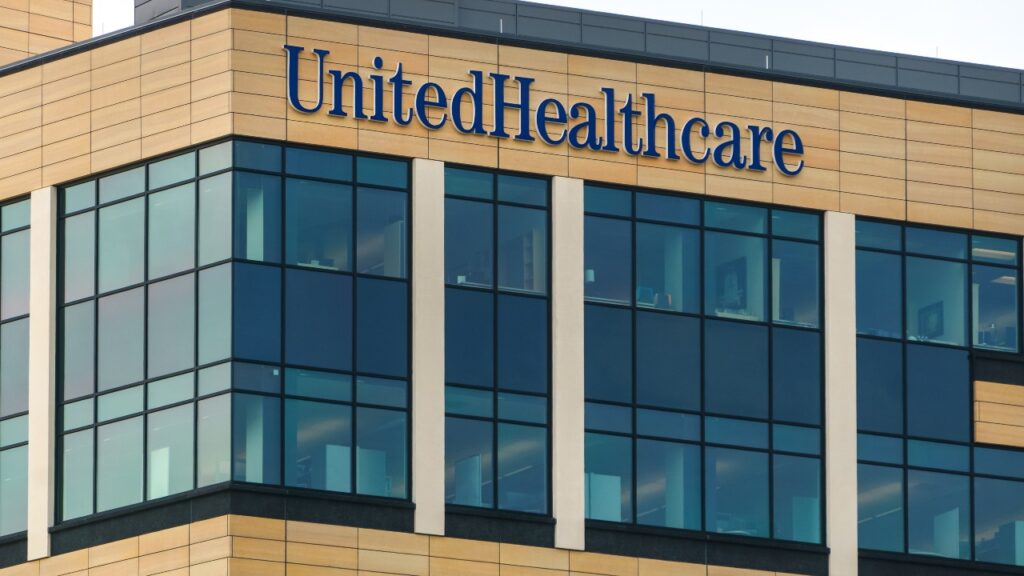
Illustration 2: UnitedHealthcare headquarters in Minnetonka, Minnesota
A major turning point in the company’s evolution came in 2011 with the creation of Optum, a health services platform designed to address systemic inefficiencies in American healthcare. Optum was split into three divisions: Optum Health, which focuses on direct clinical care and outpatient services; Optum Insight, which manages data analytics and technology solutions; and Optum Rx, which handles pharmacy benefit management and prescription drug services.
Over the past decade, Optum has become a vital engine of growth for UnitedHealth Group, accounting for nearly half of the company’s total revenue. Its integration of tech-driven healthcare with clinical and administrative services has allowed UnitedHealth to become far more than just an insurer, it is now a platform company with deep influence across every major component of the health economy.
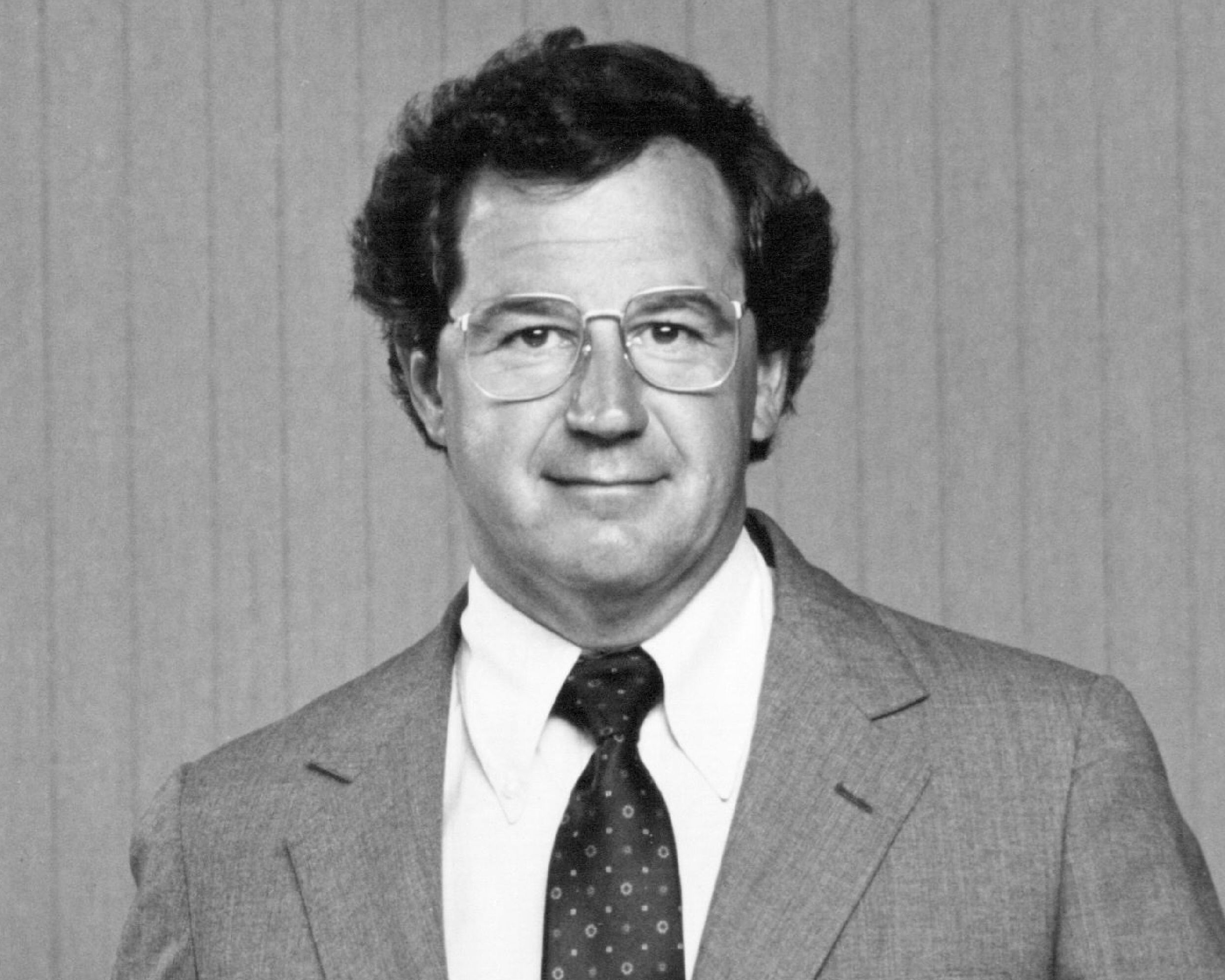
Illustration 3: Richard Burke founder of UnitedHealthcare
Today, UnitedHealth Group operates in all 50 U.S. states and increasingly abroad. Its insurance division remains the largest private health insurer in the United States, while Optum is one of the country’s largest employers of doctors, one of the biggest processors of healthcare data, and one of the top pharmacy service providers.
Operations and Structure
UnitedHealth Group operates through two core business segments which is 1. UnitedHealthcare and 2. Optimum
At the heart of its operational engine is the UnitedHealthcare division, which administers health insurance to over 50 million Americans across employer-sponsored plans, Medicare Advantage, Medicaid, individual exchanges, and military health programs.
This division handles millions of claims per day, coordinates provider networks, manages risk pools, and ensures regulatory compliance in all 50 states and abroad. Its operations rely heavily on automation, proprietary algorithms, and customer service teams trained to navigate the complex U.S. healthcare landscape.
Optum , is a health services platform divided into: Optum Health which is a clinical services including surgery centers, primary care, urgent care, and behavioral health, Optum Insight which is a data analytics, software, and AI-driven platforms used by providers and governments and Optum Rx which is a pharmacy care services including PBM (pharmacy benefit management) operations.

Illustration 4: UnitedHealth is the largest employer of doctors in the US
These two divisions create a powerful feedback loop: insurance data from UnitedHealthcare informs care delivery and analytics at Optum, while Optum’s tools help manage medical costs and improve patient outcomes benefiting the insurer’s bottom line.
Digital Transformation and Healthcare Technology
What makes UnitedHealth Group truly stand out from traditional insurers is its deep integration of technology and healthcare data. Through its Optum Insight division, the company manages one of the largest health analytics operations in the world.
It works with health systems, governments, and employers to create AI-based tools that can detect patterns in patient data, identify at-risk populations, reduce readmissions, and optimize treatment pathways.

Illustration 5: UnitedHealth is on the forefront in the interconnection of AI and medicine.
The company’s focus on digital tools also includes consumer-facing products. Members of UnitedHealthcare plans can use mobile apps to track claims, compare procedure costs, and receive virtual care. The company is increasingly shifting toward value-based care, where hospitals and doctors are rewarded not for the number of procedures they perform, but for the outcomes they deliver.
UnitedHealth is at the forefront of this movement, offering financial incentives to physicians who reduce avoidable hospitalizations, control chronic conditions, and improve patient satisfaction.

Illustration 6: UnitedHealth make use of app and other new technology in healthcare
UnitedHealth is also a massive player in behavioral health, a segment of care that has grown significantly in demand since the COVID-19 pandemic. Its services in teletherapy, psychiatric care, and substance use treatment now reach millions of Americans.
Key Competitors
UnitedHealth Group operates in a fiercely competitive landscape that spans health insurance, data analytics, pharmacy benefit management, and digital health.
1. Helath Insurance
CVS Health / Aetna has become a vertically integrated healthcare player, and its ability to cross-sell insurance with retail and pharmacy services poses a long-term strategic challenge to UnitedHealth
Anthem (Elevance Health) is one of the largest Blue Cross Blue Shield affiliates, offering strong competition in employer-sponsored and Medicaid health plans,, but lacks the services depth of Optum.
Cigna focuses on commercial insurance and owns Express Scripts, giving it strength in employer plans and pharmacy benefit management. Cigna’s model is leaner and more focused, but lacks the vertical integration that gives UnitedHealth its scalability and efficiency edge.
2. Health Technology and Services
Centene dominates in Medicaid and ACA exchanges, often underpricing rivals to win contracts, which pressures margins for everyone. Centene’s strength in low-income markets exposes UnitedHealth to pricing pressure, though UHG typically competes with better operational efficiency and outcomes.
Humana is a pure play in Medicare Advantage and is investing aggressively in home health and chronic care, areas that overlap with Optum Health.
Amazon has entered healthcare with One Medical and Amazon Clinic, using its tech expertise and logistics network to disrupt primary care and telehealth. Amazon’s entry is early-stage but significant if it scales, it could threaten Optum’s retail clinic and digital engagement strategies over time.
3. Pharmacy and PBM Players
Express Scripts, owned by Cigna, remains a top PBM and competes directly with Optum Rx in controlling drug spending and managing large employer accounts.
CVS Caremark, part of CVS Health, handles PBM services for millions and leverages its in-store footprint to drive pharmacy traffic.

Illustration 7; Health Insurance is a big part of UnitedHealth’s expenses
Walgreens Boots Alliance is expanding into primary care via partnerships and acquisitions, aiming to become a service-based health company rather than just a retail chain.
Competitive Advantage
UnitedHealth’s greatest strategic advantage lies in its vertical integration. By owning the insurance business, the care delivery network, the pharmacy services infrastructure, and the data analytics tools, the company is able to control both the cost and quality of care in a way that few others can replicate.
Its scale gives it access to data on tens of millions of patients, allowing it to build predictive models that improve care outcomes and drive down costs.
Its brand is trusted by employers, providers, and patients alike. And its ongoing investment in technology ensures that it is not just keeping pace with the transformation of healthcare, it is leading it.
Rather than waiting for the future of healthcare to arrive, UnitedHealth is actively building it, one acquisition, data platform, and clinic at a time.
Future Outlook
As the healthcare industry undergoes rapid transformation toward digitization, personalization, and value-based care, UnitedHealth Group appears better positioned than any other company to thrive.

Illustration 8: The outlook of UnitedHealth looks healthy
The company has outlined ambitious growth targets, including expanding its Medicare Advantage footprint, increasing the reach of its clinical care network under Optum Health, and leveraging its data platforms to deliver AI-driven solutions for both public and private sector clients.
International expansion is also on the horizon, with the company targeting opportunities in India, South America, and Europe. At the same time, domestic healthcare spending continues to rise, driven by aging demographics and chronic disease management, ensuring sustained demand for UnitedHealth’s services.
By 2026, UnitedHealth projects that annual revenue will exceed $450 billion, with much of that growth coming from the continued integration of insurance and care delivery. Its long-term vision is to be the digital backbone of healthcare—a platform that processes claims, delivers care, dispenses medications, and improves outcomes across the entire continuum of health.
Stock Analysis
In this section we will analyze UnitedHealth Group’s stock to see if it is a good stock to buy or not. Our philosophy is value investing meaning that we try to find good quality companies that are undervalued. However, we will give a holistic overview so all kind of investors with different philosophies can judge the stock for themselves.
Revenue and Profits


Illustration 9 and 10: Revenue of UnitedHealth Group from 2009 to 2025
As shown in Illustrations 9 and 10, UnitedHealth Group has delivered steady and consistent revenue growth, rising from approximately USD 87 billion in 2009 to over USD 400 billion in 2025. This long-term upward trend, with no major drops or erratic spikes, signals operational discipline, a resilient business model, and effective long-term planning.
Even during disruptive events like the COVID-19 pandemic and broader macroeconomic uncertainty, UnitedHealth continued to grow thanks to its diversified structure across insurance, pharmacy benefits, and healthcare services. The expansion of Optum, its data, technology, and clinical care platform, has added a high-growth, high-margin engine alongside its core insurance operations.
In short, UnitedHealth’s financial performance sends a strong green flag to long-term investors. It has demonstrated resilience through crises, maintained consistent top-line expansion, and continues to evolve through innovation and scale, all signs of a mature, well-managed company with staying power.


Illustration 11 and 12: Net Income of UnitedHealth Group from 2009 to 2025
Net income is a crucial metric to evaluate when determining whether a company is a worthwhile investment. It represents a company’s net profit or loss after accounting for all revenues, income items, and expenses, calculated as Net Income = Revenue – Expenses.
As seen in Illustrations 11 and 12, UnitedHealth Group’s net income had followed a remarkably steady upward trajectory for over a decade, closely aligned with its revenue growth. However, 2023–2024 marked a sharp departure from that trend, with net income taking an unexpected dip. This drop was primarily triggered by higher-than-expected medical care costs, particularly a spike in outpatient surgeries and elective procedures as patients resumed care that had been delayed during the pandemic. Additionally, increased regulatory scrutiny and pricing pressure in the Medicare Advantage space placed added stress on margins, especially as competitors intensified their push into the same market.
While the decline was noticeable, it’s important to put it in context. This was not a structural failure or sign of long-term weakness, but rather a short-term correction after years of strong growth. UnitedHealth has already responded by adjusting its pricing strategy, tightening cost controls, and expanding high-margin segments within Optum.
For investors, this dip is worth noting, but not panicking over. If anything, it serves as a reminder that even healthcare giants are not immune to volatility in utilization trends. That said, UnitedHealth’s strong fundamentals, diversified operations, and rapid operational response suggest this was a temporary setback, not a red flag for the company’s long-term outlook.
Revenue Breakdown

Illustration 13: Revenue breakdown of UnitedHealth Group made by gurufocus.
As shown in Illustration 13, UnitedHealth Group’s core health insurance operations remain the primary driver of revenue, consistently contributing the vast majority of total income around 77%. This includes its broad portfolio of commercial insurance plans, Medicare Advantage, Medicaid services, and individual health plans, which together serve millions of members across the United States. UnitedHealth’s extensive network and scale provide it with a competitive edge, enabling stable growth and strong member retention.
Optum Rx, responsible for pharmacy benefit management, represents approximately 12% of revenue. By leveraging extensive data analytics and scale, Optum Rx negotiates drug prices and manages medication use to control overall costs. The segment faces challenges from rising drug prices and regulatory scrutiny, which can pressure margins. Still, its operational efficiency and technological capabilities help maintain strong profitability.ver
Optum Health contributes about 9% of revenue and focuses on delivering integrated care services such as primary care, ambulatory care, and home-based services. This segment invests heavily in care infrastructure and value-based care models, which can increase operating costs in the short term. However, these investments aim to reduce long-term healthcare expenses by improving patient outcomes and lowering hospitalizations, positioning Optum Health as a key driver of future growth in a shifting healthcare landscape.
Optum Insight makes up about 1.6% of revenue and provides health IT, data analytics, and consulting services to healthcare providers and payers. This segment has relatively lower costs compared to others and offers high-margin growth potential as demand for healthcare technology and analytics expands.
UnitedHealth balances costs and investments by leveraging UnitedHealthcare’s scale to manage claims volatility and Optum’s innovation to drive efficiency. Despite high costs from medical claims and services, this approach supports steady revenue growth and stable margins, making it a strong choice for investors seeking resilience and growth.
Earnings per Share

Illustration 14; Earnings per share for UnitedHealth Group from 2009 to 2024
Earnings Per Share (EPS) is a crucial measure of how much profit UnitedHealth Group generates for each share of its stock, offering insight into its profitability and financial health. For investors, what truly matters is consistent growth in EPS over time, which signals strong performance and long-term value.
The EPS figure itself isn’t the primary focus for value investors, it can be 0.2 or 10, but what truly matters is the company’s ability to generate consistent earnings growth. A steadily increasing EPS over time signals strong financial health, profitability, and long-term value creation.
UnitedHealth’s EPS showed steady growth for years, reflecting its ability to deliver reliable profits through diversified healthcare services and efficient operations. However, there was a noticeable drop in EPS from 2023 to 2024, mainly due to increased medical claims costs and investments in new care initiatives. While this decline might raise some concerns, it’s important to see it in context: UnitedHealth is investing heavily in innovation and expanding its services, which could drive future growth.
Overall, the company’s strong track record of EPS growth combined with its strategic investments suggests resilience and potential for recovery, making it a compelling option for investors focused on long-term gains rather than short-term fluctuations.
Assets and Liabilities


Illustration 15 and 16: Assets and Liabilities for UnitedHealth Group from 2009 to 2024
When sizing up UnitedHealth Group as an investment, it’s like checking under the hood before buying a car, you want to know what’s powering the engine and how well it’s maintained. UnitedHealth has been steadily growing its assets over the years, showing that its motor is strong. The total asstes have gone up from USD 59 million USD in 2009 to nearly 300 in 2024.
But here’s a twist: its cash on hand is surprisingly low compared to its debts. That’s a bit of a red flag because having limited cash means less wiggle room to handle unexpected costs or jump on new opportunities quickly. It’s like having a powerful engine but a nearly empty fuel tank, something investors need to watch closely. Its cash on hand is also significantly below its long term debt which is a red flag for potential investors. That is total liabilities has grown over time is also a red flag that should be closely monitored.
Now for the good news. UnitedHealth’s shareholder equity. the real measure of what the company owns outright, has been climbing steadily. This means it’s building solid value and managing its financial foundation well. Growing equity signals strength and stability, which is a green flag for anyone looking for a company that can weather storms and keep growing.
In short, while the tight cash situation raises some caution, the impressive rise in shareholder equity shows UnitedHealth is on a strong, responsible path. Investors should keep an eye on how it balances these factors because how UnitedHealth handles its cash and debt will shape its ability to keep leading in the fast-evolving healthcare world.
Debt to Equity Ratio


Illustration 17 and 18: Debt to equity ratio for UnitedHealth Group from 2009 to 2024
The Debt-to-Equity (D/E) ratio is an important financial metric for assessing a company’s financial leverage and risk. It compares the amount of debt the company uses to finance its operations relative to its shareholder equity. A high D/E ratio suggests that the company relies more heavily on debt to fuel growth, which could increase financial risk, especially during economic downturns when managing debt obligations becomes more challenging. In contrast, a lower D/E ratio indicates that the company is primarily financed through equity, reducing financial risk but potentially limiting its ability to rapidly expand.
Warren Buffett, a legendary value investor, typically prefers a debt-to-equity (D/E) ratio below 0.5 as a sign of conservative financial management. UnitedHealth Group’s D/E ratio was notably higher at around 2 in 2024 which is a potential red flag. In addition it’s D/E ratio has increased steadily from 2009 to 2024. This elevated level reflects the company’s significant use of debt to finance its large-scale investments in expanding healthcare services, technology, and pharmacy benefit that are areas driving its growth. While a rising D/E ratio can be a red flag signaling increased financial risk and greater leverage, it’s important to consider that UnitedHealth is strategically deploying this debt to support long-term growth. Investors should watch the trend closely, it is not neccessairly a red flag if it is using the debt to finance its growth but it should be closely monitored.
Price to earnings ratio (P/E)


Illustration 19 and 20: Price to earnings ratio for UnitedHealth Group from 2009 to 2025
For value investors, one of the first numbers worth checking when evaluating a stock like UnitedHealth Group is the price-to-earnings (P/E) ratio. It’s like the price tag on a business and just like in real life, paying too much, even for something great, can ruin the deal. Think of it this way: imagine a business that reliably earns $1 million per year. If you could buy the whole thing for just $1, you’d jump at the opportunity. But what if the owner wanted $1 trillion for it? Suddenly, the exact same business looks like a terrible investment. The stock market is no different. Companies go in and out of favor, and sometimes great businesses get temporarily mispriced. That’s when value investors pay attention.
Warren Buffett, the oracle of Omaha himself, has famously looked for companies trading at 15 times earnings or less, calling them “bargains.” Historically, UnitedHealth Group (UNH) , America’s largest health insurer , has traded well above that range, often with a P/E between 17 and 24, reflecting its strong growth, dependable cash flow, and dominant market position in a sector that rarely slows down. But here’s where things get interesting: after recent political noise surrounding Medicare Advantage and changes to reimbursement rates, UnitedHealth’s P/E ratio has dropped to around 13.
For long-term investors focused on value, this drop could be a golden opportunity. The core business remains intact. UnitedHealth continues to post strong revenue and earnings, and demand for managed care isn’t going anywhere. If anything, the recent dip looks more like a market overreaction than a true reflection of the company’s future prospects. This suggest that it is a good time for investors to buy this stock.
Price to Book Ratio (P/B)


Illustration 21 and 22: Price to book ratio for UnitedHealth Group from 2009 to 2025
When it comes to spotting value, the price-to-book (P/B) ratio is a favorite tool of seasoned investors, especially those following in Warren Buffett’s footsteps. This ratio compares a company’s stock price to the net value of its assets (book value). A P/B below 1.5 is often seen as the sweet spot, with Buffett himself known to buy in around 1.3 or lower when quality meets value. UnitedHealth Group, a dominant force in American healthcare, isn’t usually seen as a “deep value” stock — but recent events have changed the narrative. Historically trading at a P/B between 4 and 6, UnitedHealth’s valuation took a noticeable hit between late 2024 and mid-2025, driven by political pressure around Medicare Advantage, reimbursement rate shifts, and broader volatility in the healthcare sector. As a result, its P/B ratio dropped to the 3.2–3.4 range which is the lowest in years.
Now, that may not scream “cheap” compared to old-school industrials or banks. But for a healthcare juggernaut with massive scale, strong free cash flow, and a fortress balance sheet, this pullback could represent an overlooked opportunity. A lower P/B in this context suggests that the market is undervaluing the company’s underlying assets and future cash flows, not because the fundamentals are weak, but because of short-term fear .For value-oriented investors, this shift in valuation might be exactly what they wait for: a blue-chip compounder trading at a tangible discount. If UnitedHealth’s earnings power holds steady, and all signs suggest it will, this could be one of those rare windows where Wall Street’s caution creates Main Street’s opportunity.
Return on Investment (ROI)


Illustration 23 and 24: Return on investment for UnitedHealth Group from 2009 to 2025
For value investors, Return on Investment (ROI) is another vital lens for evaluating a company like UnitedHealth Group. It tells you how effectively a business turns capital into profits, not just how much it earns, but how efficiently it earns it. You wouldn’t want to invest in a company that needs $10 billion to squeeze out mediocre returns when another business can produce similar profits with half the capital. That’s where ROI comes in. It separates the capital-efficient winners from the bloated operations. A company generating high profits on lean capital is usually doing something right, and investors like Warren Buffett are always on the lookout for those with strong, sustainable returns on capital. While Buffett rarely quotes ROI directly, his investment philosophy centers around the same idea: he seeks companies that can generate 15% or more annually over time through smart capital deployment.
Historically, UnitedHealth Group has been a capital-efficiency machine, delivering ROI in the 20% range, well above most healthcare peers and more in line with what Buffett looks for. Its diversified structure, spanning insurance, pharmacy benefits, and healthcare services via Optum, has allowed it to generate strong returns with less volatility than other insurers. But in late 2024 through mid-2025, ROI slipped, dropping below 20%, a noticeable decline tied to political uncertainty, slower-than-expected growth in Medicare Advantage, and rising costs in care delivery. Some investors took it as a red flag.
But here’s the twist: even with that drop, UnitedHealth’s ROI remains competitive, especially for a highly regulated, capital-heavy industry like healthcare. And if margins normalize, which seems likely once short-term headwinds ease, returns could rebound toward historical averages. For investors focused on long-term capital efficiency, this dip may be more opportunity than concern. UnitedHealth’s track record shows disciplined spending, intelligent reinvestment, and the ability to weather policy shocks. A temporarily lower ROI doesn’t erase a decade of strong returns, but it might give value-minded investors a rare opening to buy a world-class compounder at a discount.
Dividend

Illustration 25: Dividend Payout and Yield of UNH from 2005 to 2025
UnitedHealth Group has established itself as a dependable dividend payer in the healthcare sector, offering consistent and impressive annual dividend increases over the past decade. As of 2025, the company pays a quarterly dividend of $2.10 per share, amounting to an annual payout of $8.40. This marks a significant rise from the $0.28 per share quarterly dividend paid in 2015, reflecting a more than sevenfold increase in just 10 years. Such growth underscores UnitedHealth’s commitment to delivering shareholder value while maintaining strong financial performance and disciplined capital allocation. The company’s ability to consistently raise dividends, even during times of macroeconomic stress, highlights its robust cash flow and long-term business resilience, making it particularly appealing to income-oriented investors.
That said, investors should consider UnitedHealth’s dividend yield, which typically ranges between 1% and 1.5%. While the company continues to raise its dividend annually, its relatively low yield reflects a high stock price and a strategy centered on long-term expansion. Substantial capital is still being directed toward strategic acquisitions, digital health initiatives, and expanding healthcare services through its fast-growing Optum segment. These growth priorities may moderate the pace of future dividend hikes, particularly if rising healthcare costs, regulatory scrutiny, or margin pressures begin to affect earnings growth. Nonetheless, UnitedHealth’s strong track record suggests it is well-positioned to continue delivering growing dividend payouts over the long term.
Insider Trading
In late 2023 and early 2024, several UnitedHealth Group executives, including then-CEO Andrew Witty and CFO John Rex, sold large amounts of stock, much of it through pre-planned 10b5-1 programs. However, the timing raised concerns, as these sales occurred shortly before news broke of a Department of Justice antitrust investigation. The sales triggered political and regulatory scrutiny, with lawmakers requesting an SEC investigation. This pattern raised red flags around governance, timing, and transparency.
In contrast, 2025 saw a sharp reversal. After UnitedHealth’s stock plunged nearly 50%, a wave of insider buying signaled renewed confidence. CEO Stephen Hemsley purchased $25 million worth of stock, joined by the CFO and several board members in a coordinated buying spree exceeding $30 million. These open-market purchases, some of the largest in company history, send a strong green signal, suggesting insiders see long-term value and are committed to the company’s recovery.
Other Company Info
Founded in 1977, UnitedHealth Group is one of the world’s largest and most influential healthcare companies, known for its integrated approach to health benefits and services. As of 2025, UnitedHealth employs over 400,000 people globally through its two main business segments: UnitedHealthcare (health insurance) and Optum (health services, data, and technology). The company is publicly traded on the New York Stock Exchange under the ticker symbol UNH and operates within the Health Care sector, specifically in the Managed Health Care industry.
UnitedHealth Group is headquartered at 9900 Bren Road East, Minnetonka, Minnesota, USA. As of 2025, the company has approximately 920 million shares outstanding, with a market capitalization exceeding $400 billion USD. For more information, visit UnitedHealth Group’s official website: https://www.unitedhealthgroup.com.


Illustration 27-28: Number of employees and location of UnitedHealth Group
Final Verdict
UnitedHealth Group stands out as a strong long-term investment, particularly for growth and income-oriented investors. While its debt and liabilities has grown and its cash on hand is on the lower side, the company’s consistent earnings growth, strong cash flow, and dominant position in the healthcare sector can make it a good play. Its steadily rising dividend, conservative payout ratio, and robust balance sheet make it a reliable income-generating stock. In addition, it’s fallen P/E ratio and P/B ratio for 2025 can make it seem undervalued.
The company’s dual-engine model, combining UnitedHealthcare’s insurance business with Optum’s data-driven health services, provides diversification and resilience. UnitedHealth continues to invest heavily in technology, analytics, and value-based care models, positioning itself at the forefront of healthcare transformation.
Overall, UnitedHealth Group remains an attractive option for long-term investors seeking a mix of stability, innovation, and steady returns. Its strong fundamentals, leadership in a defensive sector, and long track record of performance make it a compelling addition to a diversified portfolio. It could potentially be a very good option for investors looking for undervalued companies after the stock has fallen by 50% in 2025.
tlover tonet
Excellent beat ! I wish to apprentice while you amend your web site, how could i subscribe for a blog website? The account aided me a acceptable deal. I had been tiny bit acquainted of this your broadcast provided bright clear idea