
Introduction – Born with Nothing but Fire in his belly
It all began in 1956 in the heart of horse country, Lexington, Kentucky. Picture a small home, chipped paint, a cracked driveway, and a fridge that was more often empty than full. This was the world John Bryan Morgan was born into. His childhood wasn’t bathed in luxury. No designer clothes, no trust funds, no summer getaways to Europe. What he had instead was a relentless fire in his belly, a hunger for something bigger.
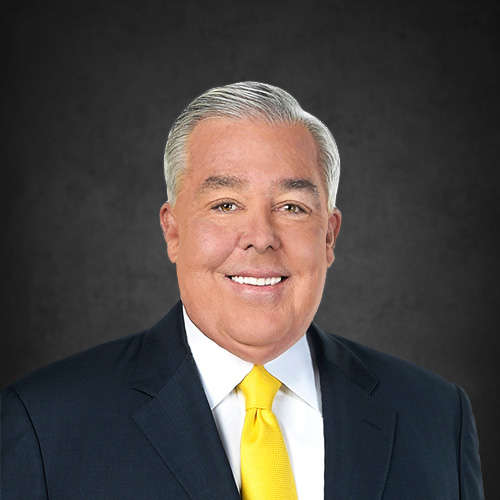
Illustration1: John Morgan, the legend behind it all.
John was one of five siblings in a working-class family that often struggled to make ends meet. His father, a meat cutter with a troubled relationship with alcohol, would sometimes disappear into his vices, leaving his wife, John’s mother, to keep the family afloat. She was the real-life Wonder Woman. No cape. No superpowers. Just grit and an unbreakable sense of duty.
Even as a child, John knew life wasn’t fair. Other kids had allowances. He had chores. While others played video games, he was mowing lawns, washing dishes and hustling in every way he could.
And yet, even amid poverty, there was something special about young John. He was observant, sharp and most importantly, he had a dream. He wasn’t sure what it was yet, but he knew it didn’t involve staying poor.
Illustration 2: Kentucky, the humble start of John Morgan
College Dreams and Detours
John was determined to break the cycle. He knew education was the key, the great equalizer. He managed to claw his way into the University of Florida, a major leap for a kid from the working-class South. But college wasn’t a picnic. It was a battlefield.
To afford tuition, John worked a series of odd jobs, from dishwashing to nighttime security. He studied by the dim glow of streetlamps. He skipped meals. He bought used textbooks with notes scribbled all over them. But he never complained. Not once. Because he was building his future, one late-night cram session at a time.
After undergrad, John set his sights on law school. He got into the University of Florida Levin College of Law, where he was surrounded by peers from elite families, meaning kids who rolled up in BMWs while he was still patching holes in his shoes. But he didn’t care. He wasn’t there to impress, he was there to dominate.
He graduated in 1983, not just with a degree, but with a vision. He didn’t want to work for the rich. He wanted to fight for the people who had no voice, people like his mom, like his friends back in Kentucky, like himself.

Illustration 3: Morgan didn’t let the fact that he wasn’t rich or his social status bring him down.
The Birth of a Giant: Morgan & Morgan
In 1988, John Morgan did something insane, he left the comfort of an established firm and started his own with barely a handful of clients and next to no money.
He and his wife Ultima, a fellow lawyer, worked from a tiny office in Orlando, scraping together clients and praying they could make rent. There was no glitz, no glam, no waiting list of millionaire clients. It was just John, Ultima, a desk, a phone and a dream. But John had something most lawyers didn’t, the courage to advertise.
Back then, legal advertising was frowned upon. It was seen as “low-brow” even tacky. But John saw the future. He started running commercials, putting up billboards and buying ad spots on radio and TV. It was revolutionary. His face became instantly recognizable. His firm’s phone began to ring off the hook. And slowly but surely, Morgan & Morgan became a name people trusted.
Traditional firms sneered. Some even mocked him openly. But guess what? It worked. The phone lines lit up. Working-class Americans, immigrants, single mothers, veterans and everyday folks finally saw a lawyer who seemed to get them, a lawyer who didn’t look down on them, but stood beside them.
John knew that justice shouldn’t be reserved for the rich. He created a firm that operated on contingency meaning clients paid nothing unless the firm won. This flipped the power dynamic of law on its head. Suddenly, people who could never afford an attorney were getting high-powered representation. And they were winning.

Illustration 4: John Morgan’s formula of success lies in his use of advertisement.
Word spread. Morgan & Morgan began adding attorneys. Then offices. Then entire teams dedicated to intake, investigations, case management and trial. The small Orlando firm morphed into a regional force, then a national powerhouse.
But the firm wasn’t just growing, it was innovating. John implemented cutting-edge call centers and custom legal software to manage thousands of cases simultaneously. He invested in digital ads and SEO when other firms were barely online. He brought in experts in analytics, data and marketing to scale the business like a Silicon Valley startup.
By the 2000s, Morgan & Morgan had become a juggernaut. John kept his foot on the gas, opening offices in nearly every major city. The firm handled cases involving everything from medical malpractice and product liability to class actions and even civil rights.
Today, Morgan & Morgan has over 800 attorneys and 3,000 staff members. It serves clients in all 50 states and handles more than half a million cases each year. It’s not just the largest injury law firm in America, it’s one of the most recognized legal brands in the world.

Illustration 5: Morgan & Morgan has now more than 800 attorneys and run ads nationwide not only in Orlando where it all started.
John Morgan didn’t just start a law firm. He built a legal empire with a mission so clear it’s tattooed on the American psyche: “For The People.”
And that empire? It all started in a tiny Orlando office, with a man who believed that no one should have to fight alone.
From the Courtroom to the Boardroom
John Morgan didn’t just want to win cases, he wanted to bend the entire legal universe to his will.
Picture this: most lawyers were grinding away on measly slip-and-fall cases, chasing billable hours like hamsters on a wheel. John? He was building an empire. While the rest of the legal world was stuck in the 1980s, he was already thinking like Jeff Bezos with a briefcase.
He turned his firm into a litigation factory, but not in a sleazy ambulance-chaser way this was industrial-strength lawyering. Car accidents? Handled. Medical malpractice? Crushed. Class-action lawsuits? Bring it on. If David had a case against Goliath, Morgan & Morgan would’ve filed it before sunrise.
He pioneered a flat-fee structure, built a literal in-house call center to handle thousands of daily inquiries, and invested in tech like he was the Mark Zuckerberg of lawsuits. Imagine Apple HQ, but instead of iPhones, they were cranking out million-dollar verdicts.
Soon, he was on the talk-show circuit, dishing out unfiltered wisdom. He wrote books that didn’t just sit on dusty law school shelves, they hit bestseller lists.
His book “You Can’t Teach Hungry” was part pep talk, part street-fight manual, and part “Morgan gospel.” The thesis was simple: hustle like hell, be unapologetically yourself and never forget who you’re fighting for.
The Man behind the money
Now, you’d think a billionaire lawyer would be a stiff in a tailored Armani suit, sipping a $500 Scotch in some mahogany-lined office. Not John.
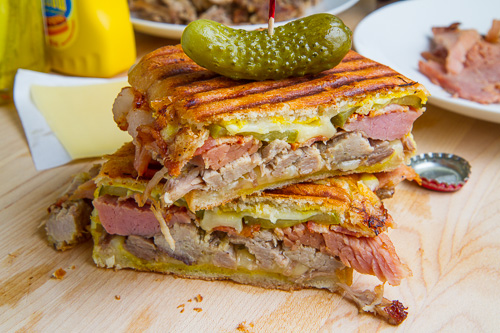
Illustration 6: Morgan was never stiff or elitist like other lawter, but he was relatable and liked the same things as an average american like a good Cuban sandwitch.
The man loves fried chicken. He loves Cuban sandwiches so much he’s practically a sandwich influencer. He puffs cigars like he’s starring in his own gangster flick, and he tweets jokes that make you wonder if your lawyer is secretly running a comedy club on the side.
He’s approachable, funny, and dare I say it dangerously relatable. And that’s why people adore him.
But peel back the jokes, and you find someone who cares deeply. Morgan has donated millions to causes like education, poverty relief, and criminal justice reform. One of his fiercest crusades? Medical marijuana.
This wasn’t about trend-chasing or headlines. This was personal. His brother, Tim, suffered from a devastating spinal cord injury, and medical marijuana was the only thing that gave him relief. John didn’t just sympathize, he fought. He poured millions into Florida’s 2016 Amendment 2 campaign and helped legalize medical marijuana statewide.
Not because it was fashionable. Not because it was profitable. But because it was right. Because family came first
The Billionaire Nobody Saw Coming
John Morgan didn’t wake up one day and say, “I want to be a billionaire.” He just kept building, winning, investing and suddenly, there it was.
Hotels? He bought them. Real estate? He stacked it like Monopoly pieces. Cannabis startups? Yep, he planted those seeds too. By the time anyone noticed, John had quietly become the billionaire nobody expected.
Sure, he’s got the toys: a mansion in Lake Mary, Florida, that looks like something out of MTV Cribs.
A fleet of cars. A private jet. A yacht. Probably a secret lair under the mansion for good measure.
But here’s the kicker: he’s still the same fried-chicken-loving, Cuban-sandwich-tweeting, people’s lawyer he always was. If you ask him about his proudest achievement, he won’t say “the billions.” He’ll say it’s his employees who love him, the thousands of clients whose lives he helped rebuild, and the fact that when people hear the name “Morgan,” they think trust.

Illustration 7: Morgan didn’t let his money change who he was.
The Media Mogul and the Meme Machine
Advertising? John Morgan doesn’t just do it, he dominates it. His law firm commercials are the stuff of legend. Funny, bold, slightly absurd and absolutely unforgettable.
And then there’s social media. Most billionaires hire a PR team to write robotic posts. John Morgan? He’s tweeting his own jokes, ranting about insurance companies, and casually dropping lines about running for president. One day he’s a lawyer. The next? A meme.
But here’s the genius: he leaned into it. He became the meme. He is the meme. He understood what most tycoons don’t: in the modern world, authenticity beats polish. Every time.
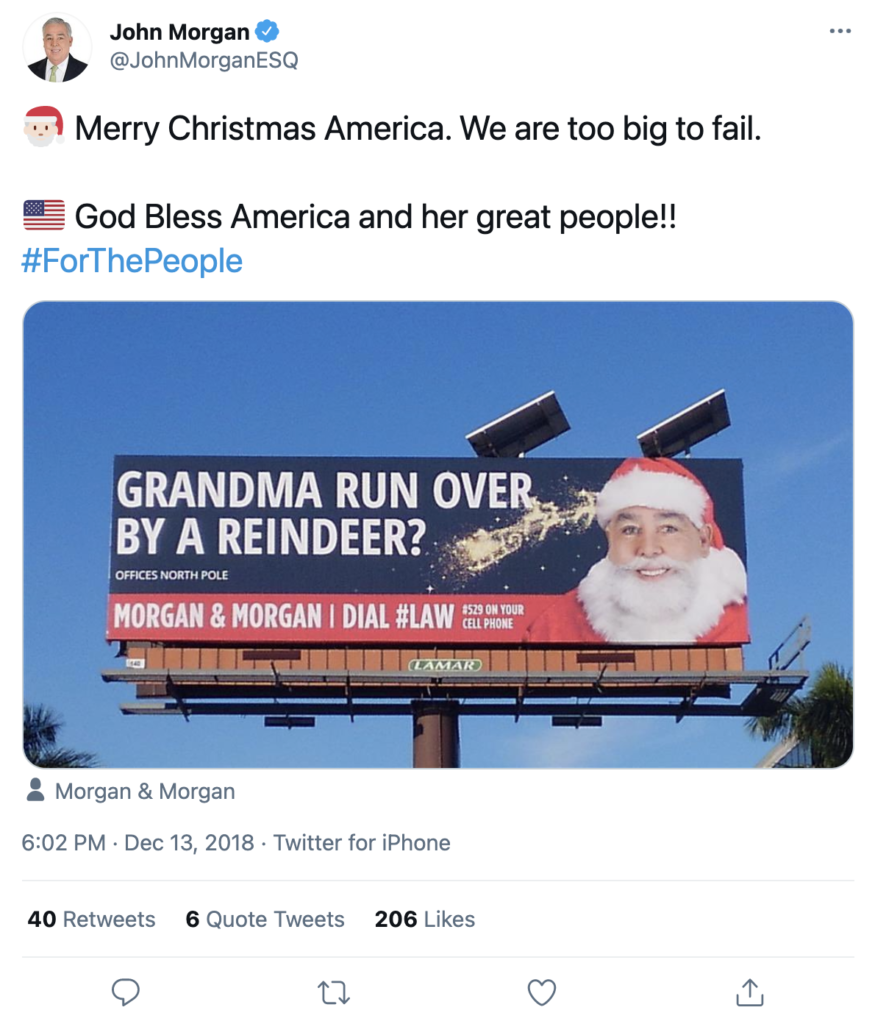
Illustration 8: John Morgan used memes, tweets and advertising heavly to his advantage.
For the People
Everything John Morgan built, everything, comes back to one mantra: For The People.
It’s not just a slogan slapped on a billboard. It’s the heartbeat of his firm. Today, Morgan & Morgan handles over 500,000 cases a year, a mind-boggling number that makes them less of a law firm and more of a justice delivery system.
He mentors young lawyers, invests in progressive causes and keeps pushing the boundaries of what a law firm can do. His sons are stepping into the game, learning the ropes, gearing up to take the Morgan legacy even further.
And John? He’s not even close to done. He might run for office. He might launch a bourbon brand called “For the Pour.” He might buy a baseball team just for the fun of it. Whatever it is, you can bet it’ll be big, bold, hilarious and very, very John Morgan.
Final Thoughts: The Legend of John Morgan
From the dirt roads of Kentucky to billion-dollar boardrooms, John Morgan’s story is the ultimate “American dream with a punchline.”
He didn’t just beat the odds, he rewrote them. He showed us that grit, guts and a sense of humor can take you from nothing to an empire.
He started with nothing. He gave everything. And he built a kingdom, for the people.
And if you don’t believe me, just wait because the next chapter of John Morgan’s story is probably going to be wilder than the last.
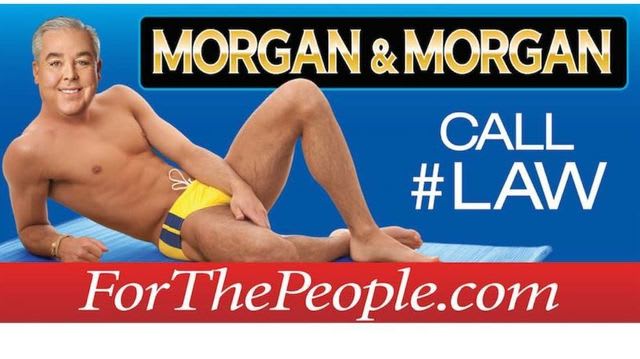
Illustration 9: John Morgan knew the power of humor and advertising.
Leave a Reply