Nvidia Stock Analysis (January, 2025)

  1. Introduction to NVIDA as Company

NVIDIA Corporation, founded in 1993 by Jensen Huang, Chris Malachowsky, and Curtis Priem, has transformed the tech landscape with its relentless innovation. Headquartered in Santa Clara, California, the company is renowned for pioneering graphics processing units (GPUs) that power everything from video gaming to artificial intelligence (AI) and data centers.The efficiency of accelerated computing.

As of 2025, NVIDIA holds a commanding position in the semiconductor industry. The company’s stock (NVDA) has seen significant growth, driven by demand for GPUs in AI and gaming. Despite facing competition from AMD, Intel, and emerging players, NVIDIA has maintained its edge through innovation and strategic acquisition

Challenges persist, including supply chain disruptions and regulatory scrutiny, especially after the failed acquisition of ARM due to antitrust concerns. Nevertheless, NVIDIA continues to diversify its portfolio, ensuring long-term resilience.

A Legacy in Gaming

The company’s journey began with a groundbreaking achievement in gaming technology, introducing the GeForce 256 in 1999, the world’s first GPU. This innovation revolutionized gaming by delivering real-time 3D rendering and setting new standards for graphical fidelity. Over the years, NVIDIA’s GeForce GPUs have remained dominant in the gaming industry, constantly pushing the boundaries of performance and visual quality.

Technologies like ray tracing and DLSS (Deep Learning Super Sampling) have further enhanced gaming experiences, offering realistic lighting and shadows while optimizing performance.

NVIDIA has also contributed significantly to gaming hardware through innovations like G-SYNC, which ensures smooth gameplay by eliminating screen tearing. Additionally, the company has embraced the future of gaming with GeForce NOW, a cloud-based platform that enables high-end gaming experiences on a variety of devices.

Illustration 1: The Logo of NVIDIA, an eye symbolizing constant innovation.

The AI Revolution

While NVIDIA’s roots lie in gaming, its impact on artificial intelligence has been transformative. GPUs, initially designed for rendering images, have proven to be highly efficient for parallel processing tasks required in AI and machine learning. NVIDIA’s CUDA (Compute Unified Device Architecture) platform opened the door for researchers and developers to harness GPU power for tasks like neural network training.

The launch of the NVIDIA DGX systems and A100 Tensor Core GPUs has positioned the company as a leader in AI infrastructure. These technologies are integral to advancements in autonomous vehicles, robotics, natural language processing, and more. NVIDIA’s AI-driven technologies are used by companies across industries, from healthcare to finance, enabling breakthroughs in fields like drug discovery and fraud detection.


Data Centers and the Cloud

NVIDIA has expanded its reach beyond gaming and AI into data centers and cloud computing. The acquisition of Mellanox in 2020 strengthened NVIDIA’s position in networking and high-performance computing. NVIDIA’s GPUs are now at the heart of data centers worldwide, accelerating workloads for cloud providers, enterprises, and research institutions.

The company’s software platforms, including NVIDIA Omniverse and NVIDIA AI Enterprise, enable collaboration and innovation across industries. Omniverse, a 3D simulation and collaboration platform, is particularly promising in fields like virtual production, architecture, and design.

Automotive Innovation

NVIDIA is also a key player in the race toward autonomous vehicles. Its DRIVE platform offers end-to-end solutions for self-driving cars, providing everything from AI computing hardware to simulation tools. Partnerships with major automakers and startups demonstrate NVIDIA’s commitment to reshaping transportation with safer and more efficient systems.

Supercomputing

Nvidia is at the forefront of supercomputing. Its DGX systems combine the power of multiple high-performance GPUs to create supercomputers that drive some of the world’s most significant scientific discoveries. These systems are used in diverse areas like climate modeling, genomics, and physics simulations.

In addition, Nvidia’s acquisition of Mellanox Technologies in 2020 expanded its portfolio into high-speed networking, further enhancing its capabilities in supercomputing and AI. By providing end-to-end infrastructure solutions, Nvidia has positioned itself as a key player in the future of high-performance computing.

Illustration 2: A NVIDIA GPU (Graohic Processing Unit), one of the products NVIDIA is famous for.

2. Stock Analysis

In this section we will analyze NVIDIA stock to see if it is a good stock to buy or not. Our philosophy is value investing meaning that we try to find good quality companies that are undervalued. However, we will give a holistic overview so all kind of investors with different philosophies can judge the stock for themselves.

Revenue and Profits

To determine a company’s worth and if it is worth investing in, the company’s revenue and profits are a natural starting point to analyze. It should never bee forgotten that a stock represents a company just like the small companies in your home town. If the local barber asked if you wanted to by her hairsalone, your first question would naturally be how much does this barber shop make in profits and what is its debt. Furthermore, you want to research how it’s result have been over the years to make sure that the recent profits are not part of a downwards trend or just outliers.


Illustration 3 and 4: The revenue graph of NVIDIA from 2009 to 2024.

As illustrated in the graph above, NVIDIA’s gross revenue has shown a clear upward trend. With an earnings growth rate of 24.5%, the company is experiencing rapid expansion. While past performance does not guarantee future growth, most analysts anticipate continued revenue increases, particularly given NVIDIA’s involvement in high-growth sectors such as data centers, AI, and gaming. The revenue of NVIDIA is a clear positive sign and indicates that this is a company to be invested in since it’s revenue has continuely grown for the past years and there are no indications that this will slow down.

Illustration 5 and 6: The Net Income of NVIDIA from 2009 to 2024

Net income is a crucial metric to evaluate when determining whether a company is a worthwhile investment. It represents a company’s net profit or loss after accounting for all revenues, income items, and expenses, calculated as Net Income = Revenue – Expenses.

As illustrated in Figures 5 and 6, NVIDIA’s net income has shown a consistent upward trend, demonstrating steady growth. The company has been profitable since 2011 and has continuously increased its earnings, despite a few outliers in 2020 and 2023. Overall, NVIDIA’s net profit from 2009 to 2024 presents a strong case for potential investors, as it reflects a company that is both profitable and has exhibited sustained net income growth over the past 15 years.

Revenue Breakdown

Illustration 7: NVIDIA Revemue breakdown, gathered from and made by App Economy Insights at appeconomyinsights.com

As illustrated in illustration 7, NVIDIA has many different sources of revenue including from Data Centers, Gaming industry, professional visualization, automotive and OEM. However, the two largest revenue streams comes from Data Centers and gaming, especially data centers account alone for 47,5 % while gaming account for 10,4 %.

nderstanding this revenue distribution allows investors to assess NVIDIA’s resilience, growth potential, and exposure to key industries. With AI and cloud computing experiencing rapid expansion, NVIDIA’s strong presence in data centers positions it well for sustained long-term growth.

Dividend

For potential investors, it is important to note that NVIDIA’s dividend policy reflects a company that returns very little cash to shareholders. While this might typically be seen as a negative indicator for many companies, it does not necessarily signal a drawback in NVIDIA’s case.

Fast-growing companies often choose not to pay significant dividends, instead reinvesting their profits into expansion and innovation. NVIDIA follows this strategy, demonstrating confidence in its long-term growth potential. Rather than distributing earnings to shareholders, the company prioritizes strengthening its leadership in high-growth industries such as AI, gaming, and data centers.

This reinvestment strategy suggests that NVIDIA is committed to accelerating its competitive edge and maintaining its market dominance. The combination of minimal dividends and strong stock price appreciation makes NVIDIA particularly appealing to growth-oriented investors who prioritize long-term capital gains over immediate income. While income-focused investors may look elsewhere, those seeking exposure to a rapidly expanding technology leader may find NVIDIA an attractive addition to their portfolios.

Assets & Liabilities

Illustration 8 and 9: The total assets and liabilities of NVIDIA.

When evaluating a company as a potential investment, understanding its assets and liabilities is crucial. If a local barber offered to sell their shop, one of the first questions you would ask—after determining revenue and profit—would be about the business’s debt and the value of its assets. The same principle applies when assessing publicly traded companies like NVIDIA.

As shown in Illustrations 8 and 9, NVIDIA’s total assets have demonstrated a consistent upward trend, increasing from $3,351 million in 2009 to $65,728 million in 2024. A significant portion of these assets consists of cash on hand, which includes cash deposits at financial institutions and highly liquid short-term investments maturing within a year. This strong liquidity position means that NVIDIA is well-equipped to handle economic downturns or unforeseen crises, ensuring financial stability and the ability to seize new investment opportunities when needed.

As NVIDIA has grown, its total liabilities have also increased, which is a natural occurrence for expanding companies. However, a particularly notable feature in NVIDIA’s financials is the decline in long-term debt from 2022 to 2024. This reflects the company’s strong financial position, as it has been able to reduce its long-term obligations while continuing to grow.

The most important indicator when assessing a company’s financial health is Total Shareholder Equity, which is calculated as: Total Shareholder Equity=Total Assets−Total Liabilities.

This metric represents the company’s net worth, and if it is increasing, it signals that the company is becoming more valuable over time. As seen in Illustration 9, NVIDIA’s shareholder equity has grown from $2,395 million in 2009 to $42,978 million in 2024, a strong indication of financial strength and sustained growth.

Over the past 15 years, NVIDIA has built a solid financial foundation with steadily increasing assets, declining long-term debt, and strong shareholder equity growth. The company’s significant cash reserves further reinforce its ability to navigate potential economic challenges. With assets far exceeding liabilities, NVIDIA is in an exceptionally strong financial position, making it an attractive investment for those seeking stability and long-term growth.

Illustration 10: Earning per Share of NVIDIA from 2009 to 2024

Other key financial metrics also highlight NVIDIA’s strong financial health and positive development. One of the most important indicators of a company’s profitability is Earnings Per Share (EPS), which measures how much profit is allocated to each outstanding share of common stock. Investors and analysts use EPS to gauge a company’s financial performance and growth potential.

As illustrated in Figure 10, NVIDIA’s EPS has shown a clear upward trend from 2009 to 2015 and has remained consistently positive since 2011. This sustained growth in EPS signals that NVIDIA is generating increasing profits per share, reinforcing its strong financial position and solid profitability.

For investors, a rising EPS is generally considered a green flag, as it indicates that the company is successfully growing earnings while maintaining financial stability. NVIDIA’s positive EPS trajectory supports the case for its long-term growth potential, making it an attractive prospect for investors looking for profitable and well-managed companies.

Illustration 11 and 12 : Debt to equity ratio of NVIDIA from 2009 to 2024

The Debt-to-Equity (D/E) ratio is a key financial metric used to assess a company’s financial leverage and risk. It measures how much debt a company uses to finance its operations relative to shareholder equity. A high D/E ratio (greater than 1.0) suggests that the company relies heavily on debt financing, which can amplify financial risk, particularly during economic downturns when debt obligations may become more difficult to manage. In contrast, a low D/E ratio (below 1.0) indicates that the company is primarily financed through equity rather than debt, reducing financial risk but potentially limiting rapid expansion. A negative D/E ratio, on the other hand, signals that a company has more liabilities than equity—often considered a warning sign for investors.

Legendary value investors like Warren Buffett favor companies with a D/E ratio below 0.5, meaning they have at least twice as much equity as debt. Buffett avoids companies with excessive debt since high interest payments can erode profits, particularly in periods of economic instability. Additionally, he prioritizes businesses that maintain a stable or declining D/E ratio over time rather than those that take on large amounts of debt unexpectedly.

As illustrated in Figures 11 and 12, NVIDIA’s D/E ratio has remained consistently low and has now fallen below 0.5—a remarkable achievement for a high-growth company. Typically, growth-oriented firms rely on significant debt to finance rapid expansion, but NVIDIA has managed to grow without overleveraging itself. Furthermore, the company has never recorded a negative D/E ratio, reinforcing its financial stability and making it an attractive option for risk-conscious investors.

Price to earnings ratio

Illustration 12 and 13: The P/E ratio of NVIDIA

For value investors, the most important metric when evaluating a stock is the price-to-earnings (P/E) ratio, which helps determine whether a company is undervalued or overvalued. Even if a company has outstanding financials, buying its stock at an excessively high price can lead to poor returns. To illustrate this, imagine a local barber shop that generates solid profits. If the owner offers to sell you the business for $1, it would be an incredible deal. However, if he tries to sell it for $1 billion, no matter how successful the shop is, the price would be absurdly overvalued. The stock market operates in a similar way—companies can be cheaply priced on some days and highly expensive on others.

Currently, NVIDIA has a P/E ratio of 52.24, which is considered very high. To put this into perspective, legendary value investor Warren Buffett typically considers stocks with a P/E ratio of 15 or lower to be “bargains.” A high P/E ratio suggests that investors are paying a premium for the company’s earnings, potentially expecting significant growth. However, it also means that the stock is far more expensive compared to its earnings, which can be a red flag for value investors. The elevated P/E ratio of 52.24 indicates that NVIDIA is trading at a premium and may be overpriced based on traditional valuation metrics. This could pose a risk for investors, as the stock might struggle to sustain such high expectations. If NVIDIA fails to deliver on its projected growth, the stock price could face significant downward pressure.

While NVIDIA is a strong and innovative company, value investors may hesitate to buy at these valuation levels. Buying stocks at the right price is just as important as picking the right companies. At a P/E ratio this high, NVIDIA may not fit within a classic value investor’s strategy and could be considered overvalued in the current market.

Insider Trading

A crucial metric to consider when evaluating whether a company is worth investing in is insider trading activity—specifically, whether company insiders have been buying or selling shares over the past year. It’s particularly important to assess who has been trading, as directors should be monitored even more closely than officers.

As shown below, there has been significant insider selling, which is a major red flag. Notably, this selling includes transactions from directors and even the CEO, raising serious concerns. Such activity could indicate that insiders anticipate weaker financial performance, expect the stock price to decline, or believe the stock is overvalued—a concern that aligns with the valuation analysis above.

If those inside the company lack confidence in its future, why should outside investors? See Illustration 14 below for a detailed record of the latest insider transactions.

InsiderTransactionTypeValueDate
PURI AJAY KOfficerSale at price 150.40 – 152.50 per share.Indirect5,544,783Jan 7, 2025
STEVENS MARK ADirectorStock Gift at price 0.00 per share.Indirect0Dec 18, 2024
COXE TENCH CDirectorStock Gift at price 0.00 per share.Indirect0Dec 17, 2024
COXE TENCH CDirectorSale at price 131.03 – 132.64 per share.Indirect131,263,863Dec 16, 2024
ROBERTSON DONALD F JROfficerSale at price 133.34 – 138.78 per share.Direct608,775Dec 13, 2024
KRESS COLETTE M.Chief Financial OfficerSale at price 133.24 – 138.88 per share.Direct9,027,318Dec 13, 2024
OCHOA ELLENDirectorStock Award(Grant) at price 0.00 per share.Direct0Dec 9, 2024
DABIRI JOHN ODirectorSale at price 142.00 per share.Direct101,672Nov 25, 2024
STEVENS MARK ADirectorSale at price 132.27 per share.Indirect20,502,578Oct 9, 2024
TETER TIMOTHY SGeneral CounselStock Gift at price 0.00 per share.Direct0Oct 3, 2024
STEVENS MARK ADirectorSale at price 122.61 per share.Indirect15,325,950Oct 3, 2024
STEVENS MARK ADirectorSale at price 121.01 per share.Indirect4,840,356Sep 27, 2024
STEVENS MARK ADirectorSale at price 121.27 per share.Indirect20,021,429Sep 24, 2024
HUANG JEN-HSUNChief Executive OfficerStock Gift at price 0.00 per share.Indirect0Sep 20, 2024
COXE TENCH CDirectorSale at price 116.27 – 119.27 per share.Indirect235,741,095Sep 20, 2024
ROBERTSON DONALD F JROfficerSale at price 116.18 – 118.15 per share.Direct524,293Sep 20, 2024
KRESS COLETTE M.Chief Financial OfficerSale at price 116.19 – 118.05 per share.Direct7,772,851Sep 20, 2024
HUANG JEN-HSUNChief Executive OfficerSale at price 115.82 – 120.29 per share.Direct28,551,919Sep 13, 2024
HUANG JEN-HSUNChief Executive OfficerSale at price 104.99 – 117.07 per share.Direct26,252,485Sep 11, 2024
HUANG JEN-HSUNChief Executive OfficerSale at price 100.99 – 108.00 per share.Direct25,044,854Sep 9, 2024
HUANG JEN-HSUNChief Executive OfficerSale at price 104.62 – 109.30 per share.Direct25,805,490Sep 5, 2024
HUANG JEN-HSUNChief Executive OfficerSale at price 107.81 – 121.29 per share.Direct27,574,820Sep 3, 2024
HUANG JEN-HSUNChief Executive OfficerSale at price 97.80 – 106.29 per share.Direct24,915,914Aug 9, 2024
HUANG JEN-HSUNChief Executive OfficerSale at price 98.84 – 108.19 per share.Direct25,069,567Aug 7, 2024
HUANG JEN-HSUNChief Executive OfficerSale at price 91.72 – 108.23 per share.Direct24,609,476Aug 5, 2024
HUANG JEN-HSUNChief Executive OfficerSale at price 106.94 – 120.05 per share.Direct27,426,748Aug 1, 2024
HUANG JEN-HSUNChief Executive OfficerSale at price 102.85 – 116.11 per share.Direct26,383,025Jul 30, 2024
HUANG JEN-HSUNChief Executive OfficerSale at price 106.79 – 116.22 per share.Direct27,216,126Jul 26, 2024
HUANG JEN-HSUNChief Executive OfficerSale at price 113.85 – 124.20 per share.Direct28,869,762Jul 24, 2024
HUANG JEN-HSUNChief Executive OfficerSale at price 117.86 – 124.02 per share.Direct28,954,933Jul 22, 2024
HUANG JEN-HSUNChief Executive OfficerSale at price 116.83 – 122.12 per share.Direct28,679,816Jul 18, 2024
HUANG JEN-HSUNChief Executive OfficerSale at price 124.84 – 131.17 per share.Direct30,638,085Jul 16, 2024
HUANG JEN-HSUNChief Executive OfficerSale at price 127.70 – 136.00 per share.Direct31,266,275Jul 12, 2024
PURI AJAY KOfficerSale at price 127.76 – 131.40 per share.Indirect13,023,949Jul 12, 2024
STEVENS MARK ADirectorSale at price 129.81 per share.Indirect20,254,063Jul 12, 2024
HUANG JEN-HSUNChief Executive OfficerSale at price 128.88 – 135.07 per share.Direct31,864,601Jul 10, 2024
STEVENS MARK ADirectorSale at price 130.65 – 134.16 per share.Indirect103,998,016Jul 10, 2024
HUANG JEN-HSUNChief Executive OfficerSale at price 125.91 – 130.33 per share.Direct30,688,598Jul 8, 2024
HUANG JEN-HSUNChief Executive OfficerSale at price 121.67 – 128.08 per share.Direct29,581,600Jul 3, 2024
TETER TIMOTHY SGeneral CounselStock Gift at price 0.00 per share.Direct0Jul 1, 2024
HUANG JEN-HSUNChief Executive OfficerSale at price 118.94 – 127.19 per share.Direct29,738,301Jul 1, 2024
DRELL PERSIS SDirectorStock Award(Grant) at price 0.00 per share.Direct0Jun 27, 2024
SHAH AARTI SDirectorStock Award(Grant) at price 0.00 per share.Direct0Jun 27, 2024
NEAL STEPHEN C.DirectorStock Award(Grant) at price 0.00 per share.Direct0Jun 27, 2024
DABIRI JOHN ODirectorStock Award(Grant) at price 0.00 per share.Direct0Jun 27, 2024
JONES HARVEY C JR.DirectorStock Award(Grant) at price 0.00 per share.Direct0Jun 27, 2024
STEVENS MARK ADirectorStock Award(Grant) at price 0.00 per share.Direct0Jun 27, 2024
BURGESS ROBERT KENNETHDirectorStock Award(Grant) at price 0.00 per share.Direct0Jun 27, 2024
HUDSON BEACH DAWN EDirectorStock Award(Grant) at price 0.00 per share.Direct0Jun 27, 2024
LORA MELISSADirectorStock Award(Grant) at price 0.00 per share.Direct0Jun 27, 2024

Illustration 14: Full list of all newest insider trades by NVIDIA officials.

Other Company Info

As illustrated below, NVIDIA currently have 29,6 thousands employees which showcases the company’s huge growth as it only had 8,8 thousands employees in 2014. The company itself was founded in 1993, it has the ticker NVDA and is listed on the NasdaqGS exchange. Its industry is officially semiconductors and it has 24.49 billion shares outstanding.

NVIDIA’s headquarters are at 2788 San Tomas Expressway, Santa Clara, California, 95051, United States of America as can be seen below-

Illustration 15-17: Number of employees at NVIDIA and its location.

Final Verdict

In conclusion, NVIDIA is a solid company with impressive growth potential, operating in high-demand sectors such as data centers, AI, and automation, all of which are poised for substantial expansion in the coming years. The company has consistently demonstrated its ability to grow, backed by a strong historical earnings record. Its financials are robust, with ample assets and cash reserves, and its shareholder equity remains positively strong. Additionally, its EPS is healthy, reflecting solid profitability.

That said, for value investors, I would caution against purchasing NVIDIA stock at this time. The stock appears overvalued based on current market conditions. Moreover, there is a significant amount of insider selling, which raises concerns. This selling could indicate that insiders believe the stock is overpriced and are capitalizing on the opportunity, or it could suggest underlying factors that are not yet publicly known but might signal potential risks ahead.


How to Find Reliable Manufacturers for Your Business

Starting a business is a very exciting adventure. However, it comes with its share of challenges, particularly in the early stages. ne of the most crucial aspects of building and sustaining a successful business is maintaining a consistent supply of high-quality goods or services. Reliable supply chains are the lifeblood of any business and play a vital role in avoiding financial pitfalls and bankruptcy. For new entrepreneurs, identifying the right suppliers can feel overwhelming. This article is meant to serve as a step-by-step guide to help you discover, evaluate, and build strong partnerships with dependable suppliers and manufacturers.

Image 1: A manufacturer producing microchips, highlighting the complexities of manufacturing products.

Once an entrepreneur has decided on a product to sell—such as for example watches—they must determine how to source that product. One option is to produce it themselves. However, as products become increasingly complex, and since most people lack the expertise or resources to manufacture everything on their own, entrepreneurs often need to find a cost-effective source for their goods. This is where manufacturers play a crucial role.

A manufacturer is a company that converts raw materials into finished products. These products are then sold to consumers, wholesalers, distributors, retailers, or even other manufacturers to create more complex items. Many manufacturers focus on a specific type of product to improve efficiency and reduce costs. For example, you might collaborate with:

  • A toy manufacturer for creating toys;
  • A electronics manufacturer for creating cameras;
  • A food manufacturer for making cookies;
  • etc.

    Working with multiple suppliers and manufacturers

    A key piece of advice for businesses is not to limit yourself to working with just one manufacturer. Partnering with multiple manufacturers can help you diversify your inventory, create a unique product mix, and establish a safety net in case of delays or contract issues. This strategy, known as supplier diversity, is an effective way to mitigate supply chain risks.

    A smart approach is to secure two manufacturers: one domestic and one international. The domestic manufacturer can act as a backup, ensuring stock availability and customer satisfaction if issues arise with international orders, such as delays or errors. While domestic suppliers may be more expensive, they offer reliability and quick response times, which can be invaluable during disruptions in your foreign supply chain.

    Image 2: A manufacturer specialized in creating watches.

    How to find a manufacturer

    Now, you’re probably wondering how to find the right manufacturer. Ideally, you want a partner who can deliver high-quality products at a low cost, with minimal shipping times, and with whom you can establish a strong business relationship. Poor-quality or overpriced products can jeopardize your business, potentially leading to financial failure. Similarly, strained relationships with manufacturers can cause significant headaches and, in the worst cases, legal disputes.

    This article will now guide you step by step through the entire process of finding the perfect manufacturer for your business needs.


    Step 1- Identify all potential suppliers

    The first step is to identify and map out all potential manufacturers. To make an informed decision about which manufacturer to choose, you must first research and determine which manufacturers are available and suitable for your needs. Here are the most essential tools to assist you in your search:

    Google: Begin with a straightforward Google search for “manufacturers near me” to identify local options. Examine their websites, customer feedback, and areas of expertise to evaluate their fit for your requirements. You can also search for manufacturers in google maps to see which ones are closest to you.

    Image 3: Google maps can be a business owner’s most essential tool.

    Helpful tip: Supplier websites are often outdated or lacking in detailed information. Use a variety of search terms, such as ‘wholesale,’ ‘supplier,’ and ‘distributor,’ to expand your search. Additionally, take advantage of Google’s advanced search features to refine and improve your results.

    Referrals: One of the most important ways to find potential suppliers is through your network. Don’t hesitate to:

    • Seek supplier recommendations from your professional network;
    • Connect with successful entrepreneurs in your industry for guidance, and
    • Participate in Facebook groups and online e-commerce communities to gather reviews and suggestions.

    Suppliers who aren’t a perfect fit may still guide you to the right connections. Industry experts often have access to a network of trusted contacts, so be sure to ask for recommendations when reaching out.

    NAICS codes: The North American Industry Classification System (NAICS) assigns specific codes to manufacturers and products, making it easier to find suppliers, particularly in professional directories. Refer to the NAICS codes for the United States and Canada to simplify your search.

    Once you’ve shortlisted your options, it’s crucial to conduct a thorough background check on potential manufacturers. Review the Better Business Bureau (BBB) for any complaints and explore customer feedback to confirm their reputation and reliability

    Alibaba: Alibaba is a well-known platform that connects you with manufacturers, mainly from China. You can use it to discover existing products or find manufacturers for custom creations. Alibaba is the place most businesses find their manufacturer. You can search for your product there and find potential suppliers. You can filter potential manufacturer by country, price, etc.

    Image 4: Alibaba is a great way to connect with suppliers.

    When researching manufacturers on Alibaba, look for these qualifications:

    • Gold supplier status (they pay for Alibaba membership)
    • Verified status (a third-party evaluation services company or Alibaba has visited their facility)

    Trade shows bring businesses together to showcase their latest products and services, often taking place over several days in convention centers across major cities. In addition to large-scale events, there are also smaller, regional trade shows that highlight local businesses. These events offer valuable opportunities to experience products in person, connect with business owners, and discover fresh ideas and trends that could inspire new product developments


    Trade assurance (free service protecting your orders from payment to delivery) 

    When looking for manufacturers, consider using filters to identify those with certifications like SA8000, which ensures humane working conditions, if this aligns with your business values. It’s essential to confirm you’re engaging directly with manufacturers, not intermediaries or trading companies, as this can lead to higher costs. Opting for a manufacturer with a track record of at least five years can also help mitigate the risk of financial instability and ensure a more reliable partnership.

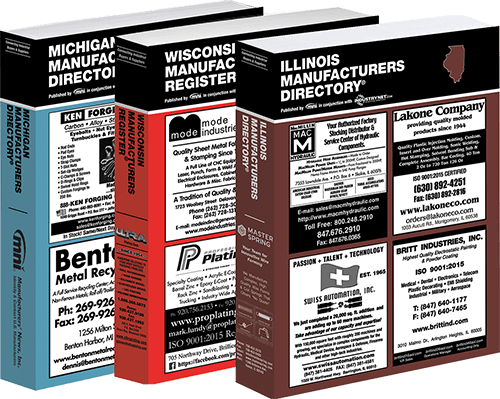
    Figure 5: Searching manufacturing directories can be a good way to find manufacturers.

    Manufacturing directories: Online supplier directories are another valuable resource. These catalogs offer the profiles of thousands of manufacturers, wholesalers, and suppliers. Here are some popular options:

    Online domestic (USA) directories:

    Online overseas directories:

    Overseas manufacturing, particularly in countries like India, China, and Vietnam, often offers lower costs. According to U.S. News & World Report, these three countries ranked as having the cheapest overseas manufacturing costs. However, consider factors beyond just price when making your decision.

    Step 2 – Research your potential manufacturers

    Once you’ve identified potential manufacturers, it’s time to request quotes. Aim for at least three quotes to effectively compare your options. For local manufacturers, consider scheduling a tour of their facilities or visiting their office to observe their operations firsthand. This will give you insight into product quality and overall processes. Additionally, explore other manufacturers in the same country that may not be listed online.

    Figure 6: It is a pro-tip to travel to to and visit the manufacturer.

    Even if the manufacturer is located in another country, such as in Asia, it can still be extremely valuable to visit their operations in person. Traveling to see the facility firsthand allows you to assess product quality, understand the processes, and build relationships with the factory leadership. The leaders of several of the largest fortune 500 companies started off by visiting a factory to find the right products.

    An example of this can be Nike founder Phill Knight that started his business by traveling to Japan in his quest for finding the perfect shoe manufacturer.

    Beyond pricing, here are key questions to ask:

    1. Can they handle custom orders? Assess whether they have the skills, resources, and automation features to create your specific product.
    2. What are their lead times? Ensure they can deliver products quickly enough to keep your customers happy and your inventory stocked.
    3. What are the shipping costs? Shipping is a significant expense for small businesses.
    4. What are their minimum order quantities (MOQs)? While it’s best not to lead with this question, you’ll need to know the minimum number of items required for production. Remember, this is often negotiable!! Do not get intimidated if they have a high number of MOQs on their website.
    5. What’s the cost per unit? Negotiate this alongside MOQs. Generally, larger orders can lead to lower per-unit costs. 
    6. Can they offer exclusivity? If you’re investing in tooling, ensure they won’t allow others to use it. You might also explore territorial, market, or total exclusivity options, or even private label goods.
    7. Are there setup fees? Some manufacturers charge fees to prepare equipment for your production run. 
    8. What’s their defect policy? Clarify who covers the cost for incorrect or defective items, including shipping and duties.
    9. Is the manufacturer sustainable and ethical? Inquire about factory conditions and their impact on workers and the environment.

    Compare prices: Even if you’ve found a supplier with high-quality products and a strong reputation, it’s important to ensure their prices remain competitive. For startups with limited business experience, comparing prices from different suppliers can help you gauge the average cost of the materials you need. It’s wise to continue this practice even after selecting a supplier to ensure you consistently get the best prices for your products.


    Even if you already have a supplier, it’s still smart to regularly compare your supplier’s prices to the prices of their competitors. By doing this, you’ll ensure that you’re always paying the minimum you need to for your supplies, which is an excellent way to cut costs in a small busines

    Tips to negotiating effectively is to:

    1. Understand the reason behind the supplier’s minimum. Is it due to upfront work? Do they prefer larger buyers?
    2. Use this understanding to propose a compelling counter-offer.
    3. If a foreign manufacturer: learn about the culture and business traditions in the country before you send them a message/e-mail it will make them respond more positivly.

    Many suppliers ask new businesses to pay for full orders upfront, which is important to consider, as inventory costs can be significant for e-commerce businesses. Be sure to inquire about payment terms for future orders as well. However, many reputable manufacturers are open to negotiating these terms. One option is to propose a 50/50 payment split: 50% upfront and 50% upon receiving the shipment. This approach helps balance the risk for both parties.

    Figure 7: Communication and negotiation with the manufacturer is an unavoidable part of the process and therefore essential

    Suppliers often receive many quote requests, which can result in delayed responses or even ignored emails. If you’re uncertain about your request, consider making a quick phone call or sending a brief email with a single question to clarify before submitting a full inquiry.

    When launching your online business, you’ll probably manage communication with manufacturers yourself, using phone, email, or text. For local manufacturers, in-person meetings are also an option. Choose trading companies that are responsive and proactive in working with you. If a potential partner is slow to reply or reluctant to send samples, they might not be the right fit for your business.

    Your initial email should be clear and concise, focusing on assessing the potential fit with the supplier. Highlight key details that matter most to suppliers, such as sourcing information.

    While it’s important to inquire about pricing for various quantities, avoid bombarding them with too many questions. Keep the message focused on essential information.

    Step 3 – Customize and design your product

    After your initial discussions with potential manufacturers, it’s time to share your product design. While some manufacturers offer product development services, including prototyping and 3D modeling, these can be expensive. Consider alternative ways to communicate your ideas, such as: 

    • Sketches
    • Written instructions
    • Reference photos 

    Figure 8: Creating a customized design is essential.

    If your chosen manufacturer doesn’t offer design services, you can turn to freelancers on platforms like Fiverr or Upwork for professional design work. Consider hiring:

    • Industrial designers
    • Product designers
    • CAD (computer-aided design) specialists
    • Consider working with a local designer for prototypes and custom molds, which may be more cost-effective than using a manufacturer.

    Private label products involve manufacturers creating a customized version of an existing product just for your business. Depending on the manufacturer and product, you can request unique branding, materials, ingredients, and features to make your product stand out. Customers often favor private labels, and adding your logo is a powerful way to build your brand identity.

    Step 4 – Request samples from suppliers and assess their quality.

    A business’s reputation depends on the quality of its products. Poor-quality goods from suppliers can harm your reputation when sold. To avoid this, always request a sample before making a large purchase and moving into full production. Once satisfied, date and sign the sample, and keep one or two as control references.

    Control samples act as a quality assurance tool to ensure product consistency. For instance, if a shipment arrives with incorrect colors, you can use the control sample to highlight the discrepancy

    A sample is typically a single unit of the desired product, allowing you to test its quality. While some suppliers offer free samples, others may require payment.

    If a supplier refuses to provide samples, even for a fee, consider working with them on a trial basis. However, proceed with caution and keep a few key considerations in mind.

    Start small when testing a new supplier. Instead of filling your entire inventory, purchase a limited quantity—such as a week’s worth of materials rather than a month’s supply. This way, if the supplier doesn’t meet your expectations, you won’t be left with a large stock of low-quality products.

    Only consider using a supplier on a trial basis if they appear trustworthy and reliable in other aspects. If their prices are competitive and they have a strong reputation, it’s likely safe to proceed without a sample. However, if you can’t obtain samples and have little information about the supplier, testing them could lead to more issues than benefits..

    Step 5 – Place your order

    Even after receiving samples, there’s still room to negotiate terms on payment or MOQ. When negotiating: Focus on building a long-term, healthy supplier relationship and consider the manufacturer’s perspective.

    Remember, the goal isn’t to exploit your manufacturing partner for the lowest price, but to create a mutually beneficial partnership.Remember, the goal isn’t to exploit your manufacturing partner for the lowest price, but to create a mutually beneficial partnership.

    Make sure to hold a high standard and be professional in your contact with the manufacturer as to not seem as an unserious business.


    When everything is done, dont forget to place your order.

    Important factors to keep in Mind

    The impact of quality on pricing

    Premium materials, like switching from cotton to cashmere in apparel production, typically come with higher costs. While these materials can enhance a product’s perceived value, they require a larger upfront investment, leading to a longer wait to recover costs through sales.

    Figure 9: Silk which is a high-quality product.

    Balancing cost savings with product durability

    Non-durable products may affect customer satisfaction but can drive repeat business. Durable products, while commanding higher prices, last longer but are more costly to source. Market research can help you understand the importance of durability to your target audience. For example budget-conscious customers may prefer a $5 umbrella that lasts one season while high-income clients may invest in premium, long-lasting items

    Identifying hidden costs in manufacturing

    The initial quote from your supplier is just a starting point. Be aware of possible extra costs, particularly when working with overseas manufacturers or wholesale suppliers, including:

    International shipping, including customs duties and tariffs, currency exchange rates, third-party quality control or inspection checks, rework and defect costs if the original sample isn’t up to standard and expenses for custom molds or machines 

    Future trends in manufacturing 

    Personalized production

    Mass customization tailors products to individual preferences at scale, unlike mass production. McKinsey research shows companies excelling in personalization generate 40% more revenue than average, a trend also seen in manufacturing.

    Manufacturers can fulfill complex customer orders using technologies like 3D printing, robotics, and data analytics. This allows for flexibility and agility in production without excessive costs. As consumer demand for personalized products grows, manufacturers who adapt will gain a competitive advantage.

    Increased use of biomanufacturing

    Biomanufacturing, also known as bioprocessing or biotechnology manufacturing, utilizes biological systems like cells or microorganisms to produce products such as pharmaceuticals, biofuels, food, and cosmetics.

    The main benefit of biomanufacturing is its sustainability. Biomanufacturing is sustainable, using renewable resources instead of fossil fuels and generating fewer emissions. It also enables the production of complex molecules and materials that traditional methods can’t synthesize.

    This manufacturing method will be especially important in fast-paced industries with fluctuating demand or evolving product needs. The biomanufacturing market is already growing, expected to reach over $85 billion, up from $18 billion in 2020.

    Figure 10: A company using biomanufacturing as an alternative way to produce products.


    Servitization

    Servitization enables manufacturers to boost revenue by offering services alongside traditional manufacturing. These can include aftermarket goods, maintenance services, training, and customer support agreements.

    By embracing servitization, manufacturers can foster stronger, more profitable customer relationships and create new recurring revenue streams. This trend is especially relevant in industries with long product life cycles, like machinery, equipment, and vehicles

    Smart Factories

    A recent Deloitte survey highlights smart factories as a key priority for manufacturers in 2024. Amid rising costs and economic uncertainty, 83% of manufacturers believe smart factory solutions will transform production in the next five years. These factories use IoT, AI, and machine learning to optimize processes, reduce downtime, and improve efficiency. As competition grows, smart factories are likely to become the industry standard.

    Figure 11: The use of AI for manufacturing is a trend that will continue.

    Social Media

    Mastering social media has become essential for businesses, as it offers a powerful tool for reaching and engaging with potential customers. Online influencers, using platforms beyond just LinkedIn and blogs, can recommend specific vendors to their audience, driving traffic and sales. This is often done through links to eCommerce websites or stores on platforms like Shopify.

    Influencers can be compensated in two main ways: they may receive upfront payment as partners of the sponsoring vendor or earn commissions as affiliates for each purchase made through their referral links. This strategy allows businesses to tap into the influencer’s network, boosting visibility and sales, especially in a digital-first world.

    The Economy of Norway

    Introduction

    Norway, known for its breathtaking fjords and robust welfare state, also boasts one of the most prosperous economies in the world. This Scandinavian nation, with a population of just over 5.4 million has managed to create a high standard of living and an economic model that is often envied globally. The economy of Norway is a highly developed mixed economy with state-ownership in strategic areas and is ranked 30th in total GDP with a top credit rating of AAA. Although sensitive to global business cycles, the economy of Norway has shown robust growth since the start of the industrial era. This article will explore the various aspects of Norway’s economy, from its historical development and key sectors to challenges and future prospects.

    Figure 1: The flag of Norway

    Historical Development of the Norwegian Economy

    • Pre Industrial History

    Norway’s economy has undergone significant transformations over the centuries. In the early stages of its history, Norway’s economy was primarily agrarian, with fishing, forestry and agriculture as the main sources of livelihood. The rugged terrain and harsh climate limited large-scale agriculture, making fishing a vital industry. Norway’s extensive coastline, abundant with marine life, allowed fishing to become a cornerstone of the economy, especially in coastal communities.

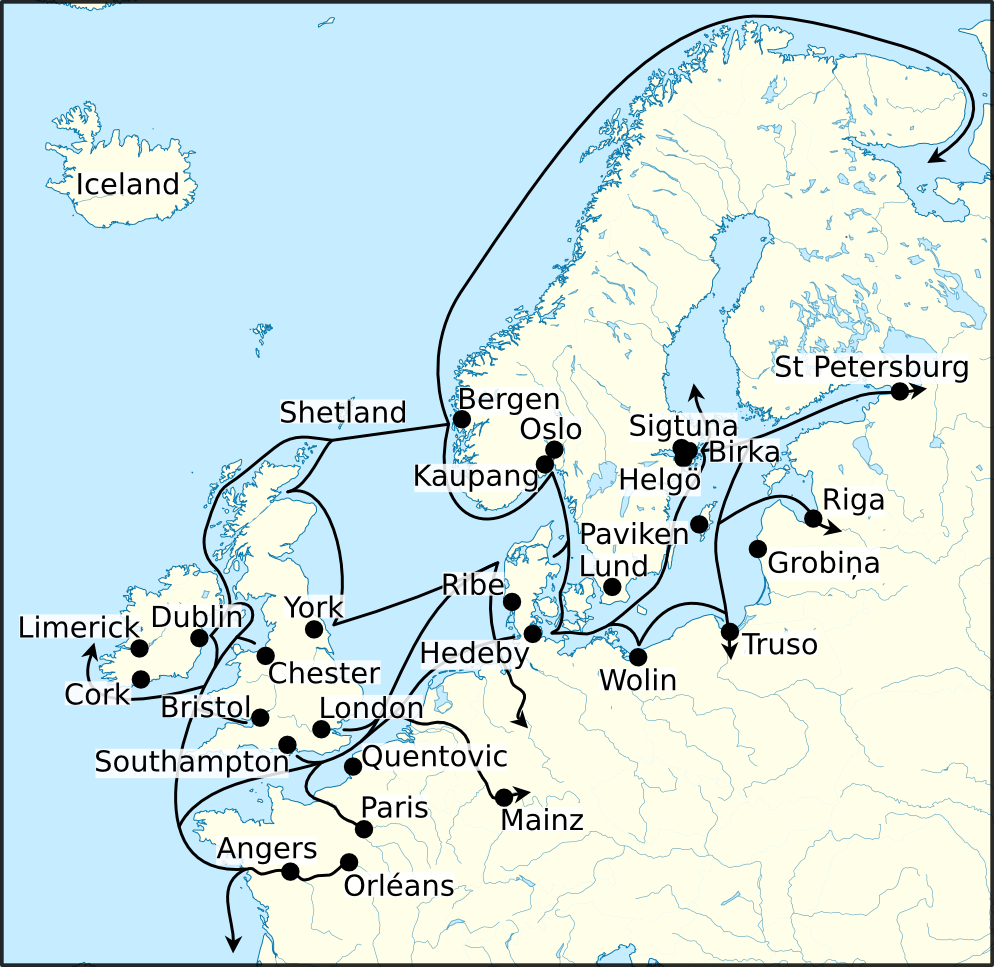
    Figure 2: Trade routes during the Viking Age

    The Viking Age, spanning from the late 8th to early 11th century, also played a role in shaping the early Norwegian economy. The Vikings were not only raiders but also traders who established trade routes across Europe. Their expeditions brought wealth to Norway, though this period did not lead to significant economic development in the modern sense. Prior to the industrial revolution, Norway’s economy was largely based on agriculture, timber, and fishing. Norwegians typically lived under conditions of considerable scarcity, though famine was rare. 

    • Industrialization and Economic diversification

    The 19th century marked a period of industrialization in Norway. The discovery of rich natural resources, such as timber, water for hydroelectric power, and minerals, provided the impetus for economic growth. The country began to develop its infrastructure, with the construction of railways, roads, and ports facilitating trade and industry.Aside from mining in Kongsberg, Røros and Løkken, industrialization came with the first textile mills that were built in Norway in the middle of the 19th century. But the first large industrial enterprises came into formation when entrepreneurs’ politics led to the founding of banks to serve those needs.

    Figure 3: Kongsberg Mine

    Industries also offered employment for a large number of individuals who were displaced from the agricultural sector. As wages from industry exceeded those from agriculture, the shift started a long-term trend of reduction in cultivated land and rural population patterns. The working class became a distinct phenomenon in Norway, with its own neighborhoods, culture, and politics.

    After World War II, the Norwegian Labour Party, with Einar Gerhardsen as prime minister, embarked on a number of social democratic reforms aimed at flattening the income distribution, eliminating poverty, ensuring social services such as retirement, medical care, and disability benefits to all, and putting more of the capital into the public trust.

    Highly progressive income taxes, the introduction of value-added tax, and a wide variety of special surcharges and taxes made Norway one of the most heavily taxed economies in the world. Authorities particularly taxed discretionary spending, levying special taxes on automobiles, tobacco, alcohol, cosmetics, etc.

    The shipping industry, in particular, became a vital part of Norway’s economy. By the early 20th century, Norway had one of the largest merchant fleets in the world. This industry was supported by Norway’s strategic location and its expertise in shipbuilding and navigation. The export of timber, fish, and later, manufactured goods, contributed significantly to the nation’s wealth.

    • Oil Boom and Economic Transformation

    The most significant turning point in Norway’s economic history came in the late 1960s with the discovery of oil and natural gas in the North Sea. The first commercial oil discovery was made at the Ekofisk field in 1969, and production began in 1971. This marked the beginning of Norway’s transformation into one of the world’s leading oil exporters.

    Figure 4: Oil field in the North Sea


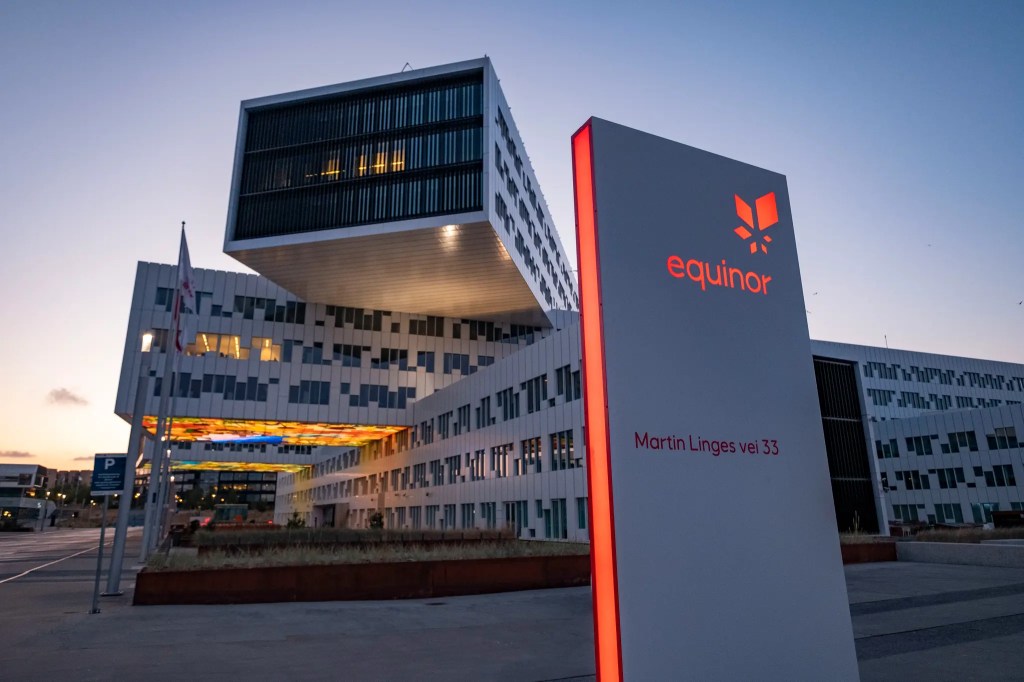
    Norway decided to stay out of OPEC keeping its own energy prices in line with world markets. The Norwegian government established its own oil company, Statoil (now known as Equinor), and awarded drilling and production rights to Norsk Hydro and the newly formed Saga Petroleum. Petroleum exports are taxed at a marginal rate of 78% (standard corporate tax of 24%, and a special petroleum tax of 54%). The North Sea turned out to present many technological challenges for production and exploration, and Norwegian companies invested in building capabilities to meet these challenges. A number of engineering and construction companies emerged from the remnants of the largely lost shipbuilding industry, creating centers of competence

    Figure 5: The partly state owned Norwegian Oil company Equinor (formerly statoil) is the largest Norwegian company and one of the largest oil companies in the world.

    The oil boom brought unprecedented wealth to Norway, allowing the country to build a robust welfare state and invest in infrastructure and education. The Norwegian government, however, was cautious in its approach to managing oil wealth. In 1990, the Government Pension Fund Global (often referred to as the Oil Fund) was established to manage the revenues from oil production. The fund, now one of the largest sovereign wealth funds in the world, is designed to ensure that oil wealth benefits future generations and stabilizes the economy against fluctuations in oil prices.

    • Post-Industrial economic developments

    Norway is among the most expensive countries in the world, as reflected in the Big Mac Index and other indices. Historically, transportation costs and barriers to free trade had caused the disparity, but in recent years, Norwegian policy in labor relations, taxation, and other areas have contributed significantly.

    The high cost of labor and other structural features of the Norwegian environment have caused concern about Norway’s ability to maintain its standard of living in a post-petroleum era. There is a clear trend toward ending the practice of “protecting” certain industries and making more of them “exposed to competition” . In addition to interest in information technology, a number of small- to medium-sized companies have been formed to develop and market highly specialized technology solutions.

    Figure 6: A Norwegian cabin.

    The future of the welfae state. Since World War II, successive Norwegian governments have sought to broaden and extend public benefits to its citizens, in the form of sickness and disability benefits, minimum guaranteed pensions, heavily subsidized or free universal health care, unemployment insurance, and so on. Public policy still favors the provision of such benefits, but there is increasing debate on making them more equitable and needs-based.

    The primary purpose of the Norwegian tax system has been to raise revenue for public expenditures; but it is also viewed as a means to achieve social objectives, such as redistribution of income, reduction in alcohol and tobacco consumption, and as a disincentive against certain behaviors. 

    Key Sectors of the Norwegian Economy

    Norway’s economy is characterized by a diverse range of industries, with oil and gas, shipping, fisheries, and technology playing key roles.

    • Oil and Gas

    The oil and gas sector is the most significant contributor to Norway’s economy. Norway is one of the largest producers of oil and natural gas in Europe and a significant exporter to global markets. The North Sea, Norwegian Sea, and Barents Sea are the primary areas of oil and gas production, with companies like Equinor (formerly Statoil) leading the industry.

    Norway’s government plays a significant role in the oil sector through ownership stakes in major companies and a regulatory framework that ensures a large portion of profits benefits the state. The sector has not only brought wealth to Norway but has also fostered technological innovation and expertise in offshore drilling and exploration.

    However, the dominance of the oil sector also presents challenges, particularly in the context of global efforts to combat climate change. Norway faces the difficult task of balancing its role as a major oil producer with its commitment to reducing carbon emissions and transitioning to a more sustainable economy.

    • Shipping and Maritime Industry

    Norway’s maritime industry is another cornerstone of its economy. The country has a long history of maritime trade, and its shipping industry is among the most advanced in the world. Norwegian companies are leaders in shipbuilding, maritime technology, and offshore services.

    Figure 7: A container ship in the North Sea

    The Norwegian shipping fleet is one of the most modern and efficient globally, with a focus on sustainability and reducing emissions. Norway is also a leader in maritime finance and insurance, with Oslo serving as a key hub for these industries.

    The maritime sector is closely linked to the oil and gas industry, with a significant portion of the fleet dedicated to offshore support vessels, drilling rigs, and transportation of oil and gas. The industry has also diversified into sectors such as aquaculture and renewable energy, with Norwegian companies playing a key role in developing offshore wind farms.

    • Fishing and Aquaculture

    Fishing has been a vital part of Norway’s economy for centuries, and today, the country is one of the world’s largest exporters of fish and seafood. The rich waters surrounding Norway are home to a diverse range of fish species, including cod, salmon, and herring.


    Norway’s fisheries are among the most sustainably managed in the world, with strict regulations in place to prevent overfishing and protect marine ecosystems. The country has also become a global leader in aquaculture, particularly in salmon farming. Norwegian salmon is exported to markets worldwide, making it a significant contributor to the economy.

    Figure 8: A Norwegian Salmon. Norway is famous for its salmon.

    The aquaculture industry has faced challenges, including concerns about environmental impact and fish health, but it continues to be a major growth sector. Norway’s expertise in sustainable fishing and aquaculture has also positioned it as a leader in global discussions on sustainable seafood production.

    • Technology and Innovation

    While Norway’s economy has traditionally been dominated by natural resources, the country has made significant strides in developing its technology and innovation sectors. The government has invested heavily in education, research, and development, fostering a strong environment for startups and tech companies.

    Norway is particularly strong in areas such as renewable energy, telecommunications, and biotechnology.  In June 2007, the government contributed to the formation of the Oslo Cancer Cluster (OCC) as a center of expertise, capitalizing on the fact that 80% of cancer research in Norway takes place in proximity to Oslo and that most Norwegian biotechnology companies are focused on cancer. The country’s expertise in offshore technology, developed through the oil and gas industry, has also been applied to renewable energy projects, including offshore wind and tidal energy.

    The technology sector is seen as a key area for future economic growth, particularly as Norway seeks to diversify its economy away from oil and gas. The government has implemented policies to encourage innovation, including tax incentives, grants, and support for research and development.

    • Renewable Energy

    Norway is a global leader in renewable energy, particularly in hydropower, which accounts for over 90% of the country’s electricity production. The country’s abundant rivers and waterfalls provide a reliable source of clean energy, making Norway one of the most sustainable energy producers in the world.

    Figure 9: Rånåsfoss hydroelectric plant in Akershus, Norway.

    In recent years, Norway has also invested in other forms of renewable energy, including wind and solar power. The government’s commitment to reducing carbon emissions and transitioning to a low-carbon economy has driven these efforts, with ambitious targets set for the expansion of renewable energy capacity.

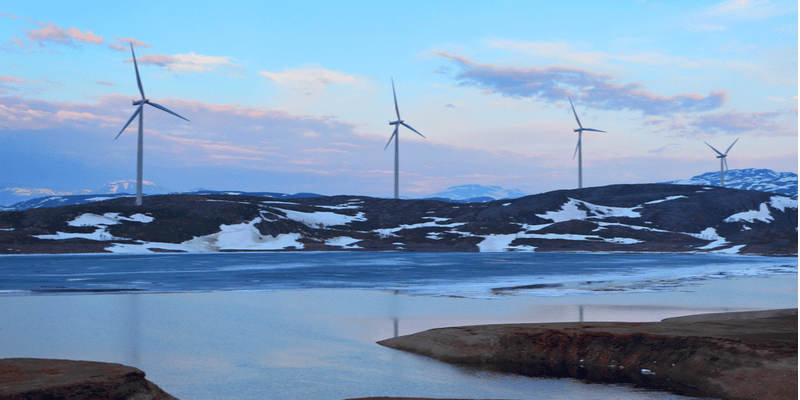
    Figure 10: Norwegian off-shore wind farms.

    Norway’s expertise in renewable energy technology, particularly in offshore wind, has also become a significant export industry. Norwegian companies are involved in renewable energy projects worldwide, contributing to the global transition to sustainable energy.

    The Norwegian Welfare Model

    Norway’s economic model is closely linked to its welfare state, which is one of the most comprehensive in the world. The welfare state is funded primarily through taxes and oil revenues, providing a wide range of services, including healthcare, education, and social security. Social expenditure stood at roughly 22.6% of GDP.


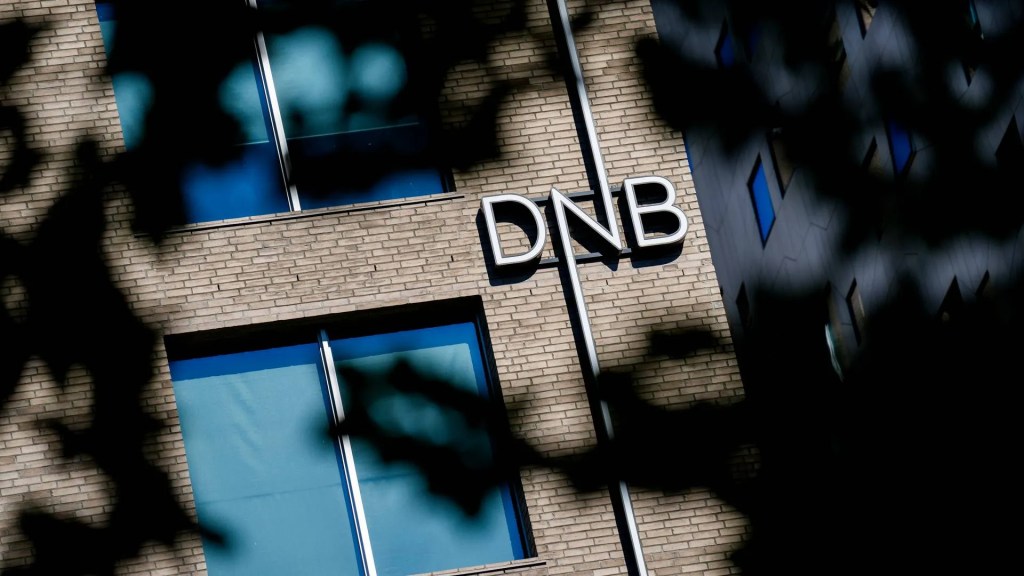
    The Norwegian government plays a central role in the economy, with a high level of public ownership and regulation. This model, often referred to as the “Nordic model,” combines a free-market economy with a strong welfare state, ensuring that wealth is distributed more evenly across society. The Norwegian state maintains large ownership positions in key industrial sectors concentrated in natural resources and strategic industries such as the strategic petroleum sector (Equinor), hydroelectric energy production (Statkraft), aluminum production (Norsk Hydro), the largest Norwegian bank (DNB) and telecommunication provider (Telenor).

    Figure 11: DNB, the largest Norwegian bank, headquarters.

    The government controls around 35% of the total value of publicly listed companies on the Oslo stock exchange, with five of its largest seven listed firms partially owned by the state. When non-listed companies are included the state has an even higher share in ownership (mainly from direct oil license ownership). Norway’s state-owned enterprises comprise 9.6% of all non-agricultural employment, a number that rises to almost 13% when companies with minority state ownership stakes are included, the highest among OECD countries. Both listed and non-listed firms with state ownership stakes are market-driven and operate in a highly liberalized market economy. Government revenues from the petroleum industry are transferred to the Government Pension Fund of Norway Global in a structure that forbids the government from accessing the fund for public spending; only income generated by the funds’ capital can be used for government spending.

    The ideological divide between socialist and non-socialist views on public ownership has decreased over time. The Norwegian government has sought to reduce its ownership over companies that require access to private capital markets, and there is an increasing emphasis on government facilitating entrepreneurship rather than controlling (or restricting) capital formation. A residual distrust of the “profit motive” persists, and Norwegian companies are heavily regulated, especially with respect to labor relations.

    The welfare state has contributed to Norway’s high standard of living, with low levels of poverty and inequality. Education and healthcare are free at the point of use, and social security provides a safety net for those in need. The government’s focus on social welfare has also supported a high level of social cohesion and trust in public institutions.

    Economic Challenges and Future Prospects

    • Managing Oil Dependency

    One of the biggest challenges facing Norway’s economy is its reliance on oil and gas. While the oil sector has brought significant wealth, it also makes the economy vulnerable to fluctuations in global oil prices. The transition to a low-carbon economy also presents a challenge, as Norway seeks to balance its role as a major oil producer with its commitment to sustainability.

    The emergence of Norway as an oil-exporting country has raised a number of issues for Norwegian economic policy. There has been concern that much of Norway’s human capital investment has been concentrated in petroleum-related industries. Critics have pointed out that Norway’s economic structure is highly dependent on natural resources that do not require skilled labor, making economic growth highly vulnerable to fluctuations in the demand and pricing for these natural resources. The Government Pension Fund of Norway is part of several efforts to hedge against dependence on petroleum revenue.

    Figure 12: Norges Bank controls the Norwegian Pension Fund.

    The Government Pension Fund Global has been a key tool in managing oil wealth and reducing the economy’s dependence on oil revenues. The fund invests in a diversified portfolio of global assets, providing a buffer against oil price volatility and ensuring that oil wealth benefits future generations.


    Norway is also actively working to diversify its economy, with investments in technology, renewable energy, and other sectors seen as key to reducing oil dependency. The government’s focus on education and innovation is aimed at fostering new industries and ensuring that Norway remains competitive in the global economy.

    • Demographic Changes

    Norway, like many developed countries, faces demographic challenges, including an aging population. The country’s birth rate has been declining, and the proportion of elderly citizens is expected to increase significantly in the coming decades. This trend could put pressure on the welfare state, particularly in terms of healthcare and pensions.

    The government has implemented policies to address these challenges, including encouraging higher fertility rates and promoting immigration to boost the workforce. However, managing the economic implications of an aging population will remain a key issue in the coming years.

    • Climate Change and Encironmental Sustainability

    Climate change is another significant challenge for Norway’s economy. As a country heavily reliant on natural resources, Norway is vulnerable to the impacts of climate change, including changes in fish stocks, melting glaciers, and increased frequency of extreme weather events.

    The Norwegian government has set ambitious targets for reducing carbon emissions and transitioning to a low-carbon economy. This includes investments in renewable energy, carbon capture and storage, and electric transportation.

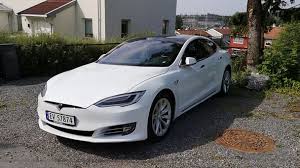
    Norway is also a leader in electric vehicle adoption, with one of the highest per capita rates.

    Figure 13: A Tesla in Oslo

    Exports/Imports

    Main export partners in 2023 were the United Kingdom at 19%, Germany 19%, Netherlands 8.3 %, Sweden 7.7 %, Poland 6.1% and France 5.9 %. Main Import partners were Germany at 11.4 %, China at 11.2%, Sweden at 10.8% , USA at 7.6%, Netherlands at 4.8% and Denmark at 4.7%.

    Conclusion

    In conclusion, Norway’s economy is a model of effective resource management and social equity. The country has successfully harnessed its natural resources, particularly oil and gas, to build a prosperous and well-functioning welfare state. However, as the world shifts towards sustainability, Norway faces the challenge of reducing its dependence on fossil fuels while maintaining economic stability.

    By investing in renewable energy, technology, and other industries, Norway is positioning itself for a future less reliant on oil. With its strong foundation in innovation and a commitment to social welfare, Norway is well-prepared to navigate the economic challenges ahead, continuing its legacy as a resilient and forward-thinking nation.

    The Economy of Brazil – The World’s Bread Baket

    Introduction

    Brazil is the largest country in South America and the fifth largest in the entire world. Th Brazilian economy is as big, rich and diverse as the country itself. With a rich history shaped by colonization, slavery, and resource extraction, Brazil has evolved into a modern economy marked by both potential and challenges.

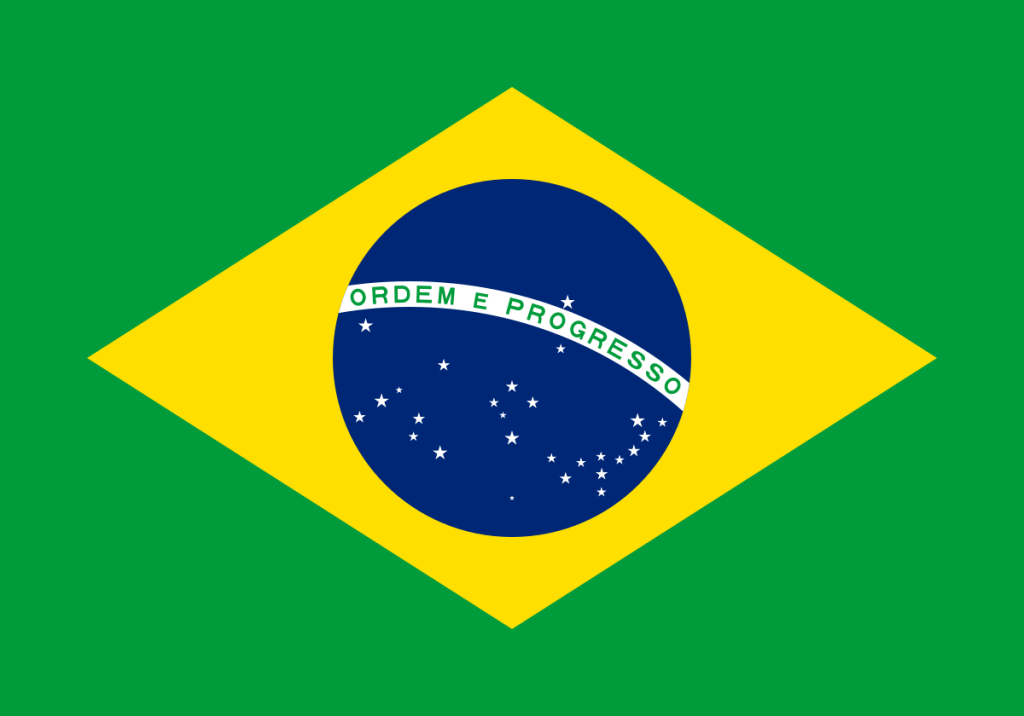
    Figure 1: Brazilian Flag

    As one of the BRICS nations, alongside Russia, India, China, and South Africa, Brazil is often highlighted as a key player among emerging markets. However, its economic journey has been far from linear, characterized by periods of rapid growth, deep recessions, and ongoing structural challenges. his video will look deeper into the various facets of Brazil’s economy, exploring its history, structure, key industries, challenges, and future prospects.

    The Economy of Brazil is currently the largest in Latin America and the 8th largest in the world with a nominal GDP of US$2.331 trillion and a GDP per capita of US$11,178 per inhabitant. In 2024, according to Forbes, Brazil was also the 7th largest country in the world by number of billionaires, and is one of the ten chief industrial states in the world.

    The country is rich in natural resources. From 2000 to 2012, Brazil was one of the fastest-growing major economies in the world, with an average annual GDP growth rate of over 5%. Its GDP surpassed that of the United Kingdom in 2012, temporarily making Brazil the world’s sixth-largest economy. However, Brazil’s economic growth decelerated in 2013 and the country entered into a recession in 2014. The economy started to recover in 2017, with a 1% growth in the first quarter, followed by a 0.3% growth in second quarter compared to the same period of the previous year. It officially exited the recession.

    Historical Context

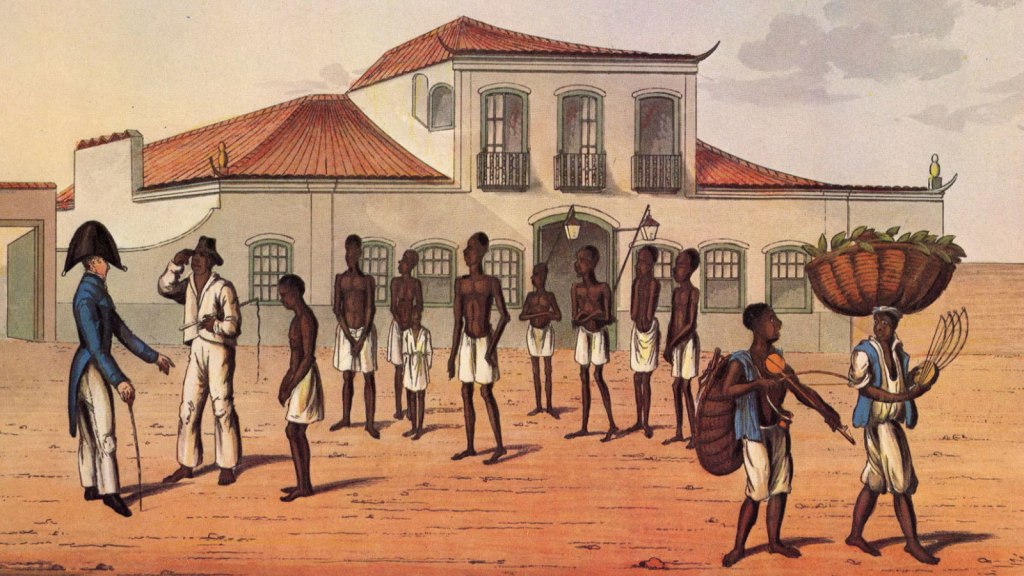
    Brazil’s economic foundations were laid during the colonial period under Portuguese rule, beginning in the early 16th century. The economy was initially based on the extraction of natural resources and agriculture, particularly sugarcane, which became the dominant export product in the 16th and 17th centuries. The use of African slave labor was integral to the Brazilian economy during this period, a legacy that has had long-lasting social and economic impacts to this day.

    Figure 2: Slaves arrive in Brazil

    In the 18th century, gold and diamond mining became the primary economic activities, particularly in the state of Minas Gerais. However, by the early 19th century, these resources began to dwindle, leading to economic decline. The country’s economy during this time was heavily dependent on exports, making it vulnerable to fluctuations in global demand and prices.

    Following its independence from Portugal in 1822, Brazil’s economy gradually shifted towards coffee production, which became the dominant export by the mid-19th century. The coffee boom brought significant wealth to the country, especially to the Southeast region, but also exacerbated regional inequalities.


    During the 19th century Brazil experienced a period of strong economic and demographic growth accompanied by mass immigration from Europe. This migration had positive effects on the country’s human capital development The immigrants usually exhibited better formal and informal training than native Brazilians and tended to have more entrepreneurial spirit. Their arrival was beneficial for the region, not only because of the skills and knowledge they brought to the country themselves, but also because of spillover effects of their human capital to the native Brazilian population. Human capital spillover effects were strongest in regions with the highest numbers of immigrants, and the positive effects are still observable today, in some regions.

    Figure 3: In Rio, the diversity of backgrounds are still noticeable

    The early 20th century marked the beginning of Brazil’s industrialization, largely driven by the coffee elites who invested in manufacturing. The country’s involvement in World War I further accelerated industrialization, as global supply chains were disrupted, leading to the development of local industries.

    During the 1930s Brazil implemented protectionist policies, promoted industrialization, and established state-owned enterprises in key sectors such as steel, oil, and electricity. This period also saw the rise of labor rights and social welfare programs. Post-World War II, Brazil continued to pursue industrialization under the Import Substitution Industrialization (ISI) strategy, which aimed to reduce dependency on imported goods by fostering domestic industries. The 1950s and 1960s were characterized by rapid industrial growth, urbanization, and the expansion of the middle class. However, this period also saw rising inflation, income inequality, and external debt.

    The Debt Crisis and Economic Reforms

    By the 1980s, Brazil was facing a severe debt crisis. The ISI model had led to inefficiencies, high inflation, and an over-reliance on foreign debt. The country was forced to implement austerity measures and seek assistance from the International Monetary Fund. The 1980s, often referred to as the “Lost Decade,” were marked by economic stagnation, hyperinflation, and social unrest.

    In the 1990s, Brazil embarked on a series of neoliberal economic reforms. Brazil also implemented trade liberalization, privatization of state-owned enterprises, and deregulation. These reforms laid the groundwork for the economic growth that Brazil experienced in the early 21st century.

    Structure of the Brazilian Economy

    Brazil’s economy is characterized by a diverse mix of industries, including agriculture, manufacturing, mining, and services. Even though, itis one of the largest economies in the world by nominal GDP and is classified as an upper-middle-income mixed economy by the World Bank, Brazil also faces significant challenges, including income inequality, political instability, and structural inefficiencies.

    Agriculture

    Agriculture has historically been a cornerstone of Brazil’s economy and continues to play a vital role. Brazil is one of the world’s leading producers and exporters of several agricultural products, including soybeans, coffee, sugar, beef, and poultry. The country’s vast and fertile land, coupled with favorable climate conditions, has made it a global agricultural powerhouse and led to the expression, “Brazil, breadbasket of the world”.

    As of 2024 the country is the second biggest grain exporter in the world, with an astounding 19% of the international market share, and the fourth overall grain producer. Brazil is the world’s largest exporter of countless popular agriculture commodities like coffee, soybeans, organic honey,  maize, beef,  poultry,  cane sugar, açai berry, orange juice, yerba mate, cellulose, tobacco, and the second biggest exporter of pork, cotton, and ethanol. The country also has a significant presence as producer and exporter of rice, wheat, eggs, refinedsugar, cocoa, beans, nuts, cassava, sisal fiber, and diverse fruits and vegetables.

    Figure 4: Agriculture in Brazil is an important and large industry

    In 2019, the country was the world’s largest exporter of chicken meat. It was also the second largest producer of beef, the world’s third largest producer of milk, the world’s fourth largest producer of pork and the seventh largest producer of eggs in the world. In Food industry, Brazil s also the 2nd largest exporter of processed foods in the world, with a value of $34.1 billion USD in exports. In the space of fifty five years (1950 to 2005), the population of Brazil grew from 51 million to approximately 187 million inhabitants, an increase of over 2 percent per year. The local consumption of Brazil has thus also increased.


    Farm-based crop storage (e.g., using silos) is not common in Brazil. Lack of storage forces produce to be commercialized quickly. According to Conab data, only 11% of warehouses are located on farms (by comparison Argentina has 40%, the European Union has 50% and Canada has 80%). Farmers rely on third party storage services. Crops are immediately trucked to market via highways, mostly in poor traffic conditions at high cost. However, the agricultural sector has benefited from significant technological advancements, particularly in areas such as genetically modified crops, precision agriculture, and improved irrigation techniques.

    Figure 5: Brazilian Agriculture leading to deforestation

    Critisicism against the agriculture sector is that its expansion has led to deforestation, particularly in the Amazon rainforest, raising concerns about environmental sustainability. The sector is also highly vulnerable to climate change, which poses risks to crop yields and livestock production.

    Industry

    Brazil’s industrial sector is diverse, encompassing a wide range of industries, including automobiles, aerospace, steel, chemicals, electronics, and textiles. The country has a well-developed manufacturing base, particularly in the Southeast region, which is home to major industrial hubs such as São Paulo, Rio de Janeiro, and Belo Horizonte. 

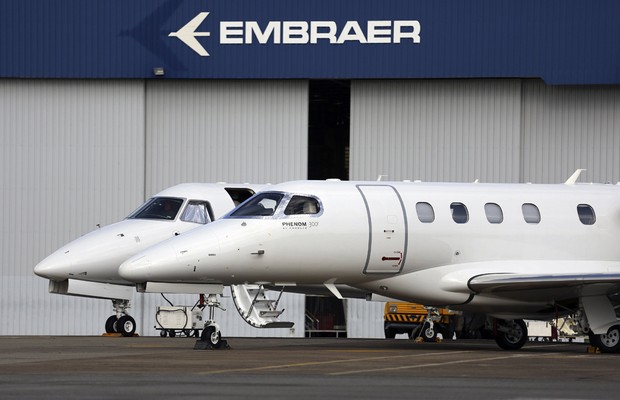
    The automotive industry is one of the largest and most important sectors in Brazil, with the country being a major producer and exporter of vehicles. Companies like Volkswagen, Fiat, and General Motors have significant manufacturing operations in Brazil. The country is the 8th producer of vehicles and the 9th producer of steel in the world. The aerospace industry, led by Embraer the third largest aircraft manufacturer in the world behind Boeing and Airbus, is another key sector, with Brazil being one of the largest producers of commercial aircraft. The country is also the 2nd largest producer of pulp in the world and the 8th producer of paper. In the footwear industry Brazil ranks 4th among world producers, and 5th when it comes to textiles.

    Figure 6: Embraer planes by the hangar. Embraer is a brazilian company.

    in the last years, the defence industry in Brazil achieved prominence with exports of more than US$1 billion per year and sales abroad of high-technology products like the transport jet PARTICULARY Embraer jetc. Embraer is one the world’s top 100 defense contractors.

    In 2019, Brazil’s industrial sector represented 11% of Brazil’s economic activity. The Brazilian industry is one of those that showed the most decline in the world in almost 50 years. The deindustrialization of the Brazilian economy is very particular and happened very early. It is normal for the industry to lose space when the per capita income of families starts to grow, since they consume more services and less goods, however, in Brazil, a high per capita income was not reached and the country did not get rich enough for the productive structure to migrate so quickly. The stagnation of the sector partly explains the slow resumption of the labor market in the country. Despite its strengths, Brazil’s industrial sector faces several challenges. High taxes, complex regulations, and inadequate infrastructure have hindered competitiveness. Additionally, the sector has struggled with low productivity and has been slow to adopt new technologies, such as automation and digitalization.

    Mining and Energy

    Brazil is a country rich in natural resources, particularly minerals and energy resources. The mining sector is a major contributor to Brazil’s GDP and exports, with companies like Vale being global leaders in the industry.

    Figure 7: The Brazilian company Vale is one of the largest mining companies in the world.

    In the mining sector, Brazil stands out in the extraction of iron ore (where it is the second world exporter), copper, g old, bauxite (one of the 5 largest producers in the world), manganese (one of the 5 largest producers in the world), tin (one of the largest producers in the world), niobium (concentrates 98% of reserves known to the world) and nickel. In terms of gemstones, Brazil is the world’s largest producer of amethyst, topaz, agate and one of the main producers of tourmaline, emerald, aquamarine, garnet and opal.

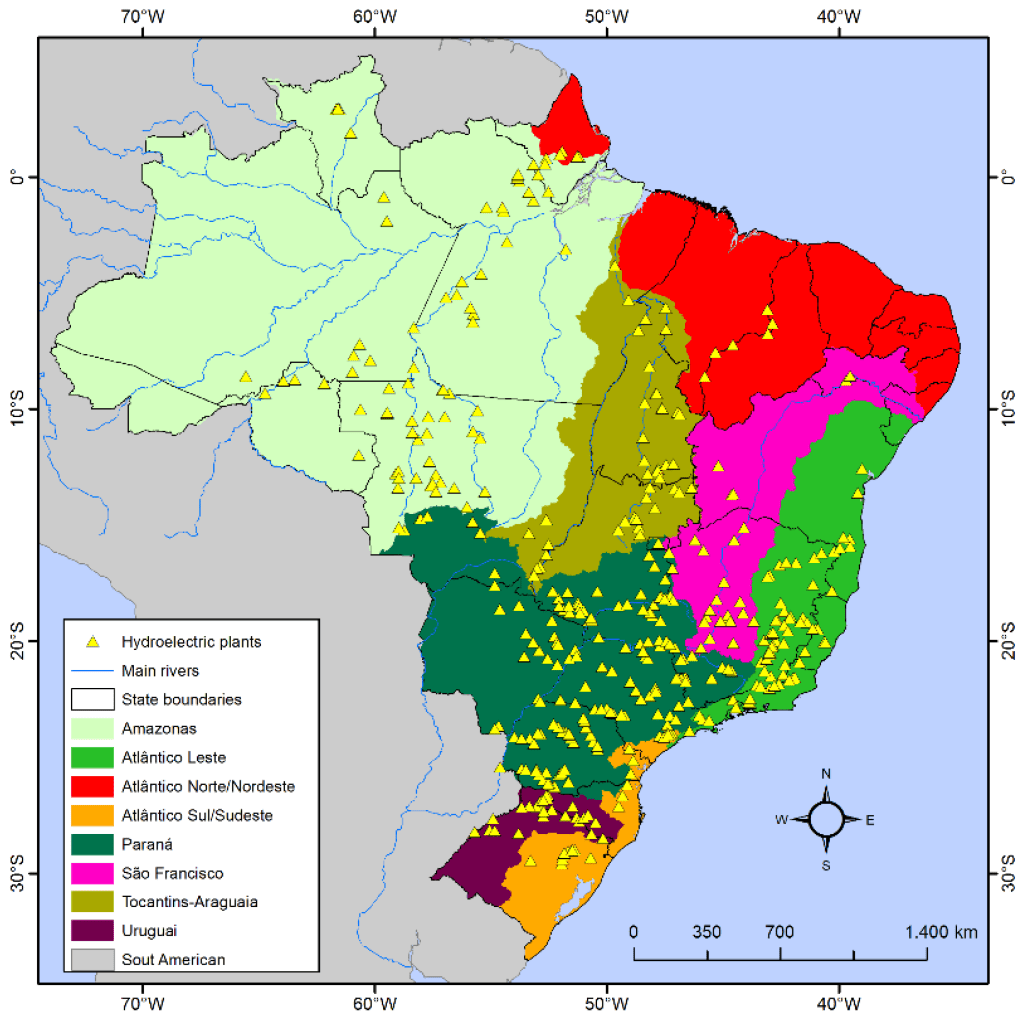
    The energy sector is also crucial to Brazil’s economy, with the country being a major producer of oil, natural gas, and biofuels. Brazil is the largest producer of ethanol from sugarcane, and biofuels play a significant role in the country’s energy matrix. Additionally, Brazil has a well-developed hydropower infrastructure, with hydroelectricity accounting for the majority of the country’s electricity generation.

    Figure 8: Map of hydroelectric plants in Brazil.

    In 2019, Brazil had 217 hydroelectric plants in operation making up more than 60 % of the country’s energy generation. In addition, wind energy represented 9% of the energy generated in the country. It is estimated that the country has an estimated wind power generation potential of around 522 GW (this, only onshore), enough energy to meet three times the country’s current demand. In 2021 Brazil was the 7th country in the world in terms of installed wind power, and the 4th largest producer of wind energy in the world, behind only China, USA and Germany. Nuclear energy also accounts for about 4% of Brazil’s electricity. The nuclear power generation monopoly is owned by Eletrobrás Eletronuclear S/A, a wholly owned subsidiary of Eletrobrás. Nuclear energy is produced by two reactors at Angra.

    solar power represents only 1,27% of the energy generated in Brazil. However, Brazil was still the 14th country in the world in terms of installed solar power and the 11th largest producer of solar energy in the world.

    The Brazilian government has undertaken an ambitious program to reduce dependence on imported petroleum. Imports previously accounted for more than 70% of the country’s oil needs but Brazil became self-sufficient in oil in 2006–2007. In the beginning of 2020, in the production of oil and natural gas, the country exceeded 4 million barrels of oil equivalent per day, for the first time, making it the 9th largest oil producer in the world.

    However, the mining and energy sectors have faced criticism for their environmental and social impacts. Deforestation, water pollution, and the displacement of indigenous communities are some of the issues associated with these industries.


    Tourism

    Tourism is another important sector, with Brazil attracting millions of visitors each year to its diverse landscapes, cultural heritage, and iconic cities like Rio de Janeiro and Salvador. However, the tourism industry has been impacted by issues such as crime, inadequate infrastructure, and political instability. In the list of world tourist destinations, in 2018, Brazil was the 48th most visited country, with 6.6 million tourists (and revenues of 5.9 billion dollars).

    Figure 8: Rio is an internationally renowned tourist destination

    Informal Economy

    The informal economy is a significant part of Brazil’s economic landscape, with a large portion of the population engaged in informal work. This includes activities such as street vending, unregistered small businesses, and informal labor in sectors like construction and domestic work. Data from the Asian Development Bank and the Tax Justice Network show the untaxed “shadow” economy of Brazil is 39% of GDP.

    The informal economy is often seen as a survival strategy for those excluded from formal employment opportunities. However, it also presents challenges, such as lower productivity, lack of social protection for workers, and difficulties in tax collection.

    Economic Model

    The country’s export model, until today, is excessively based on exports of basic or semi-manufactured products, generating criticism, since such model generates little monetary value, which prevents further growth in the country in the long run. There are several factors that cause this problem, the main ones being: the excessive collection of taxes on production (due to the country’s economic and legislative model being based on State Capitalism and not on Free-Market Capitalism), the lack or deficiency of infrastructure for export(means of transport such as roads, railways and ports that are insufficient or weak for the country’s needs, bad logistics and excessive bureaucracy), high production costs (expensive energy, expensive fuel, expensive maintenance of trucks, expensive loan rates and bank financing for production, expensive export rates), the lack of an industrial policy, the lack of focus on adding value, the lack of aggressiveness in international negotiations, in addition to abusive tariff barriers imposed by other countries on the country’s exports. Because of this, Brazil has never been very prominent in international trade.

    Figure 9: GDP per capita map of Brazil

    Brazil’s credit rating was downgraded by Standard & Poor’s to BBB in March 2014, just one notch above junk. It was further downgraded in January 2018 by S&P to BB, which is 2 notches below investment grade. Reasons behind this is that Brazil’s overall regulatory environment is relatively well institutionalized but lacks efficiency, Foreign investment faces bureaucratic hurdles, The financial sector is competitive, but state involvement remains considerable, and public banks account for more than 50 percent of loans to the private sector. Government ownership can influence company decisions in ways that may not always align with shareholder interests. Economic volatility stems from poor fiscal management and an overreliance on commodities. Political instability and widespread corruption has also eroded public trust and investor confidence. Recent scandals include the Odebrecht scandale where since the 1980s, Odebrecht had spent several billion dollars to bribe parliamentarians to vote in favour of the group. Another one is the petrobas scandal from 2014 where many millions of dollars had been kicked back to officials of Petrobras and politicians by prominent Brazilian corporations in return for contracts with Petrobras. Inefficient governance and a cumbersome bureaucracy hinders business and investment. Infrastructure deficits and environmental mismanagement attracted global criticism and posed long-term risks. 

    Figure 10: The Petrobras scandal was large enough to shake the entire Brazilian economy.

    Brazil has the potential to be a great investment arena for investors looking to diversify the geographical aspect of their portfolio. During the period between 2003 and 2014, Brazil experienced a drastic improvement in both social and economic terms. The poorest 40% of the population saw their incomes improve by 7.1%. Many would consider these growth rates to be less impressive than rates seen in China and India, but Brazil nevertheless continues to be an investment hotspot. Brazil ETFs likely have exposure to the Brazilian real, meaning that the ETF’s performance can be affected by currency fluctuations, political scandals, corruption investigations, and impeachment proceedings have all been part of the background to volatile policy shifts in Brazil in recent years. This brings uncertainty and impacts markets Brazil’s equities tend to be less liquid than developed markets. This can increase trading costs for large orders. Brazil’s stock market has experienced extreme booms and busts along with its economy, compared with more developed markets. Many advisors suggest total emerging markets exposure of 5% to 10% of a portfolio. In 2019, Brazil occupied the 4th largest destination for foreign investments, behind only the United States, China and Singapore.

    Export/Import

    The main countries to which Brazil exports in 2021 were:

    •  China: US$87.6 billion (31.28%)
    •  United States: US$31.1 billion (11.09%)
    •  Argentina: US$11.8 billion (4.24%)
    •  Netherlands: US$9.3 billion (3.32%)
    •  Chile: US$6.9 billion (2.50%)
    •  Singapore: US$5.8 billion (2.10%)
    •  Mexico: US$5.5 billion (1.98%)
    •  Germany: US$5.5 billion (1.97%)
    •  Japan: US$5.5 billion (1.97%)
    •  Spain: US$5.4 billion (1.94%)

    The main countries from which Brazil imports in 2021 were:

    •  China: US$47.6 billion (21.72%)
    •  United States: US$39.3 billion (17.95%)
    •  Argentina: US$11.9 billion (5.45%)
    •  Germany: US$11.3 billion (5.17%)
    •  India: US$6.7 billion (3.07%)
    •  Russia: US$5.7 billion (2.60%)
    •  Italy: US$5.4 billion (2.50%)
    •  Japan: US$5.1 billion (2.35%)
    •  South Korea: US$5.1 billion (2.33%)
    •  France: US$4.8 billion (2.19%)

    Conclusion

    Despite the challenges Brazil has faced, the resilience and potential of its economy remain undeniable. The country’s rich natural resources, diverse industrial base, and dynamic agricultural sector continue to provide a strong foundation for growth. Recent efforts toward economic reforms, innovation, and sustainability are setting the stage for a more stable and prosperous future. With its vast resources, vibrant culture, and growing influence on the global stage, Brazil has the opportunity to harness its strengths and drive toward a more equitable and flourishing economy in the years to come.

    The Economy of Brazil – The World’s Bread Baket

    Introduction

    Brazil is the largest country in South America and the fifth largest in the entire world. Th Brazilian economy is as big, rich and diverse as the country itself. With a rich history shaped by colonization, slavery, and resource extraction, Brazil has evolved into a modern economy marked by both potential and challenges.

    Figure 1: Brazilian Flag

    As one of the BRICS nations, alongside Russia, India, China, and South Africa, Brazil is often highlighted as a key player among emerging markets. However, its economic journey has been far from linear, characterized by periods of rapid growth, deep recessions, and ongoing structural challenges. his video will look deeper into the various facets of Brazil’s economy, exploring its history, structure, key industries, challenges, and future prospects.

    The Economy of Brazil is currently the largest in Latin America and the 8th largest in the world with a nominal GDP of US$2.331 trillion and a GDP per capita of US$11,178 per inhabitant. In 2024, according to Forbes, Brazil was also the 7th largest country in the world by number of billionaires, and is one of the ten chief industrial states in the world.

    The country is rich in natural resources. From 2000 to 2012, Brazil was one of the fastest-growing major economies in the world, with an average annual GDP growth rate of over 5%. Its GDP surpassed that of the United Kingdom in 2012, temporarily making Brazil the world’s sixth-largest economy. However, Brazil’s economic growth decelerated in 2013 and the country entered into a recession in 2014. The economy started to recover in 2017, with a 1% growth in the first quarter, followed by a 0.3% growth in second quarter compared to the same period of the previous year. It officially exited the recession.

    Historical Context

    Brazil’s economic foundations were laid during the colonial period under Portuguese rule, beginning in the early 16th century. The economy was initially based on the extraction of natural resources and agriculture, particularly sugarcane, which became the dominant export product in the 16th and 17th centuries. The use of African slave labor was integral to the Brazilian economy during this period, a legacy that has had long-lasting social and economic impacts to this day.

    Figure 2: Slaves arrive in Brazil

    In the 18th century, gold and diamond mining became the primary economic activities, particularly in the state of Minas Gerais. However, by the early 19th century, these resources began to dwindle, leading to economic decline. The country’s economy during this time was heavily dependent on exports, making it vulnerable to fluctuations in global demand and prices.

    Following its independence from Portugal in 1822, Brazil’s economy gradually shifted towards coffee production, which became the dominant export by the mid-19th century. The coffee boom brought significant wealth to the country, especially to the Southeast region, but also exacerbated regional inequalities.


    During the 19th century Brazil experienced a period of strong economic and demographic growth accompanied by mass immigration from Europe. This migration had positive effects on the country’s human capital development The immigrants usually exhibited better formal and informal training than native Brazilians and tended to have more entrepreneurial spirit. Their arrival was beneficial for the region, not only because of the skills and knowledge they brought to the country themselves, but also because of spillover effects of their human capital to the native Brazilian population. Human capital spillover effects were strongest in regions with the highest numbers of immigrants, and the positive effects are still observable today, in some regions.

    Figure 3: In Rio, the diversity of backgrounds are still noticeable

    The early 20th century marked the beginning of Brazil’s industrialization, largely driven by the coffee elites who invested in manufacturing. The country’s involvement in World War I further accelerated industrialization, as global supply chains were disrupted, leading to the development of local industries.

    During the 1930s Brazil implemented protectionist policies, promoted industrialization, and established state-owned enterprises in key sectors such as steel, oil, and electricity. This period also saw the rise of labor rights and social welfare programs. Post-World War II, Brazil continued to pursue industrialization under the Import Substitution Industrialization (ISI) strategy, which aimed to reduce dependency on imported goods by fostering domestic industries. The 1950s and 1960s were characterized by rapid industrial growth, urbanization, and the expansion of the middle class. However, this period also saw rising inflation, income inequality, and external debt.

    The Debt Crisis and Economic Reforms

    By the 1980s, Brazil was facing a severe debt crisis. The ISI model had led to inefficiencies, high inflation, and an over-reliance on foreign debt. The country was forced to implement austerity measures and seek assistance from the International Monetary Fund. The 1980s, often referred to as the “Lost Decade,” were marked by economic stagnation, hyperinflation, and social unrest.

    In the 1990s, Brazil embarked on a series of neoliberal economic reforms. Brazil also implemented trade liberalization, privatization of state-owned enterprises, and deregulation. These reforms laid the groundwork for the economic growth that Brazil experienced in the early 21st century.

    Structure of the Brazilian Economy

    Brazil’s economy is characterized by a diverse mix of industries, including agriculture, manufacturing, mining, and services. Even though, itis one of the largest economies in the world by nominal GDP and is classified as an upper-middle-income mixed economy by the World Bank, Brazil also faces significant challenges, including income inequality, political instability, and structural inefficiencies.

    Agriculture

    Agriculture has historically been a cornerstone of Brazil’s economy and continues to play a vital role. Brazil is one of the world’s leading producers and exporters of several agricultural products, including soybeans, coffee, sugar, beef, and poultry. The country’s vast and fertile land, coupled with favorable climate conditions, has made it a global agricultural powerhouse and led to the expression, “Brazil, breadbasket of the world”.

    As of 2024 the country is the second biggest grain exporter in the world, with an astounding 19% of the international market share, and the fourth overall grain producer. Brazil is the world’s largest exporter of countless popular agriculture commodities like coffee, soybeans, organic honey,  maize, beef,  poultry,  cane sugar, açai berry, orange juice, yerba mate, cellulose, tobacco, and the second biggest exporter of pork, cotton, and ethanol. The country also has a significant presence as producer and exporter of rice, wheat, eggs, refinedsugar, cocoa, beans, nuts, cassava, sisal fiber, and diverse fruits and vegetables.

    Figure 4: Agriculture in Brazil is an important and large industry

    In 2019, the country was the world’s largest exporter of chicken meat. It was also the second largest producer of beef, the world’s third largest producer of milk, the world’s fourth largest producer of pork and the seventh largest producer of eggs in the world. In Food industry, Brazil s also the 2nd largest exporter of processed foods in the world, with a value of $34.1 billion USD in exports. In the space of fifty five years (1950 to 2005), the population of Brazil grew from 51 million to approximately 187 million inhabitants, an increase of over 2 percent per year. The local consumption of Brazil has thus also increased.


    Farm-based crop storage (e.g., using silos) is not common in Brazil. Lack of storage forces produce to be commercialized quickly. According to Conab data, only 11% of warehouses are located on farms (by comparison Argentina has 40%, the European Union has 50% and Canada has 80%). Farmers rely on third party storage services. Crops are immediately trucked to market via highways, mostly in poor traffic conditions at high cost. However, the agricultural sector has benefited from significant technological advancements, particularly in areas such as genetically modified crops, precision agriculture, and improved irrigation techniques.

    Figure 5: Brazilian Agriculture leading to deforestation

    Critisicism against the agriculture sector is that its expansion has led to deforestation, particularly in the Amazon rainforest, raising concerns about environmental sustainability. The sector is also highly vulnerable to climate change, which poses risks to crop yields and livestock production.

    Industry

    Brazil’s industrial sector is diverse, encompassing a wide range of industries, including automobiles, aerospace, steel, chemicals, electronics, and textiles. The country has a well-developed manufacturing base, particularly in the Southeast region, which is home to major industrial hubs such as São Paulo, Rio de Janeiro, and Belo Horizonte. 

    The automotive industry is one of the largest and most important sectors in Brazil, with the country being a major producer and exporter of vehicles. Companies like Volkswagen, Fiat, and General Motors have significant manufacturing operations in Brazil. The country is the 8th producer of vehicles and the 9th producer of steel in the world. The aerospace industry, led by Embraer the third largest aircraft manufacturer in the world behind Boeing and Airbus, is another key sector, with Brazil being one of the largest producers of commercial aircraft. The country is also the 2nd largest producer of pulp in the world and the 8th producer of paper. In the footwear industry Brazil ranks 4th among world producers, and 5th when it comes to textiles.

    Figure 6: Embraer planes by the hangar. Embraer is a brazilian company.

    in the last years, the defence industry in Brazil achieved prominence with exports of more than US$1 billion per year and sales abroad of high-technology products like the transport jet PARTICULARY Embraer jetc. Embraer is one the world’s top 100 defense contractors.

    In 2019, Brazil’s industrial sector represented 11% of Brazil’s economic activity. The Brazilian industry is one of those that showed the most decline in the world in almost 50 years. The deindustrialization of the Brazilian economy is very particular and happened very early. It is normal for the industry to lose space when the per capita income of families starts to grow, since they consume more services and less goods, however, in Brazil, a high per capita income was not reached and the country did not get rich enough for the productive structure to migrate so quickly. The stagnation of the sector partly explains the slow resumption of the labor market in the country. Despite its strengths, Brazil’s industrial sector faces several challenges. High taxes, complex regulations, and inadequate infrastructure have hindered competitiveness. Additionally, the sector has struggled with low productivity and has been slow to adopt new technologies, such as automation and digitalization.

    Mining and Energy

    Brazil is a country rich in natural resources, particularly minerals and energy resources. The mining sector is a major contributor to Brazil’s GDP and exports, with companies like Vale being global leaders in the industry.

    Figure 7: The Brazilian company Vale is one of the largest mining companies in the world.

    In the mining sector, Brazil stands out in the extraction of iron ore (where it is the second world exporter), copper, g old, bauxite (one of the 5 largest producers in the world), manganese (one of the 5 largest producers in the world), tin (one of the largest producers in the world), niobium (concentrates 98% of reserves known to the world) and nickel. In terms of gemstones, Brazil is the world’s largest producer of amethyst, topaz, agate and one of the main producers of tourmaline, emerald, aquamarine, garnet and opal.

    The energy sector is also crucial to Brazil’s economy, with the country being a major producer of oil, natural gas, and biofuels. Brazil is the largest producer of ethanol from sugarcane, and biofuels play a significant role in the country’s energy matrix. Additionally, Brazil has a well-developed hydropower infrastructure, with hydroelectricity accounting for the majority of the country’s electricity generation.

    Figure 8: Map of hydroelectric plants in Brazil.

    In 2019, Brazil had 217 hydroelectric plants in operation making up more than 60 % of the country’s energy generation. In addition, wind energy represented 9% of the energy generated in the country. It is estimated that the country has an estimated wind power generation potential of around 522 GW (this, only onshore), enough energy to meet three times the country’s current demand. In 2021 Brazil was the 7th country in the world in terms of installed wind power, and the 4th largest producer of wind energy in the world, behind only China, USA and Germany. Nuclear energy also accounts for about 4% of Brazil’s electricity. The nuclear power generation monopoly is owned by Eletrobrás Eletronuclear S/A, a wholly owned subsidiary of Eletrobrás. Nuclear energy is produced by two reactors at Angra.

    solar power represents only 1,27% of the energy generated in Brazil. However, Brazil was still the 14th country in the world in terms of installed solar power and the 11th largest producer of solar energy in the world.

    The Brazilian government has undertaken an ambitious program to reduce dependence on imported petroleum. Imports previously accounted for more than 70% of the country’s oil needs but Brazil became self-sufficient in oil in 2006–2007. In the beginning of 2020, in the production of oil and natural gas, the country exceeded 4 million barrels of oil equivalent per day, for the first time, making it the 9th largest oil producer in the world.

    However, the mining and energy sectors have faced criticism for their environmental and social impacts. Deforestation, water pollution, and the displacement of indigenous communities are some of the issues associated with these industries.


    Tourism

    Tourism is another important sector, with Brazil attracting millions of visitors each year to its diverse landscapes, cultural heritage, and iconic cities like Rio de Janeiro and Salvador. However, the tourism industry has been impacted by issues such as crime, inadequate infrastructure, and political instability. In the list of world tourist destinations, in 2018, Brazil was the 48th most visited country, with 6.6 million tourists (and revenues of 5.9 billion dollars).

    Figure 8: Rio is an internationally renowned tourist destination

    Informal Economy

    The informal economy is a significant part of Brazil’s economic landscape, with a large portion of the population engaged in informal work. This includes activities such as street vending, unregistered small businesses, and informal labor in sectors like construction and domestic work. Data from the Asian Development Bank and the Tax Justice Network show the untaxed “shadow” economy of Brazil is 39% of GDP.

    The informal economy is often seen as a survival strategy for those excluded from formal employment opportunities. However, it also presents challenges, such as lower productivity, lack of social protection for workers, and difficulties in tax collection.

    Economic Model

    The country’s export model, until today, is excessively based on exports of basic or semi-manufactured products, generating criticism, since such model generates little monetary value, which prevents further growth in the country in the long run. There are several factors that cause this problem, the main ones being: the excessive collection of taxes on production (due to the country’s economic and legislative model being based on State Capitalism and not on Free-Market Capitalism), the lack or deficiency of infrastructure for export(means of transport such as roads, railways and ports that are insufficient or weak for the country’s needs, bad logistics and excessive bureaucracy), high production costs (expensive energy, expensive fuel, expensive maintenance of trucks, expensive loan rates and bank financing for production, expensive export rates), the lack of an industrial policy, the lack of focus on adding value, the lack of aggressiveness in international negotiations, in addition to abusive tariff barriers imposed by other countries on the country’s exports. Because of this, Brazil has never been very prominent in international trade.

    Figure 9: GDP per capita map of Brazil

    Brazil’s credit rating was downgraded by Standard & Poor’s to BBB in March 2014, just one notch above junk. It was further downgraded in January 2018 by S&P to BB, which is 2 notches below investment grade. Reasons behind this is that Brazil’s overall regulatory environment is relatively well institutionalized but lacks efficiency, Foreign investment faces bureaucratic hurdles, The financial sector is competitive, but state involvement remains considerable, and public banks account for more than 50 percent of loans to the private sector. Government ownership can influence company decisions in ways that may not always align with shareholder interests. Economic volatility stems from poor fiscal management and an overreliance on commodities. Political instability and widespread corruption has also eroded public trust and investor confidence. Recent scandals include the Odebrecht scandale where since the 1980s, Odebrecht had spent several billion dollars to bribe parliamentarians to vote in favour of the group. Another one is the petrobas scandal from 2014 where many millions of dollars had been kicked back to officials of Petrobras and politicians by prominent Brazilian corporations in return for contracts with Petrobras. Inefficient governance and a cumbersome bureaucracy hinders business and investment. Infrastructure deficits and environmental mismanagement attracted global criticism and posed long-term risks. 

    Figure 10: The Petrobras scandal was large enough to shake the entire Brazilian economy.

    Brazil has the potential to be a great investment arena for investors looking to diversify the geographical aspect of their portfolio. During the period between 2003 and 2014, Brazil experienced a drastic improvement in both social and economic terms. The poorest 40% of the population saw their incomes improve by 7.1%. Many would consider these growth rates to be less impressive than rates seen in China and India, but Brazil nevertheless continues to be an investment hotspot. Brazil ETFs likely have exposure to the Brazilian real, meaning that the ETF’s performance can be affected by currency fluctuations, political scandals, corruption investigations, and impeachment proceedings have all been part of the background to volatile policy shifts in Brazil in recent years. This brings uncertainty and impacts markets Brazil’s equities tend to be less liquid than developed markets. This can increase trading costs for large orders. Brazil’s stock market has experienced extreme booms and busts along with its economy, compared with more developed markets. Many advisors suggest total emerging markets exposure of 5% to 10% of a portfolio. In 2019, Brazil occupied the 4th largest destination for foreign investments, behind only the United States, China and Singapore.

    Export/Import

    The main countries to which Brazil exports in 2021 were:

    •  China: US$87.6 billion (31.28%)
    •  United States: US$31.1 billion (11.09%)
    •  Argentina: US$11.8 billion (4.24%)
    •  Netherlands: US$9.3 billion (3.32%)
    •  Chile: US$6.9 billion (2.50%)
    •  Singapore: US$5.8 billion (2.10%)
    •  Mexico: US$5.5 billion (1.98%)
    •  Germany: US$5.5 billion (1.97%)
    •  Japan: US$5.5 billion (1.97%)
    •  Spain: US$5.4 billion (1.94%)

    The main countries from which Brazil imports in 2021 were:

    •  China: US$47.6 billion (21.72%)
    •  United States: US$39.3 billion (17.95%)
    •  Argentina: US$11.9 billion (5.45%)
    •  Germany: US$11.3 billion (5.17%)
    •  India: US$6.7 billion (3.07%)
    •  Russia: US$5.7 billion (2.60%)
    •  Italy: US$5.4 billion (2.50%)
    •  Japan: US$5.1 billion (2.35%)
    •  South Korea: US$5.1 billion (2.33%)
    •  France: US$4.8 billion (2.19%)

    Conclusion

    Despite the challenges Brazil has faced, the resilience and potential of its economy remain undeniable. The country’s rich natural resources, diverse industrial base, and dynamic agricultural sector continue to provide a strong foundation for growth. Recent efforts toward economic reforms, innovation, and sustainability are setting the stage for a more stable and prosperous future. With its vast resources, vibrant culture, and growing influence on the global stage, Brazil has the opportunity to harness its strengths and drive toward a more equitable and flourishing economy in the years to come.

    How to Choose a Name for your company ?

    Selecting the right name for your company is a critical step in establishing its identity and making a lasting impression on your target audience. A well-thought-out name can convey your brand’s values, personality, and purpose. To guide you through this important decision-making process, here are some key considerations to keep in mind when choosing a name for your company.

    1. Reflect Your Brand Identity

    The essence of your brand should be reflected in the name of the company. Consider the products or services you offer, your company’s mission, and the values you want to communicate. A name that aligns with these aspects helps create a cohesive and meaningful brand identity.

    Questions to think about when trying to find the essence/spirit of the company are- Is the name edgy? Classic? Is it something that will match your company’s overall theme? what is your company about and what you are planning to achieve through it? Get the feeling of what your products are , i.e. ,what is your brand DNA? What are you providing your customer with ? what is your brand equity ?How you want to project your company in the market I.e. brand image? And to make sure that your customer gets the same message. I.e. brand image = brand identity?

    Once you have a general idea of what you want your company to be about, start brainstorming possible names. Write down as many as you can and then choose the ones that interest you the most. A good idea is to make it short (preferable only two words).

    2. Keep it Simple and Memorable

    Choose a name that is easy to spell, pronounce, and remember. A simple and memorable name will make it easier for customers to recall and share with others. Avoid overly complex or lengthy names that may be challenging for people to remember or type into search engines.

    This means that it would be important to consider SEO, as the company name would dictate the domain, and keywords in the long term. Questions to think about are- Do you think your potential brand name will catch people’s attention and stick in their minds? Does the name sound good, or is it fun to hear and say? Is it visually appealing?

    3. Consider Your Target Audience

    Think about your target demographic and what appeals to them. A name that resonates with your audience can create a stronger connection and make your brand more relatable. Make sure to reflect on what the preferences and expectations of your potential customers are. Have a clear idea of exactly what message you want to send, and whom you want your brand to resonate with. This will help you first choose a style (preeminent, playful, pragmatic, modern, intriguing, powerful).

    For example, if you are selling consumer-based products, and your target consumers are millennials or generations Y or Z, you will have a bit more flexibility to think outside the box with intriguing names. However, if you are a corporate company aiming for baby boomers, you’d be smart to choose something more classic like Zenith Capital.

    Before brainstorming name ideas, write down some traits that are unique to your brand. Many startups make the mistake of explaining their features or business in the name. This leads to boring and dull names.


    Visualize the key ideas-The next step is to come up with the different ideas and images to convey in your name which are inherently linked to your brand. Instead of focusing on the descriptive element — i.e., what you sell — focus on expressing one or two other core concepts that are essential to your brand, culture and values.

    For example, if you are a food-delivery startup, your ideas could convey images of healthy living, ethically sourced products or great customer service and quick delivery time. Keep in mind that your name is only as strong as your brand. Your brand is only as strong as the experience you deliver to people. How well you set and meet expectations plays a big role in the experience people have with your brand.

    The trick is to dentify the emotions you want to evoke in people. Brainstorm names around those themes. What symbols and words represent such things? Personally I like to think around words that are associated to the feelings, and aspirations of what the product I’m selling gives my customers rather than the product itself. Side note – make sure people know what it is without you having to spell it.

    4. Check Availability and legal implications

    Before finalizing a name, ensure that it is legally available and doesn’t infringe on existing trademarks or copyrights. Also make sure to check for all social media channels, and domain names to make sure the name does not constitute an infringement. A thorough search can help you avoid legal complications down the road. Check domain name availability as well, especially if you plan to have an online presence.

    Once you have your style, themes, and purpose clearly laid out, it’s time to really start experimenting. But before trying out different names, you should know which areas to avoid. With so many trademarks out there, the freedom to use almost any particular English word is becoming slim. The common danger zones are: Single English words, Power words — like force, united, omni, icon,. Symbolic words – like bridge, spring, sage, rocket.

    The Harvard Law Review did a study recently titled Are We Running Out of Trademarks? which found that more than 70% of common English words have already been trademarked. This supports the idea that literal name are hard to trademark.

    But just because you can’t use one stand-alone word doesn’t mean you can’t combine these words into something original. Transmutations are a possiblity like Zappos or Zumba. This and that names like – Haute and Bold are another possibility. Compound names like SnapChat and WordPress or Visual Story like Red Bull can all be different ways to find a name that is not taken.

    While compounds and transmutations are great, you should say the words out loud to make sure they stay within the following three guidelines: Is the name easy to say? It should roll off the tongue, rather than twist it. Is the name easy to hear? Consumers should be able to hear your brand name then quickly type it into Google to find you. Is the name easy to spell? Simple misspellings such as Flickr, Xero and Lyft are much easier to trademark, but if they are hard to spell, problems could result.

    Usually, you want to avoid very literal names (books.com) because it is extremely limiting and short-sighted. It’s very hard to enforce the trademark as well. You usually want a name that you can build into a brand that can go anywhere (Amazon). If you live in Norway chech out Navnesok.no


    5. Scalability and Flexibility:

    Make sure that the name you choose can grow with your business meaning that it will not be affected by future expansions, changes in product offerings, or potential shifts in your target market. A name that is too niche or limiting may hinder your company’s growth in the long run.

    If your company operates internationally or plans to do so in the future, be mindful of linguistic and cultural nuances. A word that mean one thing in one language does not necessarily mean the same in another and also ensure that your chosen name doesn’t have a negative connotation or meaning in other languages and cultures.

    Choose a name that has longevity. Trends come and go, so selecting a name based on the latest fad may not serve your company well in the long run. Aim for a timeless and enduring name that will withstand the test of time

    6. Differentiate from Competitors:

    Stand out in the market by selecting a name that distinguishes your company from competitors. Avoid generic terms that could easily be confused with other businesses. A unique name helps create a strong brand identity and fosters recognition.

    7. Test the Waters:

    Before making a final decision, gather feedback from potential customers, colleagues, and friends. Conduct surveys or focus groups to gauge the initial reactions to the name options you’re considering. This feedback can provid

    8. Inspiration:

    Ideas to draw inspiration from when choosing a brand name:

    • Predatory animals/animals in general
    • Geographical locations/Regions
    • Some type of rock or stone
    • Historical Figures/Civilizations
    • CEO Name or initials
    • Ancient mythology or words for example greek mythology
    • Some type of castle or fort
    • Character or place from books/Stories or shows
    • Bodies of water or bridges

    9. Types of brands:

    Descriptive names are names that explicitly convey the product offered by the company. Advantage of descriptive names are that it clearly conveys what kind of business it is and what the core competency of the company is..

    Even though, descriptive names can feel somewhat boring, there are plenty of companies who have been able to be succesfull with a descriptive name.

    Examples of such companies include: Toys R Us, E*Trade, General Motors, YouSendIt, The Weather Channel,Hotels.com, Bank of America, The Body Shop, Whole Foods, Holiday Inn, The Container Store, Vitamin Water,Booking.com


    Evocative names are names that use suggestion and/or metaphor to convey the spirit/essence of the company. Some of the best brand names are evocative names because they enable a company to tell a powerful story about an idea that’s bigger than just the products or services they sell.

    Another advantage of evocative names are that they are generally easier to trademark than descriptive names (although, it’s getting harder and harder to find an existing word that isn’t already trademarked in a given industry.)

    Examples of Evocative company names include:Nike,Amazon, Virgin,Apple, Lush, Uber, Dove

    Invented names are made up names that are truely unique. Because the search for an invented name isn’t confined to a finite set of existing words, this naming type offers the broadest creative territory when naming your company or product. But that doesn’t mean a good invented name is easy to create.

    Inventing a name that sounds like a real word and has some semblance of meaning can be hard. This is why most invented names evolve from common root origins (Latin or Greek), are actually portmanteaus (a combination of two or more words), or are intentional misspellings that leverage the meaning of an existing word. Invented names are usually a breeze to trademark, but the more unique they are, the more time and money you will need to spend to create a meaningful brand story around them.

    There is, however, plenty of famous companies that have uses invented names. Examples include: Exxon, Kodak, Xerox, Verizon, Adidas, Google, Pixar, Rolex, Spotify, Lyft and Flickr.

    Lexical names are names that rely on wordplay for their memorability. Puns, phrases, compound words, alliteration, onomatopoeia, intentional misspellings, and foreign words are all styles of this popular naming type.Lexical names are often clever—sometimes too clever—and get their impact from pairing words for linguistic effect.

    This naming type has been used to great effect by consumer brands in industries like snack food, pet supplies, and restaurants. It’s a style well-suited for playful brands in fun-loving spaces. When it comes to corporate branding, you won’t find many serious B2B brands whose names fall into the lexical category.

    This is a great example of knowing which naming type is best suited for the brand you’re looking to build and the competitive landscape in which you operate. Lexical brand names also risk feeling a bit dated, regardless of which industry they’re in. Unless you can come up with a world-class pun that’s never been used before, today’s customer is more likely to roll their eyes than open their wallets when encountering a lexical brand name in the modern market. Lexical brand name examples include: Dunkin’ Donuts, Krazy Glue, Sizzler Steakhouse, Krispy Kreme, Froot Loops, Dribbble, Laffy Taffy, Whiskas, Mello Yello, Cheez Whiz and Hubba Bubba.

    Acronyms are abbreviations formed from inital letters. there are obvious challenges with an acronymic brand name. A combination of letters does not, in and of itself, have the same meaning as the words it signifies. It can reference those words, but only if your audience knows what they are. (How many people stopped on the street could actually tell you what the letters AT&T or IBM stand for?).


    Instead, acronyms usually take function as essentially invented names. Whatever meaning they have is the result of years of branding and marketing, not of the words they signify. Over their decades in existence, brands like BMW and CVS have invested millions of dollars in both brand positioning and brand design to imbue these letters with trust and credibility. A startup these days would be hard-pressed to come up with a great reason to name their company with an acronym, though. As a rule, acronyms are difficult for audiences to remember and even harder for attorneys to trademark. Acronymic brand name examples include: IBM, BP, UPS, BMW, MTV, GEICO, HP, H&M, P&G, AT&T, CVS and BBC.


    How to Choose a Name for your company ?

    Selecting the right name for your company is a critical step in establishing its identity and making a lasting impression on your target audience. A well-thought-out name can convey your brand’s values, personality, and purpose. To guide you through this important decision-making process, here are some key considerations to keep in mind when choosing a name for your company.

    1. Reflect Your Brand Identity

    The essence of your brand should be reflected in the name of the company. Consider the products or services you offer, your company’s mission, and the values you want to communicate. A name that aligns with these aspects helps create a cohesive and meaningful brand identity.

    Questions to think about when trying to find the essence/spirit of the company are- Is the name edgy? Classic? Is it something that will match your company’s overall theme? what is your company about and what you are planning to achieve through it? Get the feeling of what your products are , i.e. ,what is your brand DNA? What are you providing your customer with ? what is your brand equity ?How you want to project your company in the market I.e. brand image? And to make sure that your customer gets the same message. I.e. brand image = brand identity?

    Once you have a general idea of what you want your company to be about, start brainstorming possible names. Write down as many as you can and then choose the ones that interest you the most. A good idea is to make it short (preferable only two words).

    2. Keep it Simple and Memorable

    Choose a name that is easy to spell, pronounce, and remember. A simple and memorable name will make it easier for customers to recall and share with others. Avoid overly complex or lengthy names that may be challenging for people to remember or type into search engines.

    This means that it would be important to consider SEO, as the company name would dictate the domain, and keywords in the long term. Questions to think about are- Do you think your potential brand name will catch people’s attention and stick in their minds? Does the name sound good, or is it fun to hear and say? Is it visually appealing?

    3. Consider Your Target Audience

    Think about your target demographic and what appeals to them. A name that resonates with your audience can create a stronger connection and make your brand more relatable. Make sure to reflect on what the preferences and expectations of your potential customers are. Have a clear idea of exactly what message you want to send, and whom you want your brand to resonate with. This will help you first choose a style (preeminent, playful, pragmatic, modern, intriguing, powerful).

    For example, if you are selling consumer-based products, and your target consumers are millennials or generations Y or Z, you will have a bit more flexibility to think outside the box with intriguing names. However, if you are a corporate company aiming for baby boomers, you’d be smart to choose something more classic like Zenith Capital.

    Before brainstorming name ideas, write down some traits that are unique to your brand. Many startups make the mistake of explaining their features or business in the name. This leads to boring and dull names.


    Visualize the key ideas-The next step is to come up with the different ideas and images to convey in your name which are inherently linked to your brand. Instead of focusing on the descriptive element — i.e., what you sell — focus on expressing one or two other core concepts that are essential to your brand, culture and values.

    For example, if you are a food-delivery startup, your ideas could convey images of healthy living, ethically sourced products or great customer service and quick delivery time. Keep in mind that your name is only as strong as your brand. Your brand is only as strong as the experience you deliver to people. How well you set and meet expectations plays a big role in the experience people have with your brand.

    The trick is to dentify the emotions you want to evoke in people. Brainstorm names around those themes. What symbols and words represent such things? Personally I like to think around words that are associated to the feelings, and aspirations of what the product I’m selling gives my customers rather than the product itself. Side note – make sure people know what it is without you having to spell it.

    4. Check Availability and legal implications

    Before finalizing a name, ensure that it is legally available and doesn’t infringe on existing trademarks or copyrights. Also make sure to check for all social media channels, and domain names to make sure the name does not constitute an infringement. A thorough search can help you avoid legal complications down the road. Check domain name availability as well, especially if you plan to have an online presence.

    Once you have your style, themes, and purpose clearly laid out, it’s time to really start experimenting. But before trying out different names, you should know which areas to avoid. With so many trademarks out there, the freedom to use almost any particular English word is becoming slim. The common danger zones are: Single English words, Power words — like force, united, omni, icon,. Symbolic words – like bridge, spring, sage, rocket.

    The Harvard Law Review did a study recently titled Are We Running Out of Trademarks? which found that more than 70% of common English words have already been trademarked. This supports the idea that literal name are hard to trademark.

    But just because you can’t use one stand-alone word doesn’t mean you can’t combine these words into something original. Transmutations are a possiblity like Zappos or Zumba. This and that names like – Haute and Bold are another possibility. Compound names like SnapChat and WordPress or Visual Story like Red Bull can all be different ways to find a name that is not taken.

    While compounds and transmutations are great, you should say the words out loud to make sure they stay within the following three guidelines: Is the name easy to say? It should roll off the tongue, rather than twist it. Is the name easy to hear? Consumers should be able to hear your brand name then quickly type it into Google to find you. Is the name easy to spell? Simple misspellings such as Flickr, Xero and Lyft are much easier to trademark, but if they are hard to spell, problems could result.

    Usually, you want to avoid very literal names (books.com) because it is extremely limiting and short-sighted. It’s very hard to enforce the trademark as well. You usually want a name that you can build into a brand that can go anywhere (Amazon). If you live in Norway chech out Navnesok.no


    5. Scalability and Flexibility:

    Make sure that the name you choose can grow with your business meaning that it will not be affected by future expansions, changes in product offerings, or potential shifts in your target market. A name that is too niche or limiting may hinder your company’s growth in the long run.

    If your company operates internationally or plans to do so in the future, be mindful of linguistic and cultural nuances. A word that mean one thing in one language does not necessarily mean the same in another and also ensure that your chosen name doesn’t have a negative connotation or meaning in other languages and cultures.

    Choose a name that has longevity. Trends come and go, so selecting a name based on the latest fad may not serve your company well in the long run. Aim for a timeless and enduring name that will withstand the test of time

    6. Differentiate from Competitors:

    Stand out in the market by selecting a name that distinguishes your company from competitors. Avoid generic terms that could easily be confused with other businesses. A unique name helps create a strong brand identity and fosters recognition.

    7. Test the Waters:

    Before making a final decision, gather feedback from potential customers, colleagues, and friends. Conduct surveys or focus groups to gauge the initial reactions to the name options you’re considering. This feedback can provid

    8. Inspiration:

    Ideas to draw inspiration from when choosing a brand name:

    • Predatory animals/animals in general
    • Geographical locations/Regions
    • Some type of rock or stone
    • Historical Figures/Civilizations
    • CEO Name or initials
    • Ancient mythology or words for example greek mythology
    • Some type of castle or fort
    • Character or place from books/Stories or shows
    • Bodies of water or bridges

    9. Types of brands:

    Descriptive names are names that explicitly convey the product offered by the company. Advantage of descriptive names are that it clearly conveys what kind of business it is and what the core competency of the company is..

    Even though, descriptive names can feel somewhat boring, there are plenty of companies who have been able to be succesfull with a descriptive name.

    Examples of such companies include: Toys R Us, E*Trade, General Motors, YouSendIt, The Weather Channel,Hotels.com, Bank of America, The Body Shop, Whole Foods, Holiday Inn, The Container Store, Vitamin Water,Booking.com


    Evocative names are names that use suggestion and/or metaphor to convey the spirit/essence of the company. Some of the best brand names are evocative names because they enable a company to tell a powerful story about an idea that’s bigger than just the products or services they sell.

    Another advantage of evocative names are that they are generally easier to trademark than descriptive names (although, it’s getting harder and harder to find an existing word that isn’t already trademarked in a given industry.)

    Examples of Evocative company names include:Nike,Amazon, Virgin,Apple, Lush, Uber, Dove

    Invented names are made up names that are truely unique. Because the search for an invented name isn’t confined to a finite set of existing words, this naming type offers the broadest creative territory when naming your company or product. But that doesn’t mean a good invented name is easy to create.

    Inventing a name that sounds like a real word and has some semblance of meaning can be hard. This is why most invented names evolve from common root origins (Latin or Greek), are actually portmanteaus (a combination of two or more words), or are intentional misspellings that leverage the meaning of an existing word. Invented names are usually a breeze to trademark, but the more unique they are, the more time and money you will need to spend to create a meaningful brand story around them.

    There is, however, plenty of famous companies that have uses invented names. Examples include: Exxon, Kodak, Xerox, Verizon, Adidas, Google, Pixar, Rolex, Spotify, Lyft and Flickr.

    Lexical names are names that rely on wordplay for their memorability. Puns, phrases, compound words, alliteration, onomatopoeia, intentional misspellings, and foreign words are all styles of this popular naming type.Lexical names are often clever—sometimes too clever—and get their impact from pairing words for linguistic effect.

    This naming type has been used to great effect by consumer brands in industries like snack food, pet supplies, and restaurants. It’s a style well-suited for playful brands in fun-loving spaces. When it comes to corporate branding, you won’t find many serious B2B brands whose names fall into the lexical category.

    This is a great example of knowing which naming type is best suited for the brand you’re looking to build and the competitive landscape in which you operate. Lexical brand names also risk feeling a bit dated, regardless of which industry they’re in. Unless you can come up with a world-class pun that’s never been used before, today’s customer is more likely to roll their eyes than open their wallets when encountering a lexical brand name in the modern market. Lexical brand name examples include: Dunkin’ Donuts, Krazy Glue, Sizzler Steakhouse, Krispy Kreme, Froot Loops, Dribbble, Laffy Taffy, Whiskas, Mello Yello, Cheez Whiz and Hubba Bubba.

    Acronyms are abbreviations formed from inital letters. there are obvious challenges with an acronymic brand name. A combination of letters does not, in and of itself, have the same meaning as the words it signifies. It can reference those words, but only if your audience knows what they are. (How many people stopped on the street could actually tell you what the letters AT&T or IBM stand for?).


    Instead, acronyms usually take function as essentially invented names. Whatever meaning they have is the result of years of branding and marketing, not of the words they signify. Over their decades in existence, brands like BMW and CVS have invested millions of dollars in both brand positioning and brand design to imbue these letters with trust and credibility. A startup these days would be hard-pressed to come up with a great reason to name their company with an acronym, though. As a rule, acronyms are difficult for audiences to remember and even harder for attorneys to trademark. Acronymic brand name examples include: IBM, BP, UPS, BMW, MTV, GEICO, HP, H&M, P&G, AT&T, CVS and BBC.


    Steve Jobs – Master of both Art and Technology

    Steve Jobs, the co-founder of Apple Inc., is one of the most iconic figures in the world of technology and business. His life story is often described as a classic example of going from rags to riches. Born in San Francisco on February 24, 1955, to two University of Wisconsin graduate students, Joanne Schieble and Abdulfattah Jandali, Steve Jobs faced numerous challenges and setbacks throughout his life, but he eventually rose to become a billionaire and one of the most influential innovators of the 21st century. This article will delve into the remarkable journey of Steve Jobs from his humble beginnings to his extraordinary success.

    Steven Paul Jobs was born in San Francasico on February 24, 1955, to Joanne Carole Schieble and Abdulfattah Jandali. Abdulfattah was born in a wealthy muslim Syrian family. He obtained his undergraduate degree at American University of Beirut and pursued a PhD in political science at the University of Wiconsin. There, he met Joanne Schieble, an American Catholic of German descent whose parents owned a mink farm and real estate. The two fell in love but faced opposition from Schieble’s father due to Jandali’s Muslim faith. Steve Jobs’ life began with a turbulent start as shortly after his birth, Joanne Schieble and Abdulfattah Jandali decided to put him up for adoption. Schieble requested that her son be adopted by college graduates. A lawyer and his wife were selected, but they withdrew after discovering that the baby was a boy, so Jobs was instead adopted by Paul Reinhold and Clara (née Hagopian) Jobs. Paul and Clara Jobs, working-class couple from Mountain View, California ended up adopting him. This marked the beginning of Steve Jobs’ upbringing in a modest and middle-class family, setting the stage for his journey from rags to riches.

    Figure 1: Steve Jobs childhood house in Palo Alto where Apple was founded in the garage

    Jobs had difficulty functioning in a traditional classroom, tended to resist authority figures, frequently misbehaved, and was suspended a few times. Clara had taught him to read as a toddler, and Jobs stated that he was “pretty bored in school and [had] turned into a little terror… you should have seen us in the third grade, we basically destroyed the teacher”. His father Paul (who was abused as a child) never reprimanded him, however, and instead blamed the school for not challenging his brilliant son. As a child, Steve showed an early interest in electronics, often tinkering with household appliances alongside his adoptive father, Paul Jobs. This early exposure to technology and innovation would prove to be crucial in shaping his future. His parents encouraged his curiosity and even bought him his first chemistry set


    . When he was 13, in 1968, Jobs was given a summer job by Bill Hewlett (of Hewlett-Packard) after Jobs cold-called him to ask for parts for an electronics project.

    In high school Jobs developed two different interests: electronics and literature. Jobs later noted to his official biographer that “I started to listen to music a whole lot, and I started to read more outside of just science and technology—Shakespare, Plato. I loved King Lear… when I was a senior I had this phenomenal AP English Class.” In 1971, after Wozniak his best friend began attending University of California, Berkley, Jobs would visit him there a few times a week. This experience led him to study in nearby Stanford University’s student union. Instead of joining the electronics club, Jobs put on light shows with a friend for Homestead’s avant-grade jazz program. H

    Figure 2: Steve Jobs High School Picture

    e was described by a high school classmate as “kind of brain and kind of hippie … but he never fit into either group. He was smart enough to be a nerd, but wasn’t nerdy. And he was too intellectual for the hippies, who just wanted to get wasted all the time. He was kind of an outsider. In high school everything revolved around what group you were in, and if you weren’t in a carefully defined group, you weren’t anybody. He was an individual, in a world where individuality was suspect.”

    In 1974, Steve Jobs returned to California and began attending meetings of the Homebrew Computer Club with his friend, Steve Wozniak. The club was a gathering of technology enthusiasts and hobbyists, and it was at these meetings that Jobs and Wozniak were exposed to the world of early personal computing. It was here that they first conceptualized the idea of building and selling personal computers.

    Figure 3: Jobs and Wozniak at the Homebrew Computer Club


    In 1976, Steve Jobs and Steve Wozniak co-founded Apple Computer, Inc. in the Jobs family garage. The name Apple was decided after Jobs came back All Onee farm commune in Oregon and told Wozniak about the farms apple orchard. They introduced the Apple I, their first computer, and sold it to a local retailer. The success of the Apple I led to the development of the Apple II, which would become one of the first highly successful mass-produced personal computers.

    Figure 4: An Apple I computer

    Apple Inc. was officially incorporated in 1977, and with Jobs’ vision and Wozniak’s technical expertise, the company started to gain recognition and success. They were pioneers in making technology accessible to the average person, a theme that would define Jobs’ career.

    The turning point in Steve Jobs’ life came when he hired John Sculley from PepsiCo to become Apple’s CEO in 1983. This decision ultimately led to Jobs’ removal from the Macintosh division. In 1985, he left Apple, the company he co-founded, under strained circumstances.

    Figure 5: An apple Macintosh

    After leaving Apple, Jobs founded NeXT Computer, a company aimed at creating high-end computers for the education and business markets. Although NeXT Computer did not achieve commercial success, it played a pivotal role in Jobs’ personal growth. The company’s technology and software eventually found its way into the Apple ecosystem, contributing to Apple’s resurgence in the 1990s.

    During this period, Jobs also acquired a majority stake in The Graphics Group, which later became Pixar Animation Studios. Under his leadership, Pixar produced a string of blockbuster animated films, including “Toy Story” and “Finding Nemo,” revolutionizing the animation industry and generating substantial wealth for Jobs.

    Figure 6: Steve Jobs at Pixar Studios


    In 1996, Apple was on the verge of bankruptcy. The company’s stock price had plummeted, and its future looked bleak. Apple’s board, recognizing the need for a visionary leader, decided to acquire NeXT Computer and bring Steve Jobs back to the company. This was a pivotal moment that set the stage for one of the most remarkable comebacks in business history.

    Steve Jobs returned to Apple as its interim CEO in 1997, and he quickly made dramatic changes. He simplified the product lineup, streamlined the company’s operations, and infused Apple with his design sensibilities. Under his leadership, Apple released a series of iconic products, including the iMac, iPod, iPhone, and iPad, which transformed the company into a global technology powerhouse.

    Figure 7: Apple revenue breakdown.Retrieved from https://www.visualcapitalist.com/how-tech-giants-make-billions/

    One of Steve Jobs’ most significant contributions to Apple and the technology industry at large was his relentless pursuit of innovation and his commitment to design excellence. He was known for his perfectionism and his ability to bring together art and technology. Jobs believed that products should be not only functional but also beautiful and user-friendly.

    The iPhone, introduced in 2007, marked a revolution in the smartphone industry. Its sleek design, intuitive interface, and App Store ecosystem changed the way people interacted with technology. The iPhone became a cultural phenomenon, and it propelled Apple to new heights of success.

    Steve Jobs’ vision, leadership, and innovation left an indelible mark on the world of technology and business. He passed away on October 5, 2011, but his legacy lives on through the company he co-founded and the products he helped create.

    Apple Inc. remains one of the most valuable and influential companies in the world, consistently producing groundbreaking products that shape the future of technology. Under Jobs’ guidance, Apple became the first trillion-dollar company, a testament to his ability to turn a struggling business into a global juggernaut.

    Jobs’ approach to business was driven by his passion for innovation and his belief in the power of simplicity and design. His famous product launches, such as the annual iPhone unveilings, became highly anticipated events that showcased his ability to captivate audiences and build excitement around new technology.

    Figure 8: Steve Jobs launches Ipad for the first time


    The story of Steve Jobs, from rags to riches, is a testament to the power of vision, determination, and innovation. His journey from a college dropout to a co-founder of Apple Inc., his subsequent ousting from the company, and his triumphant return and impact on the technology industry are nothing short of extraordinary. His ability to combine both technology and art was what made him soo successful has he was able to make the computer attractive and appealing to the broader masses of people.

    Steve Jobs’ life story inspires individuals worldwide to think differently, dream big, and push the boundaries of what is possible. His legacy continues to influence the way we live, work, and communicate, leaving an indelible mark on the world and reminding us that even from the humblest beginnings, greatness can be achieved with the right combination of passion, talent, and perseverance.

    Figure 8: Apple, the small company starting in Jobs garage reached a $1 trillion in value in mid-2018, and it achieved a $2 trillion valuation in August 2020

    Steve Jobs – Master of both Art and Technology

    Steve Jobs, the co-founder of Apple Inc., is one of the most iconic figures in the world of technology and business. His life story is often described as a classic example of going from rags to riches. Born in San Francisco on February 24, 1955, to two University of Wisconsin graduate students, Joanne Schieble and Abdulfattah Jandali, Steve Jobs faced numerous challenges and setbacks throughout his life, but he eventually rose to become a billionaire and one of the most influential innovators of the 21st century. This article will delve into the remarkable journey of Steve Jobs from his humble beginnings to his extraordinary success.

    Steven Paul Jobs was born in San Francasico on February 24, 1955, to Joanne Carole Schieble and Abdulfattah Jandali. Abdulfattah was born in a wealthy muslim Syrian family. He obtained his undergraduate degree at American University of Beirut and pursued a PhD in political science at the University of Wiconsin. There, he met Joanne Schieble, an American Catholic of German descent whose parents owned a mink farm and real estate. The two fell in love but faced opposition from Schieble’s father due to Jandali’s Muslim faith. Steve Jobs’ life began with a turbulent start as shortly after his birth, Joanne Schieble and Abdulfattah Jandali decided to put him up for adoption. Schieble requested that her son be adopted by college graduates. A lawyer and his wife were selected, but they withdrew after discovering that the baby was a boy, so Jobs was instead adopted by Paul Reinhold and Clara (née Hagopian) Jobs. Paul and Clara Jobs, working-class couple from Mountain View, California ended up adopting him. This marked the beginning of Steve Jobs’ upbringing in a modest and middle-class family, setting the stage for his journey from rags to riches.

    Figure 1: Steve Jobs childhood house in Palo Alto where Apple was founded in the garage

    Jobs had difficulty functioning in a traditional classroom, tended to resist authority figures, frequently misbehaved, and was suspended a few times. Clara had taught him to read as a toddler, and Jobs stated that he was “pretty bored in school and [had] turned into a little terror… you should have seen us in the third grade, we basically destroyed the teacher”. His father Paul (who was abused as a child) never reprimanded him, however, and instead blamed the school for not challenging his brilliant son. As a child, Steve showed an early interest in electronics, often tinkering with household appliances alongside his adoptive father, Paul Jobs. This early exposure to technology and innovation would prove to be crucial in shaping his future. His parents encouraged his curiosity and even bought him his first chemistry set


    . When he was 13, in 1968, Jobs was given a summer job by Bill Hewlett (of Hewlett-Packard) after Jobs cold-called him to ask for parts for an electronics project.

    In high school Jobs developed two different interests: electronics and literature. Jobs later noted to his official biographer that “I started to listen to music a whole lot, and I started to read more outside of just science and technology—Shakespare, Plato. I loved King Lear… when I was a senior I had this phenomenal AP English Class.” In 1971, after Wozniak his best friend began attending University of California, Berkley, Jobs would visit him there a few times a week. This experience led him to study in nearby Stanford University’s student union. Instead of joining the electronics club, Jobs put on light shows with a friend for Homestead’s avant-grade jazz program. H

    Figure 2: Steve Jobs High School Picture

    e was described by a high school classmate as “kind of brain and kind of hippie … but he never fit into either group. He was smart enough to be a nerd, but wasn’t nerdy. And he was too intellectual for the hippies, who just wanted to get wasted all the time. He was kind of an outsider. In high school everything revolved around what group you were in, and if you weren’t in a carefully defined group, you weren’t anybody. He was an individual, in a world where individuality was suspect.”

    In 1974, Steve Jobs returned to California and began attending meetings of the Homebrew Computer Club with his friend, Steve Wozniak. The club was a gathering of technology enthusiasts and hobbyists, and it was at these meetings that Jobs and Wozniak were exposed to the world of early personal computing. It was here that they first conceptualized the idea of building and selling personal computers.

    Figure 3: Jobs and Wozniak at the Homebrew Computer Club


    In 1976, Steve Jobs and Steve Wozniak co-founded Apple Computer, Inc. in the Jobs family garage. The name Apple was decided after Jobs came back All Onee farm commune in Oregon and told Wozniak about the farms apple orchard. They introduced the Apple I, their first computer, and sold it to a local retailer. The success of the Apple I led to the development of the Apple II, which would become one of the first highly successful mass-produced personal computers.

    Figure 4: An Apple I computer

    Apple Inc. was officially incorporated in 1977, and with Jobs’ vision and Wozniak’s technical expertise, the company started to gain recognition and success. They were pioneers in making technology accessible to the average person, a theme that would define Jobs’ career.

    The turning point in Steve Jobs’ life came when he hired John Sculley from PepsiCo to become Apple’s CEO in 1983. This decision ultimately led to Jobs’ removal from the Macintosh division. In 1985, he left Apple, the company he co-founded, under strained circumstances.

    Figure 5: An apple Macintosh

    After leaving Apple, Jobs founded NeXT Computer, a company aimed at creating high-end computers for the education and business markets. Although NeXT Computer did not achieve commercial success, it played a pivotal role in Jobs’ personal growth. The company’s technology and software eventually found its way into the Apple ecosystem, contributing to Apple’s resurgence in the 1990s.

    During this period, Jobs also acquired a majority stake in The Graphics Group, which later became Pixar Animation Studios. Under his leadership, Pixar produced a string of blockbuster animated films, including “Toy Story” and “Finding Nemo,” revolutionizing the animation industry and generating substantial wealth for Jobs.

    Figure 6: Steve Jobs at Pixar Studios


    In 1996, Apple was on the verge of bankruptcy. The company’s stock price had plummeted, and its future looked bleak. Apple’s board, recognizing the need for a visionary leader, decided to acquire NeXT Computer and bring Steve Jobs back to the company. This was a pivotal moment that set the stage for one of the most remarkable comebacks in business history.

    Steve Jobs returned to Apple as its interim CEO in 1997, and he quickly made dramatic changes. He simplified the product lineup, streamlined the company’s operations, and infused Apple with his design sensibilities. Under his leadership, Apple released a series of iconic products, including the iMac, iPod, iPhone, and iPad, which transformed the company into a global technology powerhouse.

    Figure 7: Apple revenue breakdown.Retrieved from https://www.visualcapitalist.com/how-tech-giants-make-billions/

    One of Steve Jobs’ most significant contributions to Apple and the technology industry at large was his relentless pursuit of innovation and his commitment to design excellence. He was known for his perfectionism and his ability to bring together art and technology. Jobs believed that products should be not only functional but also beautiful and user-friendly.

    The iPhone, introduced in 2007, marked a revolution in the smartphone industry. Its sleek design, intuitive interface, and App Store ecosystem changed the way people interacted with technology. The iPhone became a cultural phenomenon, and it propelled Apple to new heights of success.

    Steve Jobs’ vision, leadership, and innovation left an indelible mark on the world of technology and business. He passed away on October 5, 2011, but his legacy lives on through the company he co-founded and the products he helped create.

    Apple Inc. remains one of the most valuable and influential companies in the world, consistently producing groundbreaking products that shape the future of technology. Under Jobs’ guidance, Apple became the first trillion-dollar company, a testament to his ability to turn a struggling business into a global juggernaut.

    Jobs’ approach to business was driven by his passion for innovation and his belief in the power of simplicity and design. His famous product launches, such as the annual iPhone unveilings, became highly anticipated events that showcased his ability to captivate audiences and build excitement around new technology.

    Figure 8: Steve Jobs launches Ipad for the first time


    The story of Steve Jobs, from rags to riches, is a testament to the power of vision, determination, and innovation. His journey from a college dropout to a co-founder of Apple Inc., his subsequent ousting from the company, and his triumphant return and impact on the technology industry are nothing short of extraordinary. His ability to combine both technology and art was what made him soo successful has he was able to make the computer attractive and appealing to the broader masses of people.

    Steve Jobs’ life story inspires individuals worldwide to think differently, dream big, and push the boundaries of what is possible. His legacy continues to influence the way we live, work, and communicate, leaving an indelible mark on the world and reminding us that even from the humblest beginnings, greatness can be achieved with the right combination of passion, talent, and perseverance.

    Figure 8: Apple, the small company starting in Jobs garage reached a $1 trillion in value in mid-2018, and it achieved a $2 trillion valuation in August 2020

    The South Korean Economy: A Story of Remarkable Transformation and Resilience

    South Korea, officially known as the Republic of Korea (ROK), presents an intriguing case study in economic development. From the ravages of the Korean War to becoming an economic powerhouse, the South Korean economy’s journey is a testament to a combination of strategic planning, relentless hard work, and innovative spirit.

    From its humble beginning the countries economy had grown to a nominal GDP of ₩2.24 quadrillion (US$1.72 trillion) making it the 4th largest economy in Asia and the 12th largest in the world

    Part of the OECD and the G20. South Korea’s education system and an educated and motivated population was largely responsible for the technology boom and economic development in the country. South Korea adapted an export-oriented economic strategy to fuel its economy. In 2019, South Korea was the eight largest exporter and eight largest importer in the world.

    Financial organizations, such as the international monetary fund comments that the South Korean economy is resilient against various economic crises. They country’s economic advantages such as its low state debt, and high fiscal reserves and its country’s major economic output being the technology products exports is the reason behind this resilience.

    However, despite the South Korean economy’s high growth and structural stability, the credit rating of the country is damaged in the stock market due to North Korea in times of military crisis. The recurring conflict affects the financial markets of its economy

    The Beginning

    The foundation of the South Korean economic story is deeply rooted in its tumultuous history. After gaining independence from Japan in 1945, Korea was split into North and South. The Korean War (1950-1953) devastated the South Korean economy, leaving it as one of the poorest countries in the world.

    However, South Korea only remained a country with less developed markets for a little more than a decade after the Korean war.


    The principal reason behind the growth of the South Korea’s economic development is the industrial sector. Due to strong domestic encouragement and some foreign aid, Seoul’s industrialists introduced modern technologies into outmoded or newly built facilities, increased the production of commodities especially those for sale in foreign markets and invested the proceeds back into further industrial expansion. As a result, industry altered South Korea’s landscape, drawing millions of labourers to urban manufacturing centres.

    The Miracle on the Han River

    In the beginning in the 1960s, under the leadership of Park Chung-hee, South Korea underwent rapid industrialization and modernization, an era often referred to as the “Miracle on the Han River.”

    The government instituted comprehensive reforms and laid the groundwork for an export-driven economy. To promote development, a policy of export oriented industrialization was applied, closing the entry into the country of all kinds of foreign products, except raw materials. Major industries, such as steel, shipbuilding, and chemicals, were heavily promoted. Infrastructure, education, and R&D became vital investment areas.

    The 1970s and 1980s saw the rise of family-controlled conglomerates, or “chaebols,” like Samsung, Hyundai, and LG. Their growth was often backed by government policies, and they became significant players in driving South Korea’s economic expansion.

    Through the model of export-led industrialization, the government incentigvized corporations to develop new technology and upgrade productive efficiency to compete the global market. By adhering to state regulations and demands, firms were awarded subsidization and investment support to develop their export markets in the evolving international arena. The chaebols received state incentives such as tax breaks, legality for their exploitation system and cheap or free financing In addition, the inflow of foreign capital was encouraged to supplement the shortage of domestic savings. These efforts enabled South Korea to achieve growth in exports and subsequent increases in income.

    By emphasizing the industrial sector, Seoul’s export-oriented development strategy left the rural sector barely touched. The steel and shipbuilding industries in particular played key roles in developing South Korea’s economy during this time.

    The Asian financial crisis and its aftermath


    In 1997, South Korea, along with many Asian nations, faced a severe financial crisis. The chaebols’ excessive borrowing and a fixed exchange rate regime were among the primary reasons for South Korea’s vulnerability. The crisis led to significant economic restructuring, with the International Monetary Fund (IMF) providing a $58 billion bailout package.

    Hosting the 1988 Summer Olympic Games, commonly known as Seoul 1988, provided the country with the momentum to join the ranks of semi-advanced countries. The overseas mass media called South Korea one of the four Asian tigers along with Taiwan, Singapore, and Hong Kong. In December 1996, the country became the 29th member country of the OECD, which is largely composed of advanced countries.

    In response, the South Korean government implemented stringent reforms, including financial sector liberalization, corporate governance reforms, and the restructuring of chaebols. By 2001, the country had remarkably bounced back, with its economy growing at 4%.

    High-tech industries in the 1990s and 2000s

    In 1990, South Korean manufacturers planned a shift in future production toward high-technology industries. In June 1989, panels of government officials, scholars, and business leaders held planning sessions on the production of such goods as new materials, mechatronics, bioengineering, microelectronics, fine chemistry, and aerospace.

    This shift did not mean an immediate decline in heavy industries such as automobile and ship production, which had dominated the economy in the 1980s.

    In November 1997, a foreign exchange crisis hit the country, forcing it to turn to the IMF for a bailout. It was the first ordeal the country had to confront after years of rapid economic growth. The country took the drastic step to drive insolvent businesses out of the market and then pushed ahead with industrial restructuring. In only two years, the country regained its previous growth rate and price levels as well as a current account balance surplus. In the process, some 3.5 million people joined in the campaign to collect gold to help the government repay the fund borrowed from the IMF. A total of 227 tons of gold were collected. The world marveled at the South Koran people’s voluntary participation in the determined effort to repay its national debts

    South Korea today is known as a Launchpad of a mature mobile market, where developers thrive in a market where few technology constraints exist. There is a growing trend of inventions of new types of media or apps, using the 4G and 5G internet infrastructure in South Korea. South Korea has today the infrastructures to meet a density of population and culture that has the capability to create strong local particularity. The country has displayed global competitiveness in various fields such as mobile phones, semiconductors, automobiles, chemicals, and steelmaking. In recent years, its cultural content, including music, gaming, and webtoons, is emerging as an essential industry in itself, taking the lead in the Korean economy.


    The chaebols are large family-owned business conglomerates that dominate South Korea’s economic, political, and social life. Their roots trace back to the 1960s and 70s when South Korea, under the leadership of then-president Park Chung-hee, embarked on an ambitious plan of industrialization. The government formed strategic partnerships with select business groups, offering them financial incentives, cheap loans, and protection from competition in exchange for their commitment to the national industrialization effort.

    At the heart of every chaebol is a founding family. The typical culture at one of these conglomerates is highly paternalistic. Much of the environment is defined by the chairman who acts as a “fatherly figure” to his subordinates. Workers commit to long hours, most notably on weekends and holidays, to appease their superiors. Company outings and drinking sessions tend to be compulsory to foster a sense of family and belonging among employees. Employers believe that enhancing a common bond between them would translate into prosperity and productivity for the company. Other practices that would be uncommon for Western workplaces to engage in include gift-giving to employees and arranging dates for workers in search of relationships or marriage.

    Chaebols are notoriously hierarchical. As such, it is unusual for an individual to challenge or question the decision-making of his or her boss. Promotion is rarely merit-based. Rather, it is through the order of age and time served to the conglomerate. If a worker does not attain an executive or senior-management role by the age of fifty, he or she is commonly forced to resign.

    Because of South Korea’s long-lasting relationship with chaebols, South Korea has always suppressed and ignored labour unions. As of 2019, there are only two legally recognized labour unions in South Korea: The Federation of Korean Trade Unions and the Korean Confederation of Trade Unions. Despite these unions’ attempts at reform, the South Korean government does not take many actions. If a union oversteps and openly criticizes a chaebol, it faces serious repercussions, as chaebols are essentially government entities. It is well known that chaebols evade taxes regularly.  

    Many South Korean family-run chaebols have been criticized for low dividend payouts and other governance practices that favor controlling shareholders at the expense of ordinary investors. Because of their major role in the Korean stock market, foreign investors play a massive part in whether or not chaebol conglomerates remain financially successful.

    Foreign investors tend to avoid chaebols, especially those that displayed heavy political influence in South Korea, like Samsung and Hyundai. Investors are reluctant to invest in large control-ownership disparity businesses because these companies tended to cheat shareholders to have higher personal financial gain. A study published in the Journal of the Japanese and International Economies found that after the 1997 Asian financial crisis, foreign investment behavioural patterns changed drastically. While foreign investors like to hold shares in large companies with high profit and liquidity margins, they do not show any particular interest in either chaebol or non-chaebol companies. Nonetheless, chaebols are still able to survive, highlighting just how much power and aid they receive from the Korean government. All but 3 of the top 50 firms listed on the Korean Stock Exchange are designated as chaebols, and despite chaebols only accounting for just over 10 percent of the country’s workers, the four largest chaebols hold 70 percent of total market capitalization, and all chaebols together holding 77 percent as of the late 2010s.

    Even though they might hold a minor stake in terms of shares, they exercise considerable control through a complex web of cross-shareholdings among subsidiary companies. One of the characteristics of a Chaebols is diversification meaning have a diverse range of businesses. For instance, Samsung, initially a trading company, has expanded into electronics, shipbuilding, construction, insurance. Many chaebols are known for vertical integration. They often control the entire supply chain, from raw materials to finished products, ensuring reduced costs and greater markert.

    While chaebols have been instrumental in South Korea’s economic success, they haven’t been without controversies. The power and wealth concentrated in a few chaebols have sometimes stymied the growth of small and medium-sized businesses. Due to their complex structures and family dominance, issues of corporate governance, transparency, and fair trade practices have been raised. Over the years, several chaebols have been embroiled in political scandals, raising concerns about their influence on political decisions. For many people the nut rage incident where Korean Air vice president Heather Cho dissatisfied with the way a flight attendant served nuts on the plane, ordered the aircraft to return to the gate before takeoff , highlights the power chaebols have.


    Economic inequality, a universal challenge, has emerged as a focal point of discussion in South Korea, a nation renowned for its remarkable post-war economic transformation. While the “Miracle on the Han River” narrates a story of astounding growth, there’s a less talked about subplot – widening economic disparities.

    South Korea was the 5th most equal country in the world in 2019, however economic inequality is growing. According to data from 2010, low-income earners (those earning 12 million won or less) make up 37.8% of South Korea’s labour force. However, among other countries in OECD, South Korea performs relatively well when considering indicators such as the Gini coefficient and Palma ratio, especially when limiting the comparison to countries with similar populations

    Income disparity in South Korea has been growing. The top 10% of income earners in the country make around 45% more than the bottom 10%. The implications of this gap manifest in various ways, from access to quality education and healthcare to overall life satisfaction and social mobility.

    Regional disparities also exists in South Korea. Seoul and its neighboring regions, being the epicenters of commerce and industry, have seen greater growth than other parts of the country, leading to noticeable regional economic imbalances.

    Figure above shows regional disparities in South Korea.

    There is a generation gap in South Korea. Young South Koreans, despite being more educated than previous generations, face challenges like underemployment, precarious job security, and rising housing costs. On the other hand, the elderly population, which has grown due to increased life expectancy, faces poverty rates that are alarmingly high by OECD standards. The social safety net in South Korea is less comprehensive than in many other developed nations. This has particularly affected the elderly population, leading to high levels of elderly poverty.

    Real estate in South Korea, especially in Seoul, has seen skyrocketing prices, making homeownership an unattainable dream for many young people. Speculative investments in property have further exacerbated this issue. Economic inequality is often linked to low or limited social mobility, a situation which may instill a sense of hopelessness among South Korea’s youth. Gambling, though extremely limited due to its legality in South Korea, can be a dangerous source of debt for South Koreans who are susceptible to gambling and gambling addiction. In 2017, the availability of cryptocurrency in South Korea,combined with a lack of legal outlets for gambling, has contributed to gambling problems and associated deb

    South Korea’s labor market is characterized by a divide between regular and non-regular workers. Non-regular workers, despite making up a substantial portion of the workforce, face lower wages, less job security, and fewer benefits.

    Overall GDP by section can be summarized as agriculture: 2.2%industry: 39.3%services: 58.3%(2017 est.)

    Shipbuilding

    Shipbuilding-During the 1970s and 1980s, South Korea became a leading producer of ships, including oil supertankers, and oil-drilling platforms. The country’s major shipbuilder was Hyundai, which built a 1-million-ton capacity drydock at Ulsan in the mid-1970s. Daewoo joined the shipbuilding industry in 1980 and finished a 1.2-million-ton facility at Okpo on Geoje Island, south of Busan, in mid-1981.


    The industry declined in the mid-1980s because of the oil glut and because of a worldwide recession. There was a sharp decrease in new orders in the late 1980s; new orders for 1988 totaled 3 million gross tons valued at US$1.9 billion, decreases from the previous year of 17.8 percent and 4.4 percent, respectively. These declines were caused by labor unrest, Seoul’s unwillingness to provide financial assistance, and Tokyo’s new low-interest export financing in support of Japanese shipbuilders. However, the South Korean shipping industry was expected to expand in the early 1990s because older ships in world fleets needed replacing. South Korea eventually became the world’s dominant shipbuilder with a 50.6% share of the global shipbuilding market as of 2008. Notable Korean shipbuilders are Hyundai Heavy Industries, Samsung Heavy Industries, Daewoo Shipbuilding & Marine Engineering, and the now bankrupt STX Offshore & Shipbuilding.

    Electronics

    Electronics is one of South Korea’s main industries. During the 1980s through the 2000s, South Korean companies such as Samsung, LG and SK led South Korea’s growth. In 2017, 17.1% of South Korea’s exports were semiconductors produced by Samsung Electronics and SK Hynix. Samsung and

    LG are also major producers in electronic devices such as televisions, smartphones, display, and computers.

    Automobiles

    The automobile industry was one of South Korea’s major growth and export industries in the 1980s. By the late 1980s, the capacity of the South Korean motor industry had increased more than fivefold since 1984; it exceeded 1 million units in 1988. Total investment in car and car-component manufacturing was over US$3 billion in 1989. In 1988 automobile exports totaled 576,134 units, of which 480,119 units (83.3 percent) were sent to the United States.

    Throughout most of the late 1980s, much of the growth of South Korea’s automobile industry was the result of a surge in exports; 1989 exports, however, declined 28.5 percent from 1988. This decline reflected sluggish car sales to the United States, especially at the less expensive end of the market, and labor strife at home. South Korea today has developed into one of the world’s largest automobile producers. The Hyundai Kia Automotive Group is South Korea’s largest automaker in terms of revenue, production units and worldwide presence.

    Mining

    Most of the mineral deposits in the Korean Peninsula are located in North Korea, with the South only possessing an abundance of tungsten and graphite. Coal, iron ore, and molybdenum are found in South Korea, but not in large quantities and mining operations are on a small scale. Much of South Korea’s minerals and ore are imported from other countries. Most South Korean coal is anthracite that is only used for heating homes and boilers.


    In 2019, South Korea was the 3rd largest world producer of bismuth, the 4th largest world producer of rhenium, and the 10th largest world producer of sulfur.

    Construction

    Construction has been an important South Korean export industry since the early 1960s and remains a critical source of foreign currency and invisible export earnings. By 1981 overseas construction projects, most of them in the Middle East, accounted for 60 percent of the work undertaken by South Korean construction companies.

    South Korean construction companies concentrated on the rapidly growing domestic market in the late 1980s. By 1989 there were signs of a revival of the overseas construction market: the Dong Ah Construction Company signed a US$5.3 billion contract with Libya to build the second phase of Libya’s Great Man-Made River Project, with a projected cost of US$27 billion when all 5 phases were completed. South Korean construction companies signed over US$7 billion of overseas contracts in 1989. Korea’s largest construction companies include Samsung C&T Corporation, which built some of the highest building’s and most noteworthy skyscrapers such as three consecutively world’s tallest buildings: Petronas Towers, Taipei 101, and Burj Khalifa.

    Armaments

    Since the 1980s, South Korea has begun exporting military equipment and technology to boost its international trade. South Korea also exports various core components of other countries’ advanced military hardware. Those hardware include modern aircraft such as F-15K fighters and AH-64 attack helicopters which will be used by Singapore. In other major outsourcing and joint-production deals, South Korea has jointly produced the S-300 air defense system of Russia via Samsung Group. South Korea’s defense exports were $1.03 billion in 2008 and $1.17 billion in 2009

    Tourism

    In 2012, 11.1 million foreign tourists visited South Korea, making it one of the most visited countries in the world, up from 8.5 million in 2010. Many tourists from all around Asia visit South Korea which has been due to the rise of Korean Wave (Hallyu).Seoul is the principal tourist destination for visitors; popular tourist destinations outside of Seoul include Seorak-san national park, the historic city of Gyeongju and semi-tropical Jeju Island.

    Overall

    South Korea relies upon exports to fuel the growth of its economy, with finished products such as electronics, textiles, ships, automobiles, and steel being some of its most important exports. Although the import market has liberalized in recent years, the agricultural market has remained protectionist due to disparities in the price of domestic agricultural products such as rice with the international market. As of 2005, the price of rice in South Korea was four times that of the average price of rice on the international market, and it was believed that opening the agricultural market would affect South Korean agricultural sector negatively. In late 2004, however, an agreement was reached with the WTO in which South Korean rice imports will gradually increase from 4% to 8% of consumption by 2014. In addition, up to 30% of imported rice will be made available directly to consumers by 2010, where previously imported rice was only used for processed foods. Following 2014, the South Korean rice market will be fully opened

    South Korea established an export-oriented economic structure centered on large businesses while pursuing growth in the face of insufficient capital and resources. This led conglomerates to dominate industry, making the economic structure heavily reliant on exports and imports, thus leaving the country susceptible to external economic conditions.

    Most Exported goods are : Integrated Circuits 15.35%, Machinery 12.81%, Vehicles and their parts 11.34%, Mineral Fuels 7.01%, Plastics 5.86%, Iron and Steel 4.23%, Instruments and Apparatus 4.16%, Organic Chemicals 3.85%, Others 35.39%(2019 estm.)


    Export-driven: South Korea is the 10th largest exporter in the world. Major exports include semiconductors, petrochemicals, automobiles, and ships. Its ability to innovate and adapt to global market needs has been a significant factor in its export success.

    Innovation and Technology: South Korea is a global leader in various high-tech industries. The country boasts the world’s highest broadband penetration, and its firms lead in sectors like mobile technology, semiconductors, and OLED display production.

    Chaebols: These conglomerates still play a dominant role in the South Korean economy. While they have been catalysts for growth, they also raise concerns related to corporate governance, competition, and economic disparity.

    Education: South Koreans place a high emphasis on education, resulting in a highly skilled and competitive workforce. The country consistently ranks high in global education indices.

    Demographics: South Korea has one of the world’s lowest fertility rates. A rapidly aging population puts a strain on the social security system and can lead to potential labor shortages.

    Dependency on Exports: While exports have driven growth, over-dependency makes the economy vulnerable to global market fluctuations.

    Inter-Korean Relations: Political and military tensions with North Korea have implications for investor confidence and regional stability.

    Corporate Governance: While reforms post the 1997 crisis have been implemented, there are still concerns about transparency and accountability within the chaebols.

    Challenges also include an aging population, low worker productivity, and the need to implement a structural shift away from overreliance on export-led growth and expansionary fiscal policy.

    South Korea’s economic transformation over the past six decades is nothing short of miraculous. A mix of strategic state interventions, entrepreneurial spirit, cultural emphasis on education, and adaptability has propelled the country into the ranks of advanced economies. However, as with all nations, South Korea faces challenges that it must address to ensure continued prosperity. With its track record of overcoming adversity, the South Korean economy’s future remains promising.


    Country/RegionExport (M$)Percentage
     China162,12526.8%
     United States72,72012.0%
     Vietnam48,6228.0%
     Hong Kong45,9967.6%
     Japan30,5295.1%
     Russia20,8723.4%
     Taiwan20,7843.2%
     India15,6062.6%
     Philippines12,0372.0%
     Singapore11,7822.0%
     Mexico11,4581.9%
    Others173,20128.6%
    Total604,860100.0%
    Country/RegionImport (M$)Percentage
     China106,48919.9%
     United States58,86811.0%
     Japan54,60410.2%
     Saudi Arabia26,3364.9%
     Germany20,8543.9%
     Australia20,7193.9%
     Vietnam19,6433.7%
     Russia17,5043.4%
     Taiwan16,7383.1%
     Qatar16,2943.0%
     Singapore12,7622.0%
    Others177,15333.1%
    Total535,202100.0%

    Page 4 of 5

    Powered by WordPress & Theme by Anders Norén