Tag: technology

Nvidia Stock Analysis (January, 2025)

  1. Introduction to NVIDA as Company

NVIDIA Corporation, founded in 1993 by Jensen Huang, Chris Malachowsky, and Curtis Priem, has transformed the tech landscape with its relentless innovation. Headquartered in Santa Clara, California, the company is renowned for pioneering graphics processing units (GPUs) that power everything from video gaming to artificial intelligence (AI) and data centers.The efficiency of accelerated computing.

As of 2025, NVIDIA holds a commanding position in the semiconductor industry. The company’s stock (NVDA) has seen significant growth, driven by demand for GPUs in AI and gaming. Despite facing competition from AMD, Intel, and emerging players, NVIDIA has maintained its edge through innovation and strategic acquisition

Challenges persist, including supply chain disruptions and regulatory scrutiny, especially after the failed acquisition of ARM due to antitrust concerns. Nevertheless, NVIDIA continues to diversify its portfolio, ensuring long-term resilience.

A Legacy in Gaming

The company’s journey began with a groundbreaking achievement in gaming technology, introducing the GeForce 256 in 1999, the world’s first GPU. This innovation revolutionized gaming by delivering real-time 3D rendering and setting new standards for graphical fidelity. Over the years, NVIDIA’s GeForce GPUs have remained dominant in the gaming industry, constantly pushing the boundaries of performance and visual quality.

Technologies like ray tracing and DLSS (Deep Learning Super Sampling) have further enhanced gaming experiences, offering realistic lighting and shadows while optimizing performance.

NVIDIA has also contributed significantly to gaming hardware through innovations like G-SYNC, which ensures smooth gameplay by eliminating screen tearing. Additionally, the company has embraced the future of gaming with GeForce NOW, a cloud-based platform that enables high-end gaming experiences on a variety of devices.

Illustration 1: The Logo of NVIDIA, an eye symbolizing constant innovation.

The AI Revolution

While NVIDIA’s roots lie in gaming, its impact on artificial intelligence has been transformative. GPUs, initially designed for rendering images, have proven to be highly efficient for parallel processing tasks required in AI and machine learning. NVIDIA’s CUDA (Compute Unified Device Architecture) platform opened the door for researchers and developers to harness GPU power for tasks like neural network training.

The launch of the NVIDIA DGX systems and A100 Tensor Core GPUs has positioned the company as a leader in AI infrastructure. These technologies are integral to advancements in autonomous vehicles, robotics, natural language processing, and more. NVIDIA’s AI-driven technologies are used by companies across industries, from healthcare to finance, enabling breakthroughs in fields like drug discovery and fraud detection.


Data Centers and the Cloud

NVIDIA has expanded its reach beyond gaming and AI into data centers and cloud computing. The acquisition of Mellanox in 2020 strengthened NVIDIA’s position in networking and high-performance computing. NVIDIA’s GPUs are now at the heart of data centers worldwide, accelerating workloads for cloud providers, enterprises, and research institutions.

The company’s software platforms, including NVIDIA Omniverse and NVIDIA AI Enterprise, enable collaboration and innovation across industries. Omniverse, a 3D simulation and collaboration platform, is particularly promising in fields like virtual production, architecture, and design.

Automotive Innovation

NVIDIA is also a key player in the race toward autonomous vehicles. Its DRIVE platform offers end-to-end solutions for self-driving cars, providing everything from AI computing hardware to simulation tools. Partnerships with major automakers and startups demonstrate NVIDIA’s commitment to reshaping transportation with safer and more efficient systems.

Supercomputing

Nvidia is at the forefront of supercomputing. Its DGX systems combine the power of multiple high-performance GPUs to create supercomputers that drive some of the world’s most significant scientific discoveries. These systems are used in diverse areas like climate modeling, genomics, and physics simulations.

In addition, Nvidia’s acquisition of Mellanox Technologies in 2020 expanded its portfolio into high-speed networking, further enhancing its capabilities in supercomputing and AI. By providing end-to-end infrastructure solutions, Nvidia has positioned itself as a key player in the future of high-performance computing.

Illustration 2: A NVIDIA GPU (Graohic Processing Unit), one of the products NVIDIA is famous for.

2. Stock Analysis

In this section we will analyze NVIDIA stock to see if it is a good stock to buy or not. Our philosophy is value investing meaning that we try to find good quality companies that are undervalued. However, we will give a holistic overview so all kind of investors with different philosophies can judge the stock for themselves.

Revenue and Profits

To determine a company’s worth and if it is worth investing in, the company’s revenue and profits are a natural starting point to analyze. It should never bee forgotten that a stock represents a company just like the small companies in your home town. If the local barber asked if you wanted to by her hairsalone, your first question would naturally be how much does this barber shop make in profits and what is its debt. Furthermore, you want to research how it’s result have been over the years to make sure that the recent profits are not part of a downwards trend or just outliers.


Illustration 3 and 4: The revenue graph of NVIDIA from 2009 to 2024.

As illustrated in the graph above, NVIDIA’s gross revenue has shown a clear upward trend. With an earnings growth rate of 24.5%, the company is experiencing rapid expansion. While past performance does not guarantee future growth, most analysts anticipate continued revenue increases, particularly given NVIDIA’s involvement in high-growth sectors such as data centers, AI, and gaming. The revenue of NVIDIA is a clear positive sign and indicates that this is a company to be invested in since it’s revenue has continuely grown for the past years and there are no indications that this will slow down.

Illustration 5 and 6: The Net Income of NVIDIA from 2009 to 2024

Net income is a crucial metric to evaluate when determining whether a company is a worthwhile investment. It represents a company’s net profit or loss after accounting for all revenues, income items, and expenses, calculated as Net Income = Revenue – Expenses.

As illustrated in Figures 5 and 6, NVIDIA’s net income has shown a consistent upward trend, demonstrating steady growth. The company has been profitable since 2011 and has continuously increased its earnings, despite a few outliers in 2020 and 2023. Overall, NVIDIA’s net profit from 2009 to 2024 presents a strong case for potential investors, as it reflects a company that is both profitable and has exhibited sustained net income growth over the past 15 years.

Revenue Breakdown

Illustration 7: NVIDIA Revemue breakdown, gathered from and made by App Economy Insights at appeconomyinsights.com

As illustrated in illustration 7, NVIDIA has many different sources of revenue including from Data Centers, Gaming industry, professional visualization, automotive and OEM. However, the two largest revenue streams comes from Data Centers and gaming, especially data centers account alone for 47,5 % while gaming account for 10,4 %.

nderstanding this revenue distribution allows investors to assess NVIDIA’s resilience, growth potential, and exposure to key industries. With AI and cloud computing experiencing rapid expansion, NVIDIA’s strong presence in data centers positions it well for sustained long-term growth.

Dividend

For potential investors, it is important to note that NVIDIA’s dividend policy reflects a company that returns very little cash to shareholders. While this might typically be seen as a negative indicator for many companies, it does not necessarily signal a drawback in NVIDIA’s case.

Fast-growing companies often choose not to pay significant dividends, instead reinvesting their profits into expansion and innovation. NVIDIA follows this strategy, demonstrating confidence in its long-term growth potential. Rather than distributing earnings to shareholders, the company prioritizes strengthening its leadership in high-growth industries such as AI, gaming, and data centers.

This reinvestment strategy suggests that NVIDIA is committed to accelerating its competitive edge and maintaining its market dominance. The combination of minimal dividends and strong stock price appreciation makes NVIDIA particularly appealing to growth-oriented investors who prioritize long-term capital gains over immediate income. While income-focused investors may look elsewhere, those seeking exposure to a rapidly expanding technology leader may find NVIDIA an attractive addition to their portfolios.

Assets & Liabilities

Illustration 8 and 9: The total assets and liabilities of NVIDIA.

When evaluating a company as a potential investment, understanding its assets and liabilities is crucial. If a local barber offered to sell their shop, one of the first questions you would ask—after determining revenue and profit—would be about the business’s debt and the value of its assets. The same principle applies when assessing publicly traded companies like NVIDIA.

As shown in Illustrations 8 and 9, NVIDIA’s total assets have demonstrated a consistent upward trend, increasing from $3,351 million in 2009 to $65,728 million in 2024. A significant portion of these assets consists of cash on hand, which includes cash deposits at financial institutions and highly liquid short-term investments maturing within a year. This strong liquidity position means that NVIDIA is well-equipped to handle economic downturns or unforeseen crises, ensuring financial stability and the ability to seize new investment opportunities when needed.

As NVIDIA has grown, its total liabilities have also increased, which is a natural occurrence for expanding companies. However, a particularly notable feature in NVIDIA’s financials is the decline in long-term debt from 2022 to 2024. This reflects the company’s strong financial position, as it has been able to reduce its long-term obligations while continuing to grow.

The most important indicator when assessing a company’s financial health is Total Shareholder Equity, which is calculated as: Total Shareholder Equity=Total Assets−Total Liabilities.

This metric represents the company’s net worth, and if it is increasing, it signals that the company is becoming more valuable over time. As seen in Illustration 9, NVIDIA’s shareholder equity has grown from $2,395 million in 2009 to $42,978 million in 2024, a strong indication of financial strength and sustained growth.

Over the past 15 years, NVIDIA has built a solid financial foundation with steadily increasing assets, declining long-term debt, and strong shareholder equity growth. The company’s significant cash reserves further reinforce its ability to navigate potential economic challenges. With assets far exceeding liabilities, NVIDIA is in an exceptionally strong financial position, making it an attractive investment for those seeking stability and long-term growth.

Illustration 10: Earning per Share of NVIDIA from 2009 to 2024

Other key financial metrics also highlight NVIDIA’s strong financial health and positive development. One of the most important indicators of a company’s profitability is Earnings Per Share (EPS), which measures how much profit is allocated to each outstanding share of common stock. Investors and analysts use EPS to gauge a company’s financial performance and growth potential.

As illustrated in Figure 10, NVIDIA’s EPS has shown a clear upward trend from 2009 to 2015 and has remained consistently positive since 2011. This sustained growth in EPS signals that NVIDIA is generating increasing profits per share, reinforcing its strong financial position and solid profitability.

For investors, a rising EPS is generally considered a green flag, as it indicates that the company is successfully growing earnings while maintaining financial stability. NVIDIA’s positive EPS trajectory supports the case for its long-term growth potential, making it an attractive prospect for investors looking for profitable and well-managed companies.

Illustration 11 and 12 : Debt to equity ratio of NVIDIA from 2009 to 2024

The Debt-to-Equity (D/E) ratio is a key financial metric used to assess a company’s financial leverage and risk. It measures how much debt a company uses to finance its operations relative to shareholder equity. A high D/E ratio (greater than 1.0) suggests that the company relies heavily on debt financing, which can amplify financial risk, particularly during economic downturns when debt obligations may become more difficult to manage. In contrast, a low D/E ratio (below 1.0) indicates that the company is primarily financed through equity rather than debt, reducing financial risk but potentially limiting rapid expansion. A negative D/E ratio, on the other hand, signals that a company has more liabilities than equity—often considered a warning sign for investors.

Legendary value investors like Warren Buffett favor companies with a D/E ratio below 0.5, meaning they have at least twice as much equity as debt. Buffett avoids companies with excessive debt since high interest payments can erode profits, particularly in periods of economic instability. Additionally, he prioritizes businesses that maintain a stable or declining D/E ratio over time rather than those that take on large amounts of debt unexpectedly.

As illustrated in Figures 11 and 12, NVIDIA’s D/E ratio has remained consistently low and has now fallen below 0.5—a remarkable achievement for a high-growth company. Typically, growth-oriented firms rely on significant debt to finance rapid expansion, but NVIDIA has managed to grow without overleveraging itself. Furthermore, the company has never recorded a negative D/E ratio, reinforcing its financial stability and making it an attractive option for risk-conscious investors.

Price to earnings ratio

Illustration 12 and 13: The P/E ratio of NVIDIA

For value investors, the most important metric when evaluating a stock is the price-to-earnings (P/E) ratio, which helps determine whether a company is undervalued or overvalued. Even if a company has outstanding financials, buying its stock at an excessively high price can lead to poor returns. To illustrate this, imagine a local barber shop that generates solid profits. If the owner offers to sell you the business for $1, it would be an incredible deal. However, if he tries to sell it for $1 billion, no matter how successful the shop is, the price would be absurdly overvalued. The stock market operates in a similar way—companies can be cheaply priced on some days and highly expensive on others.

Currently, NVIDIA has a P/E ratio of 52.24, which is considered very high. To put this into perspective, legendary value investor Warren Buffett typically considers stocks with a P/E ratio of 15 or lower to be “bargains.” A high P/E ratio suggests that investors are paying a premium for the company’s earnings, potentially expecting significant growth. However, it also means that the stock is far more expensive compared to its earnings, which can be a red flag for value investors. The elevated P/E ratio of 52.24 indicates that NVIDIA is trading at a premium and may be overpriced based on traditional valuation metrics. This could pose a risk for investors, as the stock might struggle to sustain such high expectations. If NVIDIA fails to deliver on its projected growth, the stock price could face significant downward pressure.

While NVIDIA is a strong and innovative company, value investors may hesitate to buy at these valuation levels. Buying stocks at the right price is just as important as picking the right companies. At a P/E ratio this high, NVIDIA may not fit within a classic value investor’s strategy and could be considered overvalued in the current market.

Insider Trading

A crucial metric to consider when evaluating whether a company is worth investing in is insider trading activity—specifically, whether company insiders have been buying or selling shares over the past year. It’s particularly important to assess who has been trading, as directors should be monitored even more closely than officers.

As shown below, there has been significant insider selling, which is a major red flag. Notably, this selling includes transactions from directors and even the CEO, raising serious concerns. Such activity could indicate that insiders anticipate weaker financial performance, expect the stock price to decline, or believe the stock is overvalued—a concern that aligns with the valuation analysis above.

If those inside the company lack confidence in its future, why should outside investors? See Illustration 14 below for a detailed record of the latest insider transactions.

InsiderTransactionTypeValueDate
PURI AJAY KOfficerSale at price 150.40 – 152.50 per share.Indirect5,544,783Jan 7, 2025
STEVENS MARK ADirectorStock Gift at price 0.00 per share.Indirect0Dec 18, 2024
COXE TENCH CDirectorStock Gift at price 0.00 per share.Indirect0Dec 17, 2024
COXE TENCH CDirectorSale at price 131.03 – 132.64 per share.Indirect131,263,863Dec 16, 2024
ROBERTSON DONALD F JROfficerSale at price 133.34 – 138.78 per share.Direct608,775Dec 13, 2024
KRESS COLETTE M.Chief Financial OfficerSale at price 133.24 – 138.88 per share.Direct9,027,318Dec 13, 2024
OCHOA ELLENDirectorStock Award(Grant) at price 0.00 per share.Direct0Dec 9, 2024
DABIRI JOHN ODirectorSale at price 142.00 per share.Direct101,672Nov 25, 2024
STEVENS MARK ADirectorSale at price 132.27 per share.Indirect20,502,578Oct 9, 2024
TETER TIMOTHY SGeneral CounselStock Gift at price 0.00 per share.Direct0Oct 3, 2024
STEVENS MARK ADirectorSale at price 122.61 per share.Indirect15,325,950Oct 3, 2024
STEVENS MARK ADirectorSale at price 121.01 per share.Indirect4,840,356Sep 27, 2024
STEVENS MARK ADirectorSale at price 121.27 per share.Indirect20,021,429Sep 24, 2024
HUANG JEN-HSUNChief Executive OfficerStock Gift at price 0.00 per share.Indirect0Sep 20, 2024
COXE TENCH CDirectorSale at price 116.27 – 119.27 per share.Indirect235,741,095Sep 20, 2024
ROBERTSON DONALD F JROfficerSale at price 116.18 – 118.15 per share.Direct524,293Sep 20, 2024
KRESS COLETTE M.Chief Financial OfficerSale at price 116.19 – 118.05 per share.Direct7,772,851Sep 20, 2024
HUANG JEN-HSUNChief Executive OfficerSale at price 115.82 – 120.29 per share.Direct28,551,919Sep 13, 2024
HUANG JEN-HSUNChief Executive OfficerSale at price 104.99 – 117.07 per share.Direct26,252,485Sep 11, 2024
HUANG JEN-HSUNChief Executive OfficerSale at price 100.99 – 108.00 per share.Direct25,044,854Sep 9, 2024
HUANG JEN-HSUNChief Executive OfficerSale at price 104.62 – 109.30 per share.Direct25,805,490Sep 5, 2024
HUANG JEN-HSUNChief Executive OfficerSale at price 107.81 – 121.29 per share.Direct27,574,820Sep 3, 2024
HUANG JEN-HSUNChief Executive OfficerSale at price 97.80 – 106.29 per share.Direct24,915,914Aug 9, 2024
HUANG JEN-HSUNChief Executive OfficerSale at price 98.84 – 108.19 per share.Direct25,069,567Aug 7, 2024
HUANG JEN-HSUNChief Executive OfficerSale at price 91.72 – 108.23 per share.Direct24,609,476Aug 5, 2024
HUANG JEN-HSUNChief Executive OfficerSale at price 106.94 – 120.05 per share.Direct27,426,748Aug 1, 2024
HUANG JEN-HSUNChief Executive OfficerSale at price 102.85 – 116.11 per share.Direct26,383,025Jul 30, 2024
HUANG JEN-HSUNChief Executive OfficerSale at price 106.79 – 116.22 per share.Direct27,216,126Jul 26, 2024
HUANG JEN-HSUNChief Executive OfficerSale at price 113.85 – 124.20 per share.Direct28,869,762Jul 24, 2024
HUANG JEN-HSUNChief Executive OfficerSale at price 117.86 – 124.02 per share.Direct28,954,933Jul 22, 2024
HUANG JEN-HSUNChief Executive OfficerSale at price 116.83 – 122.12 per share.Direct28,679,816Jul 18, 2024
HUANG JEN-HSUNChief Executive OfficerSale at price 124.84 – 131.17 per share.Direct30,638,085Jul 16, 2024
HUANG JEN-HSUNChief Executive OfficerSale at price 127.70 – 136.00 per share.Direct31,266,275Jul 12, 2024
PURI AJAY KOfficerSale at price 127.76 – 131.40 per share.Indirect13,023,949Jul 12, 2024
STEVENS MARK ADirectorSale at price 129.81 per share.Indirect20,254,063Jul 12, 2024
HUANG JEN-HSUNChief Executive OfficerSale at price 128.88 – 135.07 per share.Direct31,864,601Jul 10, 2024
STEVENS MARK ADirectorSale at price 130.65 – 134.16 per share.Indirect103,998,016Jul 10, 2024
HUANG JEN-HSUNChief Executive OfficerSale at price 125.91 – 130.33 per share.Direct30,688,598Jul 8, 2024
HUANG JEN-HSUNChief Executive OfficerSale at price 121.67 – 128.08 per share.Direct29,581,600Jul 3, 2024
TETER TIMOTHY SGeneral CounselStock Gift at price 0.00 per share.Direct0Jul 1, 2024
HUANG JEN-HSUNChief Executive OfficerSale at price 118.94 – 127.19 per share.Direct29,738,301Jul 1, 2024
DRELL PERSIS SDirectorStock Award(Grant) at price 0.00 per share.Direct0Jun 27, 2024
SHAH AARTI SDirectorStock Award(Grant) at price 0.00 per share.Direct0Jun 27, 2024
NEAL STEPHEN C.DirectorStock Award(Grant) at price 0.00 per share.Direct0Jun 27, 2024
DABIRI JOHN ODirectorStock Award(Grant) at price 0.00 per share.Direct0Jun 27, 2024
JONES HARVEY C JR.DirectorStock Award(Grant) at price 0.00 per share.Direct0Jun 27, 2024
STEVENS MARK ADirectorStock Award(Grant) at price 0.00 per share.Direct0Jun 27, 2024
BURGESS ROBERT KENNETHDirectorStock Award(Grant) at price 0.00 per share.Direct0Jun 27, 2024
HUDSON BEACH DAWN EDirectorStock Award(Grant) at price 0.00 per share.Direct0Jun 27, 2024
LORA MELISSADirectorStock Award(Grant) at price 0.00 per share.Direct0Jun 27, 2024

Illustration 14: Full list of all newest insider trades by NVIDIA officials.

Other Company Info

As illustrated below, NVIDIA currently have 29,6 thousands employees which showcases the company’s huge growth as it only had 8,8 thousands employees in 2014. The company itself was founded in 1993, it has the ticker NVDA and is listed on the NasdaqGS exchange. Its industry is officially semiconductors and it has 24.49 billion shares outstanding.

NVIDIA’s headquarters are at 2788 San Tomas Expressway, Santa Clara, California, 95051, United States of America as can be seen below-

Illustration 15-17: Number of employees at NVIDIA and its location.

Final Verdict

In conclusion, NVIDIA is a solid company with impressive growth potential, operating in high-demand sectors such as data centers, AI, and automation, all of which are poised for substantial expansion in the coming years. The company has consistently demonstrated its ability to grow, backed by a strong historical earnings record. Its financials are robust, with ample assets and cash reserves, and its shareholder equity remains positively strong. Additionally, its EPS is healthy, reflecting solid profitability.

That said, for value investors, I would caution against purchasing NVIDIA stock at this time. The stock appears overvalued based on current market conditions. Moreover, there is a significant amount of insider selling, which raises concerns. This selling could indicate that insiders believe the stock is overpriced and are capitalizing on the opportunity, or it could suggest underlying factors that are not yet publicly known but might signal potential risks ahead.


Silver investing: An overview

Silver is a precious metal that has been used for thousands of years as a store of value, currency, and industrial commodity. It has unique properties that make it a valuable asset for investors looking to diversify their portfolio or protect against inflation. In this article, we will explore the various factors that affect the price of silver and the reasons why it is an attractive investment option.

Supply and Demand

Silver is a precious metal that is used as an element in jewelry, electronics, coins and photography. Silver as a metal has the highest electrical conductivity of any metal. Therefore, it is used in many industrial processes. Silver is also important in many cultures around the world as it is used in ceremonies or worn during important occasions. As with any commodity, the price of silver is heavily influenced by the balance between the supply and demand for the metal.

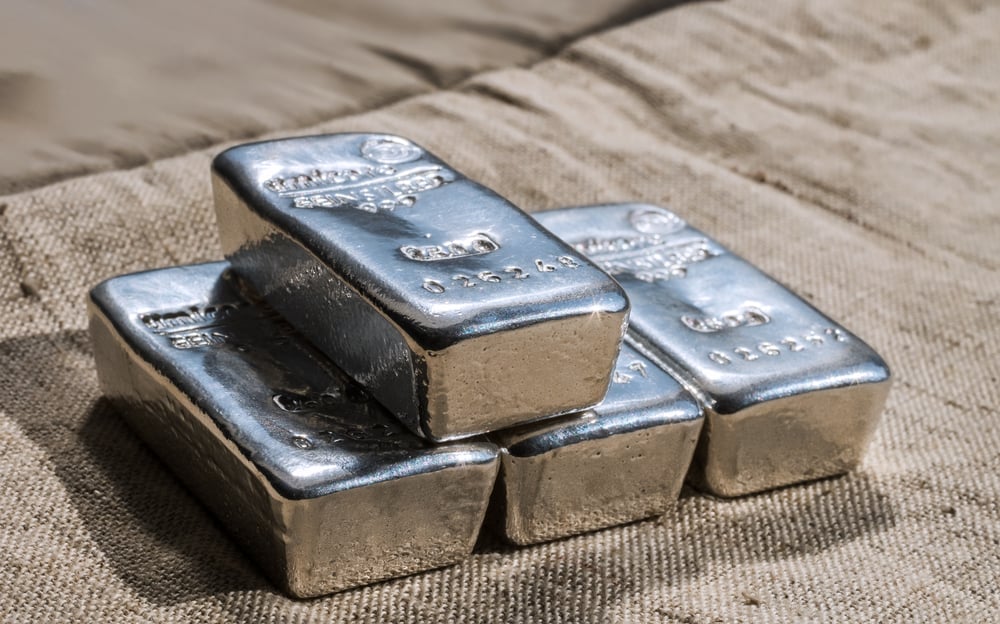
Figure 1: Mining production can affect the price of silver

The supply of silver is primarily driven by mining production. Silver is primarily produced as a byproduct of mining other metals like copper, lead, and zinc. As such, the supply of silver is heavily influenced by the mining industry’s production of these metals. If the production of these metals increases, the supply of silver will also increase, leading to a potential decrease in price. Conversely, if the production of these metals decreases, the supply of silver will also decrease, leading to a potential increase in price.

Another factor that can affect the supply of silver is recycling. Silver can be recovered from a variety of sources, including electronic waste, jewelry, and industrial waste. The amount of silver that is recycled can impact the overall supply of the metal. If the amount of silver that is recycled increases, the supply of silver will also increase, leading to a potential decrease in price. Conversely, if the amount of silver that is recycled decreases, the supply of silver will also decrease, leading to a potential increase in price.

Silver is an important industrial metal, with a wide range of uses in various industries. It is a key component in the production of electronics, solar panels, batteries, and medical equipment, among other things. As such, the demand for silver is largely tied to the health of the global economy. During times of economic growth, demand for silver tends to increase as industries expand and more products are produced. Conversely, during times of economic contraction, demand for silver tends to decline as industries contract and production slows down.

Silver is also a popular investment asset, with investors using it to diversify their portfolios and protect against inflation. During times of economic uncertainty, investors tend to flock to safe-haven assets like silver, which can help to protect their wealth in the event of a market downturn. This can cause the price of silver to rise as demand increases.

When it comes to the demand large traders or investors can have much to say. The silver market is much smaller than the gold market and is actually much smaller than many companies. The London gold market alone turns over 18 times more monetary value than silver. With physical demand estimated at around only $15 billion per year it may be possible for a large trader or investor to influence the silver price either positively or negatively. An example of this could be when the Hunt brothers were accused of attempting to corner the silver market in 1979.  They were estimated to have accumulated over 100 million troy ounces of silver, potentially contributing to the increase in price from $6 to $48.40 as seen in the graph below. The y-axis represent the nominal price of silver while the x-axis represents the year.

A big driver for silver sales in 2012 was Morgan Stanley and their short position holdings. This has influenced the silver market, along with an apparent shortage of above ground silver available for investment. As silver continues to boom for industrial uses, less of the metal is available for physical bullion for investment. That, coupled with paper investment uncertainty, has driven the market prices wildly.

Silver is also used in the production of jewelry. The demand for silver jewelry is largely driven by fashion trends and consumer preferences. In some cultures, silver is also used as a store of value or a form of currency, which can drive up demand for the metal.

The interaction between supply and demand is what ultimately determines the price of silver. If the demand for silver is greater than the supply, the price will increase. Conversely, if the supply of silver is greater than the demand, the price will decrease. Worlds largest silver producers by country are : 1.Mexico, 2. Peru, 3. China, 4. Australia, 5. Chile, 6. Poland, 7. Russia, 8. Bolivia, 9. USA. Worlds largest silver consumers are: 1. USA, 2. China, 3. Japan, 4. India, 5. Germany, 6. Italy.


Price elasticity is another important factor to consider when it comes to silver investing. Price elasticity refers to the degree to which the demand for silver changes in response to a change in price. If the demand for silver is highly elastic, meaning that even small changes in price can cause a significant change in demand, then the price of silver will be highly volatile. Conversely, if the demand for silver is relatively inelastic, meaning that changes in price have little impact on demand, then the price of silver will be relatively stable.

Financial Stress/Hedging

Silver is considered a safe heaven during times of volatility/ insecurity in the markets. So if there is volatility or one or more of the large currencies fail the price of silver will go up. Silver can also be used as a hedge against inflation and deflation.  A hedge is essentially a way to safeguard yourself when you are investing. You may feel vulnerable as you look at your portfolio, especially if experts are predicting a downturn. Hedging can be a form of insurance against the risk you feel you’re taking with the other items in your portfolio.

You’ll see hedging as a strategy used by professional brokers as they help you build your portfolio. They’ll look at safer investments to offset the high-risk items they choose. The theory is that, if things go wrong, you’ll have some items in your portfolio that may be gaining or holding their value to help reduce your losses.

Figure 3: Silver can be a hedge in uncertain times

Political factors such as government policies, regulations, and trade agreements can impact the supply and demand of silver. In addition, political instability, such as war or civil unrest, can also lead to an increase in demand for safe-haven assets like silver, causing the price to rise.

Despite the subtle dangers of silver, it’s popular with investors, especially during tough times. This puts it in the category of a safe haven, which is defined as an investment that is expected to hold its value as the market turns turbulent. However, no safe haven is guaranteed in every market, which means it’s important to research silver before putting money into it.

Due to its slightly safer natur some investors choose to make silver a part of a larger portfolio. Although you won’t earn interest on that part of your portfolio over the years, it can be useful as a hedge against inflation. The fact that they tend to do better when other stocks are failing can help balance out your portfolio.

Many still invest in silver and gold stocks, though, with the logic that metals tend to fare well during stock market crashes. While this has historically been true of gold, that same improved performance doesn’t apply to silver. Silver is used heavily in industrial sectors, which makes it more likely to be tied to the performance of the greater economy.

Technology

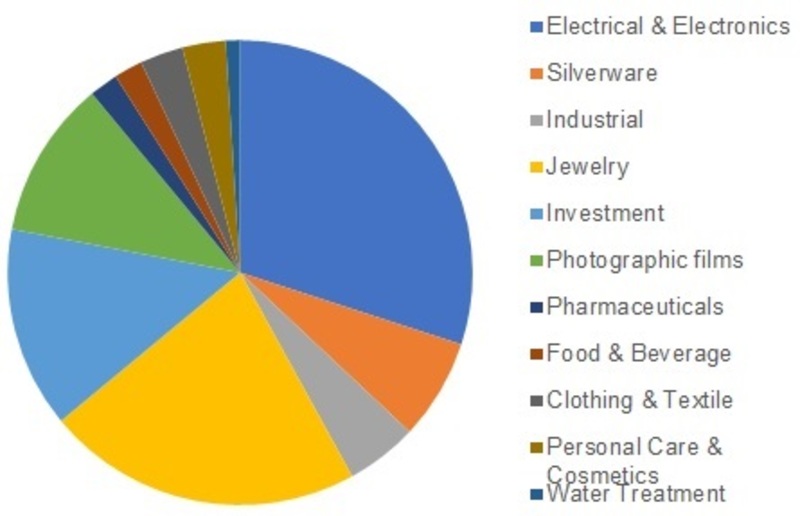
Silver is an important component in many electrical products. As more people use modern technology, the demand for silver slowly increases.

Unlike gold, the price of silver swings between its perceived role as a store of value and its role as an industrial metal. For this reason, price fluctuations in the silver market are more volatile than gold. So, while silver will trade roughly in line with gold as an item to be hoarded, the industrial supply/demand equation for the metal exerts an equally strong influence on its price.

Figure 4: Market for silver

That equation has always fluctuated with new innovations, including: Silver’s once predominant role in the photography industry—silver-based photographic film—which has been eclipsed by the advent of the digital camera.

The rise of a vast middle class in the emerging market economies of the East, which created an explosive demand for electrical appliances, medical products, and other industrial items that require silver inputs. From bearings to electrical connections, silver’s properties made it a desired commodity. Silver’s used in batteries, superconductor applications, and microcircuit markets.


How to Buy Silver

There are several ways to invest in silver, including physical silver, exchange-traded funds (ETFs), futures contracts, and mining stocks. Each of these investment options has its own advantages and disadvantages, and investors should carefully consider their options before making a decision.

Investors can invest in silver through ETFs, which track the price of silver and trade like stocks. ETFs offer investors the ability to invest in silver without actually owning the physical metal, making them a convenient and cost-effective investment option.

Funds like the iShares Silver Trust (SLV) have made it quite easy for regular retail investors to enter the silver market. This industrial demand makes silver prices more volatile than gold and generally reactive to various measures of manufacturing data. Given this fact, ETFs that track silver prices or futures could be a better bet versus physical bullion, as they can be sold quite easily if investors think prices are too frothy.

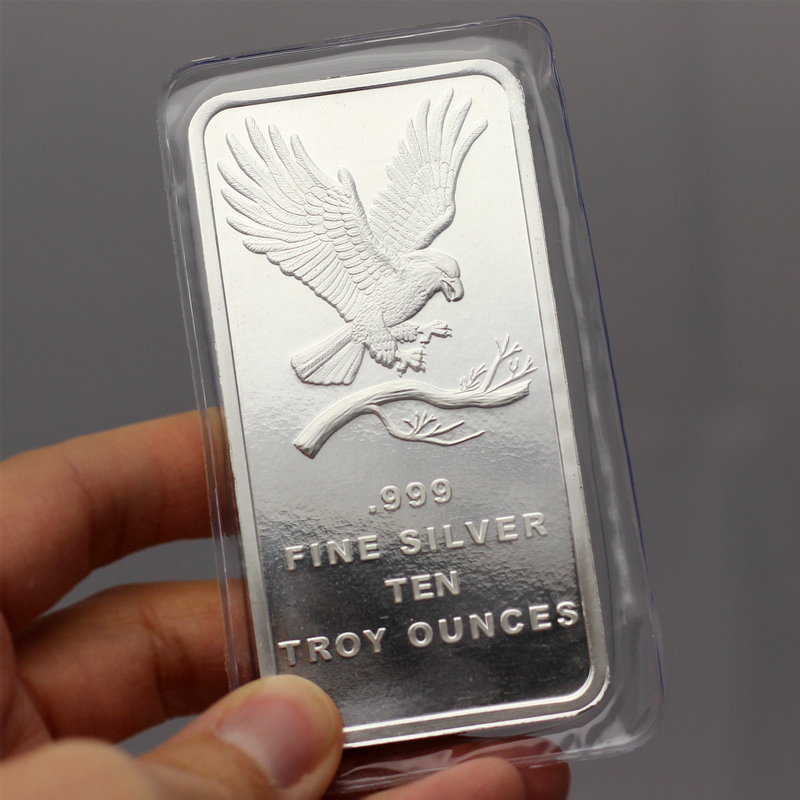
American Eagle is a famous silver brand

Then there are costs to consider. Buying physical silver comes with added costs many investors may not be thinking of. First, investors have to pay an average of 5% to 6% in commissions to acquire silver coins and bullion, depending on the source. Then there are the storage costs to consider. Safety deposit boxes at banks carry an annual fee and home safes can range into the thousands, depending on the size, while precious metals IRAs and custodial accounts come with yearly storage fees as well.

For the cost of just one share that trades at roughly spot price and as little as 0.50% in yearly expenses, investors can access silver via an ETF. A perfect example of the potential problems with ETF stems from the bankruptcy of MF global in the late 2011. Investors who held warehouse silver bars within the firm’s accounts had their assets frozen and pooled together. The liquidating trustee in the court-approved bankruptcy paid these investors about 72 cents on the dollar for their holdings. In other words, these investors lost 28% of their bullion. With some silver participants claiming manipulation in the silver markets with regards to many of the big ETF/ETN sponsors, owning physical bullion could pay-off in the real end.

Finally, ETF fees do have an eroding effect on their underlying prices. Many of the physically-backed funds sell a portion of their bullion to pay for their expenses. Over time, this has caused share prices to track less than spot. Shareholders don’t actually own title to the metal itself unless they are an authorized participent in an ETF. On the other hand, when you own actual silver it’s yours. If the world goes “crazy,” you have the store of value directly in your own hands or vault. This fact underscores the number one reason why most investors choose precious metals in the first place: insurance.

The third way to invest in silver is by buying silver mining stocks. Publicly-traded silver mining companies are located across the globe and can help you make a profit. As silver prices rise and fall, you’ll see your stocks in mining companies follow those trends. However, events such as an accident may affect a mining company even when silver is performing well.

Another option is to invest in something called a silver streaming company. A streaming company doesn’t directly deal in mining steel but instead offers financing to them in exchange for shares. These streaming companies are also affected by fluctuations in silver prices, but their ability to keep a steady stream of financing deals can also affect their stocks.

Investors can also invest in silver through futures contracts, which allow them to purchase silver

Warren Buffet (did not make much money on it/don’t advise it), “didn’t get where we are by owning silver”- Charlie Monger.

Silver investing: An overview

Silver is a precious metal that has been used for thousands of years as a store of value, currency, and industrial commodity. It has unique properties that make it a valuable asset for investors looking to diversify their portfolio or protect against inflation. In this article, we will explore the various factors that affect the price of silver and the reasons why it is an attractive investment option.

Supply and Demand

Silver is a precious metal that is used as an element in jewelry, electronics, coins and photography. Silver as a metal has the highest electrical conductivity of any metal. Therefore, it is used in many industrial processes. Silver is also important in many cultures around the world as it is used in ceremonies or worn during important occasions. As with any commodity, the price of silver is heavily influenced by the balance between the supply and demand for the metal.

Figure 1: Mining production can affect the price of silver

The supply of silver is primarily driven by mining production. Silver is primarily produced as a byproduct of mining other metals like copper, lead, and zinc. As such, the supply of silver is heavily influenced by the mining industry’s production of these metals. If the production of these metals increases, the supply of silver will also increase, leading to a potential decrease in price. Conversely, if the production of these metals decreases, the supply of silver will also decrease, leading to a potential increase in price.

Another factor that can affect the supply of silver is recycling. Silver can be recovered from a variety of sources, including electronic waste, jewelry, and industrial waste. The amount of silver that is recycled can impact the overall supply of the metal. If the amount of silver that is recycled increases, the supply of silver will also increase, leading to a potential decrease in price. Conversely, if the amount of silver that is recycled decreases, the supply of silver will also decrease, leading to a potential increase in price.

Silver is an important industrial metal, with a wide range of uses in various industries. It is a key component in the production of electronics, solar panels, batteries, and medical equipment, among other things. As such, the demand for silver is largely tied to the health of the global economy. During times of economic growth, demand for silver tends to increase as industries expand and more products are produced. Conversely, during times of economic contraction, demand for silver tends to decline as industries contract and production slows down.

Silver is also a popular investment asset, with investors using it to diversify their portfolios and protect against inflation. During times of economic uncertainty, investors tend to flock to safe-haven assets like silver, which can help to protect their wealth in the event of a market downturn. This can cause the price of silver to rise as demand increases.

When it comes to the demand large traders or investors can have much to say. The silver market is much smaller than the gold market and is actually much smaller than many companies. The London gold market alone turns over 18 times more monetary value than silver. With physical demand estimated at around only $15 billion per year it may be possible for a large trader or investor to influence the silver price either positively or negatively. An example of this could be when the Hunt brothers were accused of attempting to corner the silver market in 1979.  They were estimated to have accumulated over 100 million troy ounces of silver, potentially contributing to the increase in price from $6 to $48.40 as seen in the graph below. The y-axis represent the nominal price of silver while the x-axis represents the year.

A big driver for silver sales in 2012 was Morgan Stanley and their short position holdings. This has influenced the silver market, along with an apparent shortage of above ground silver available for investment. As silver continues to boom for industrial uses, less of the metal is available for physical bullion for investment. That, coupled with paper investment uncertainty, has driven the market prices wildly.

Silver is also used in the production of jewelry. The demand for silver jewelry is largely driven by fashion trends and consumer preferences. In some cultures, silver is also used as a store of value or a form of currency, which can drive up demand for the metal.

The interaction between supply and demand is what ultimately determines the price of silver. If the demand for silver is greater than the supply, the price will increase. Conversely, if the supply of silver is greater than the demand, the price will decrease. Worlds largest silver producers by country are : 1.Mexico, 2. Peru, 3. China, 4. Australia, 5. Chile, 6. Poland, 7. Russia, 8. Bolivia, 9. USA. Worlds largest silver consumers are: 1. USA, 2. China, 3. Japan, 4. India, 5. Germany, 6. Italy.


Price elasticity is another important factor to consider when it comes to silver investing. Price elasticity refers to the degree to which the demand for silver changes in response to a change in price. If the demand for silver is highly elastic, meaning that even small changes in price can cause a significant change in demand, then the price of silver will be highly volatile. Conversely, if the demand for silver is relatively inelastic, meaning that changes in price have little impact on demand, then the price of silver will be relatively stable.

Financial Stress/Hedging

Silver is considered a safe heaven during times of volatility/ insecurity in the markets. So if there is volatility or one or more of the large currencies fail the price of silver will go up. Silver can also be used as a hedge against inflation and deflation.  A hedge is essentially a way to safeguard yourself when you are investing. You may feel vulnerable as you look at your portfolio, especially if experts are predicting a downturn. Hedging can be a form of insurance against the risk you feel you’re taking with the other items in your portfolio.

You’ll see hedging as a strategy used by professional brokers as they help you build your portfolio. They’ll look at safer investments to offset the high-risk items they choose. The theory is that, if things go wrong, you’ll have some items in your portfolio that may be gaining or holding their value to help reduce your losses.

Figure 3: Silver can be a hedge in uncertain times

Political factors such as government policies, regulations, and trade agreements can impact the supply and demand of silver. In addition, political instability, such as war or civil unrest, can also lead to an increase in demand for safe-haven assets like silver, causing the price to rise.

Despite the subtle dangers of silver, it’s popular with investors, especially during tough times. This puts it in the category of a safe haven, which is defined as an investment that is expected to hold its value as the market turns turbulent. However, no safe haven is guaranteed in every market, which means it’s important to research silver before putting money into it.

Due to its slightly safer natur some investors choose to make silver a part of a larger portfolio. Although you won’t earn interest on that part of your portfolio over the years, it can be useful as a hedge against inflation. The fact that they tend to do better when other stocks are failing can help balance out your portfolio.

Many still invest in silver and gold stocks, though, with the logic that metals tend to fare well during stock market crashes. While this has historically been true of gold, that same improved performance doesn’t apply to silver. Silver is used heavily in industrial sectors, which makes it more likely to be tied to the performance of the greater economy.

Technology

Silver is an important component in many electrical products. As more people use modern technology, the demand for silver slowly increases.

Unlike gold, the price of silver swings between its perceived role as a store of value and its role as an industrial metal. For this reason, price fluctuations in the silver market are more volatile than gold. So, while silver will trade roughly in line with gold as an item to be hoarded, the industrial supply/demand equation for the metal exerts an equally strong influence on its price.

Figure 4: Market for silver

That equation has always fluctuated with new innovations, including: Silver’s once predominant role in the photography industry—silver-based photographic film—which has been eclipsed by the advent of the digital camera.

The rise of a vast middle class in the emerging market economies of the East, which created an explosive demand for electrical appliances, medical products, and other industrial items that require silver inputs. From bearings to electrical connections, silver’s properties made it a desired commodity. Silver’s used in batteries, superconductor applications, and microcircuit markets.


How to Buy Silver

There are several ways to invest in silver, including physical silver, exchange-traded funds (ETFs), futures contracts, and mining stocks. Each of these investment options has its own advantages and disadvantages, and investors should carefully consider their options before making a decision.

Investors can invest in silver through ETFs, which track the price of silver and trade like stocks. ETFs offer investors the ability to invest in silver without actually owning the physical metal, making them a convenient and cost-effective investment option.

Funds like the iShares Silver Trust (SLV) have made it quite easy for regular retail investors to enter the silver market. This industrial demand makes silver prices more volatile than gold and generally reactive to various measures of manufacturing data. Given this fact, ETFs that track silver prices or futures could be a better bet versus physical bullion, as they can be sold quite easily if investors think prices are too frothy.

American Eagle is a famous silver brand

Then there are costs to consider. Buying physical silver comes with added costs many investors may not be thinking of. First, investors have to pay an average of 5% to 6% in commissions to acquire silver coins and bullion, depending on the source. Then there are the storage costs to consider. Safety deposit boxes at banks carry an annual fee and home safes can range into the thousands, depending on the size, while precious metals IRAs and custodial accounts come with yearly storage fees as well.

For the cost of just one share that trades at roughly spot price and as little as 0.50% in yearly expenses, investors can access silver via an ETF. A perfect example of the potential problems with ETF stems from the bankruptcy of MF global in the late 2011. Investors who held warehouse silver bars within the firm’s accounts had their assets frozen and pooled together. The liquidating trustee in the court-approved bankruptcy paid these investors about 72 cents on the dollar for their holdings. In other words, these investors lost 28% of their bullion. With some silver participants claiming manipulation in the silver markets with regards to many of the big ETF/ETN sponsors, owning physical bullion could pay-off in the real end.

Finally, ETF fees do have an eroding effect on their underlying prices. Many of the physically-backed funds sell a portion of their bullion to pay for their expenses. Over time, this has caused share prices to track less than spot. Shareholders don’t actually own title to the metal itself unless they are an authorized participent in an ETF. On the other hand, when you own actual silver it’s yours. If the world goes “crazy,” you have the store of value directly in your own hands or vault. This fact underscores the number one reason why most investors choose precious metals in the first place: insurance.

The third way to invest in silver is by buying silver mining stocks. Publicly-traded silver mining companies are located across the globe and can help you make a profit. As silver prices rise and fall, you’ll see your stocks in mining companies follow those trends. However, events such as an accident may affect a mining company even when silver is performing well.

Another option is to invest in something called a silver streaming company. A streaming company doesn’t directly deal in mining steel but instead offers financing to them in exchange for shares. These streaming companies are also affected by fluctuations in silver prices, but their ability to keep a steady stream of financing deals can also affect their stocks.

Investors can also invest in silver through futures contracts, which allow them to purchase silver

Warren Buffet (did not make much money on it/don’t advise it), “didn’t get where we are by owning silver”- Charlie Monger.

Page 2 of 2

Powered by WordPress & Theme by Anders Norén