Tag: Stock Analysis

Target: Stock Analysis

Introduction

Target Corporation has grown from a single discount store into one of the most iconic retail brands in the United States.
Target Announces Plans to Right-Size Inventory | Shop Eat Surf Outdoor

Illustration 1: The iconic Target Bullseye Logo

Known for its signature red logo and “Expect More. Pay Less.” philosophy, Target has become a favorite destination for millions of shoppers who value style, convenience, and affordability. From groceries to fashion, home goods to electronics, Target has it all.

From its Minneapolis headquarters, Target manages hundreds of stores across the United States, a sophisticated e-commerce platform, and a growing network of fulfillment and distribution centers.

Its guiding philosophy of blending affordability with style and quality has helped it carve out a unique position in retail.

Unlike traditional retailers that grew cautiously, Target expanded strategically. It focused on curated product offerings. It also emphasized smart store locations and innovative marketing.

By integrating online and offline shopping experiences, Target continues to capture the hearts and wallets of millions.

History

The Target story began in 1962, when George Dayton’s Dayton Company opened the first Target store in Roseville, Minnesota.

From the start, Target differentiated itself from competitors by offering a higher-quality shopping experience at affordable prices.

What Target Looked Like When the Retail Giant First Opened - Business  Insider

Illustration 2: The first ever Target store in 1962. Image gathered from: What Target Looked Like When the Retail Giant First Opened – Business Insider


During the 1970s and 1980s, Target expanded steadily across the Midwest. It also expanded in the Southern United States. The focus was on locations that allowed it to serve growing suburban communities.

vintage target

Illustration 3: Vintage photage from a Target store in the 80s. Gathered from Vintage Photos of What Target Used to Look Like – Business Insider

Unlike discount chains that competed purely on price, Target invested in store design. It also focused on product quality and customer experience. As a result, it earned a loyal following among middle-class Americans.

In the 1990s, Target introduced its SuperTarget stores, combining general merchandise with full grocery sections. This move positioned Target as a one-stop-shop for families, directly challenging Walmart’s dominance in grocery and household essentials.

Target’s expansion has always balanced growth with brand identity. While Walmart pushed for sheer scale, Target cultivated a reputation for style, design, and a curated shopping experience.

In recent years, Target has also embraced digital transformation. Its e-commerce operations, delivery services, and membership programs help it compete with online giants like Amazon.

Target debuts a super-sized new store design

Illustration 4: A Target Superstore that competes directly with Walmart superstores. Image from Target debuts a super-sized new store design.

Today, Target operates over 1,900 stores nationwide. It employs hundreds of thousands of team members. The company continues to grow its online marketplace and attracts millions of customers every week.

Operations


Nationwide Presence

Target generates revenue through a diverse mix of product categories and services. It blends its physical retail operations with a rapidly expanding digital presence.

Target Unwraps Immersive Store and Digital Experiences for Holiday Shoppers  - Retail TouchPoints

Illustration 5: Chritstmas products at target, image from Target Unwraps Immersive Store and Digital Experiences for Holiday Shoppers – Retail TouchPoints.

The company’s core revenue comes from general merchandise, including apparel, home goods, electronics, and beauty products. Its private-label brands, such as Goodfellow & Co. and Up & Up, allow Target to offer stylish, high-quality products at competitive prices. This strategy creates strong customer loyalty and results in higher margins.

Groceries and everyday essentials are another key revenue driver. SuperTarget and traditional Target locations provide fresh produce, packaged foods, and household staples. This segment not only drives foot traffic but also encourages larger shopping baskets.

E-commerce has emerged as a critical growth engine for Target. Its online platform integrates traditional retail with innovative delivery options, including curbside pickup, same-day delivery through Shipt, and a seamless digital marketplace

Membership and loyalty programs, especially Target Circle, enhance revenue. They offer personalized deals, rewards, and promotions. These incentives drive repeat purchases. These initiatives have allowed Target to capture convenience-oriented shoppers. They also capture value-conscious shoppers. This positions Target as a hybrid retailer that thrives across channels.

Target’s Supply Chain

Target’s supply chain is one of its most critical competitive advantages. The company uses strategically located distribution centers and centralized procurement. It has an advanced logistics network. This setup moves goods efficiently from suppliers to stores and directly to customers.

Its sophisticated inventory management systems reduce waste. They maintain stock accuracy and keep pricing competitive. Its private trucking fleet ensures timely delivery across the country. B

Capping off National Truck Driver Appreciation Week, thank you to all of  our transportation partners who help us serve our guests. We appreciate you!

Illustration 6: A target Truck.

By combining technology, scale, and operational discipline, Target’s supply chain supports both its physical stores and e-commerce operations. This combination enables the company to offer convenience and reliability that few competitors can match.


Key Competitors

Target operates in a highly competitive retail landscape. Walmart is its most formidable rival. It leverages unmatched scale and a vast grocery footprint. Walmart’s low-price leadership captures a broad segment of everyday shoppers.

Amazon Go Grocery: This Is The Future Of Shopping, Whether We Like It Or Not

Illustration 7: Amazon Go Grocery is becoming a big competitor. Image from Amazon Go Grocery: This Is The Future Of Shopping, Whether We Like It Or Not

Walmart’s aggressive pricing and expansive store network create constant pressure on Target, particularly in mass merchandise and grocery categories. Please see our article for more information about Walmart: Walmart: Stock Analysis (Nov. 2025) – Insightpost %.

Online retail adds another layer of competition. Amazon has reshaped consumer expectations around convenience, delivery speed, and product variety, directly challenging both Target’s digital and physical offerings.

Amazon’s dominance in e-commerce is significant. Its expanding footprint in grocery delivery poses a continuous threat. This forces Target to innovate across its online channels and fulfillment capabilities.

Membership-based retailers such as Costco present another form of competition. By offering bulk products at discounted prices, Costco attracts cost-conscious, loyalty-driven shoppers, directly challenging Target.

Similarly, Dollar General and Dollar Tree continue to expand aggressively in smaller, value-focused markets. They target regions and segments where Target’s larger-format stores may not fit.

Traditional grocers like Kroger, Albertsons, and Publix also compete with Target’s SuperTarget locations in fresh foods and groceries. Meanwhile, global retailers such as Aldi, Lidl, and Carrefour apply additional pressure. They use regional expertise, low-cost strategies and increasingly sophisticated digital tools.

Rayon fromage moyen dans un supermarché italien. C'est seulement un tiers  du tout cependant (le Parmigiano Reggiano a sa propre section, bien sûr) :  r/Cheese

Illustration 8: Carrefour cheese section

Competitive Advantages

Target’s strongest advantage lies in its brand identity. Unlike Walmart, which prioritizes scale and the lowest possible prices, Target has built a reputation around style. It focuses on an elevated shopping experience.


Technology and operational efficiency are central to Target’s advantage. The company has made significant investments in e-commerce, fulfillment, inventory management, and automation.

Its growing network of micro-fulfillment centers and advanced inventory tracking allow Target to process orders quickly. Integrated digital systems ensure accuracy. Customers receive their products with speed and convenience.

Target’s nationwide distribution network and strategically placed store footprint further enhance its efficiency. Products move rapidly from suppliers to stores. They are delivered directly to customers. This is supported by a logistics system that rivals the best in retail.

See next page for Stock analysis,


Stock Analysis

In this section we will analyze Target’s stock to see if it is a good stock to buy or not. Our philosophy is value investing meaning that we try to find good quality companies that are undervalued. However, we will give a holistic overview. This allows all kinds of investors with different philosophies to judge the stock for themselves.

Revenue and Profits
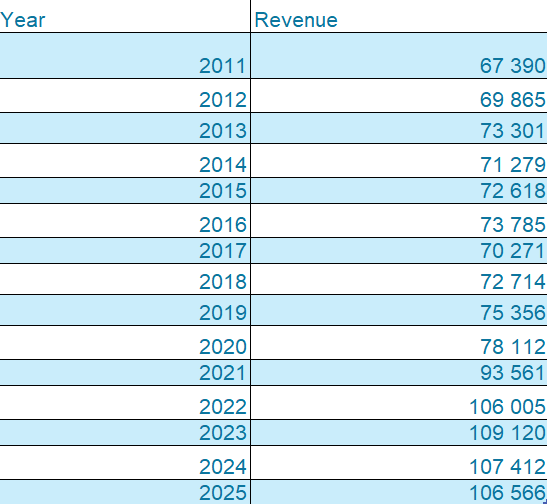
Illustration 9 and 10: Revenue of Target from 2011 to 2025

As shown in Illustrations 9 and 10, Target’s revenue has experienced significant fluctuations over the years. From 2011 to 2020, revenue mainly stayed around the same level. This period reflects stagnation and can be considered a negative signal for consistent growth. The overall trend from 2011 to 2025 has been positive. However, recent data from 2022 to 2025 show that Target continues to experience volatility. Revenue is rising and falling rather than steadily increasing.

Target’s revenue performance between 2015 and 2017 was impacted by various factors, including heightened competition in the U.S. market and operational adjustments in certain underperforming segments, which temporarily suppressed earnings growth.

Overall, while Target has achieved long-term growth from 2011 to 2025, the recurring fluctuations indicate areas of inconsistency. This suggests that investors should be aware of the company’s cyclical performance when considering its stability and long-term prospects. The fluctuation is a red flag that the company has a hard time achieving steady growth.

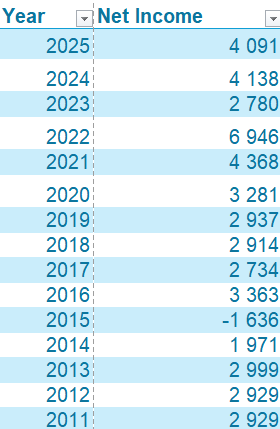
Illustration 11 and 12: Net Income for Target from 2011 to 2025

Net income is a crucial metric to evaluate when determining whether a company is a worthwhile investment. It represents a company’s net profit or loss after accounting for all revenues and income items. All expenses are deducted to calculate the net income as Net Income = Revenue – Expenses.

For Target, as illustrated in figures 11 and 12, several concerning trends appear in the development of net income. The decline in net income from 2011 to 2015 is a clear red flag. It signals operational and strategic challenges during those years. Rising operational expenses affected this period. Competition intensified significantly. The costly impact of Target’s unsuccessful Canadian expansion placed considerable pressure on profitability.

The net income remained flat between 2016 and 2020. There was no meaningful growth during this period. This lack of growth is also a negative sign. A prolonged lack of upward movement suggests stagnation in earnings. This is despite significant investments in digital transformation, store renovations, and supply-chain improvements.

The decline in net income from 2022 to 2023 is another notable warning signal. This drop was largely driven by sharp increases in freight, transportation, and inventory-related costs. Heavy markdowns were also a factor as Target attempted to correct excess inventory. Most significantly, the negative net income in 2015 marks a major red flag. Rising operating costs, margin compression, and persistent competitive pressure have culminated. This move into negative territory reflects these challenges.

Overall, Target’s net income trend raises concerns. The repeated declines (2011–2015 and 2022–2023), the prolonged stagnation (2016–2020), and the negative net income in 2015 collectively indicate that Target has faced significant profitability challenges. Persistent fluctuation without sustained growth is generally a negative sign for long-term financial health.

Revenue Breakdown

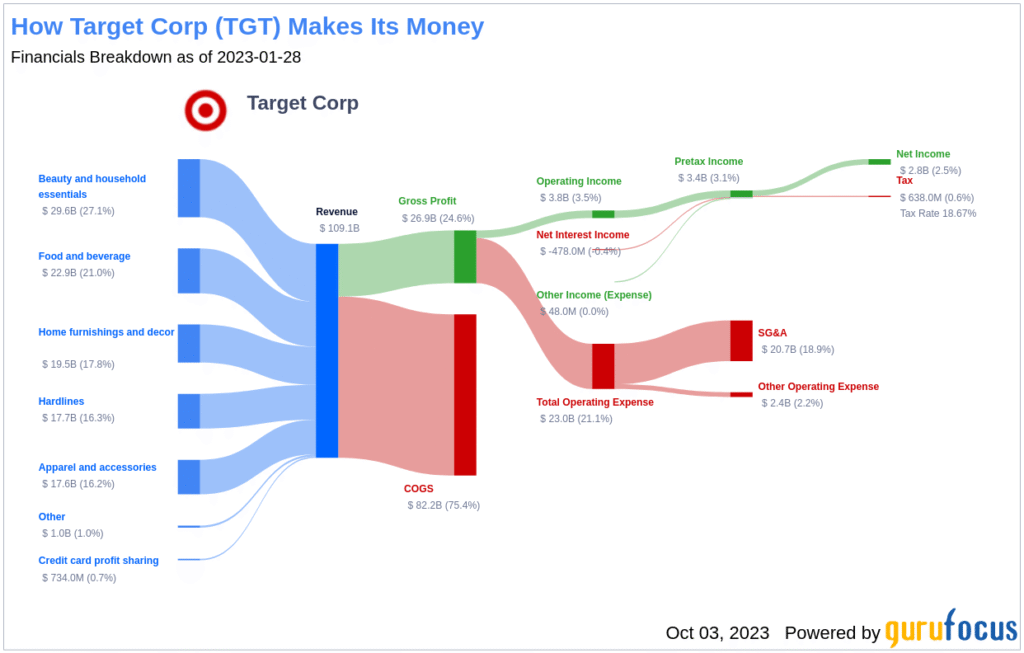
Illustration 13: Revenue breakdown of Target Corp., made by Gurufocus: Target (TGT)’s Hidden Bargain: An In-Depth Look at the 25% Margi

As shown in Illustration 13, Target’s revenue is driven primarily by its U.S. retail operations, as the company operates exclusively within the United States. Essentials & Beauty represents Target’s largest and most stable revenue contributors (around 27%). This category includes household essentials, personal care, cleaning supplies, and beauty products. Because these goods are purchased frequently, this segment provides Target with a reliable baseline of recurring revenue.

Food & Beverage is another major driver, accounting for around 21% share of overall revenue. . Although margins in grocery tend to be lower than in discretionary categories, the steady demand improves store traffic. Apparel & Accessories is one of Target’s historically strong segments and a key differentiator from many other big-box retailers. Target’s private-label apparel brands, combined with affordable pricing, drive strong seasonal demand. However, this category can be sensitive to shifts in consumer spending during inflationary periods. It can also be sensitive during recessionary periods. These conditions can lead to volatility.

Home contributes meaningfully to total revenue (17.8%) but has experienced fluctuations in recent years. After strong performance during the pandemic, demand softened as consumers shifted spending toward services and essentials. This cyclicality makes the Home category more volatile than Target’s other segments. Hardlines, which includes electronics, sporting goods, and toys, accounts for a smaller but still important portion of Target’s revenue. Performance in this segment tends to vary with product cycles and holiday-driven demand. Electronics, in particular, can generate high sales volatility depending on consumer trends and promotional activity.

On the cost side, cost of sales typically consumes a large share of Target’s revenue. This reflects the retailer’s competitive pricing strategy in a low-margin environment. Operating expenses, primarily wages, supply-chain costs, digital-fulfillment expenses, and ongoing store investments—make up most of the remaining cost base.

Earnings per share (EPS)

Illustration 14: EPS for Target Corp. from 2011 to 2025

Earnings Per Share (EPS) is a key financial metric. It shows how much profit a company generates for each outstanding share. It is a strong indicator of profitability, financial health, and long-term value creation. While the absolute EPS number matters less to value investors, the trend in EPS is crucial. A steadily rising EPS signals consistent profit growth and a strong underlying business.

For Target, the decline in EPS from 2013 to 2015 is a clear warning sign. This drop was largely driven by the company’s failed Canadian expansion, which resulted in significant operating losses, high exit costs, and considerable write-downs. These challenges placed heavy pressure on profitability and reduced Target’s earnings on a per-share basis.

The second notable dip, from 2022 to 2023, is also concerning. This decline reflects a combination of sharply rising supply-chain and freight costs, inventory costs and broader inflationary pressures. These factors strained margins and negatively affected earnings, even though revenues remained solid.

However, despite these dips, the overall long-term trend in Target’s EPS is positive. When viewed over a longer time horizon, EPS has generally moved upward. This is supported by strong private-label performance. More efficient store operations have also contributed. This upward trajectory suggests that Target has been able to recover from short-term setbacks and continue creating value for shareholders.

Assets and Liabilities

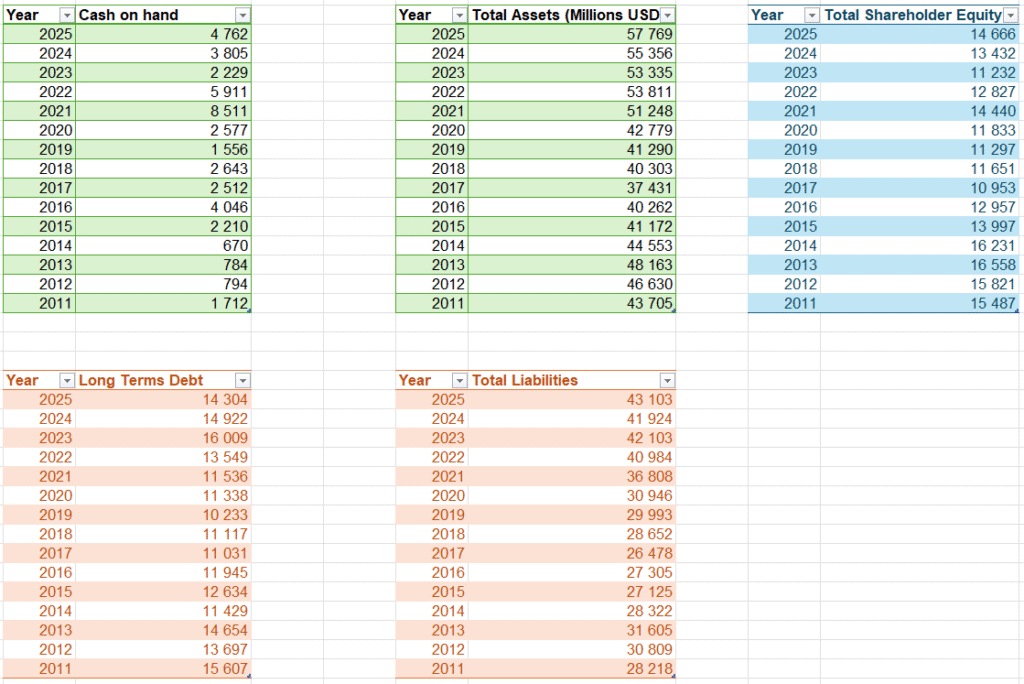
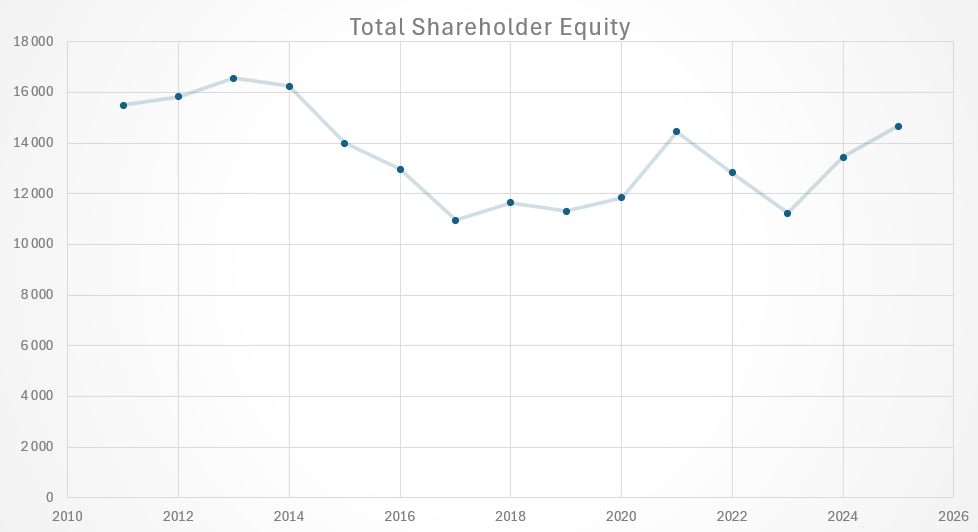
Illustration 15 and 16: Assets and Liabilities for Target from 2011 to 2025

When evaluating a company as a potential investment, understanding its assets and liabilities is essential. Just as you would assess the equity and assets of a local business before considering a purchase, the same logic applies. This also holds true when analyzing publicly traded companies like Target.

As shown in Illustrations 15, the downward trend in shareholder equity is the most concerning element. A declining equity base is a clear red flag, as it suggests that liabilities may be growing faster than assets. Illustration 15 shows that both total liabilities and assets have grown over time. However, assets are growing more slowly than liabilities. This can result from higher operating costs, inventory write-downs, margin pressures, or share buybacks exceeding retained earnings. Regardless of the specific cause, a sustained decline in equity weakens the company’s financial foundation. It reduces long-term value creation for shareholders.

The growth in Target’s total liabilities can also reflect investments in logistics, technology, inventory management and store modernization. Rising liabilities are not inherently negative, but they become more concerning when viewed alongside Target’s fluctuating cash on hand. Instead of showing a steady increase, cash levels have moved up and down year-to-year, signaling inconsistent liquidity management. More importantly, cash on hand is much lower than Target’s long-term debt. This creates a liquidity imbalance. It limits financial flexibility. It also increases reliance on external borrowing. This is a notable risk factor for investors.

Overall, Target’s balance sheet presents both strengths and significant caution points. Asset growth and ongoing investment in operational capabilities are positive. However, the decline in shareholder equity is a worrying sign. Fluctuating cash levels also raise concerns. Additionally, the large gap between cash on hand and long-term debt is something that investors should monitor closely.

Debt to Equity Ratio

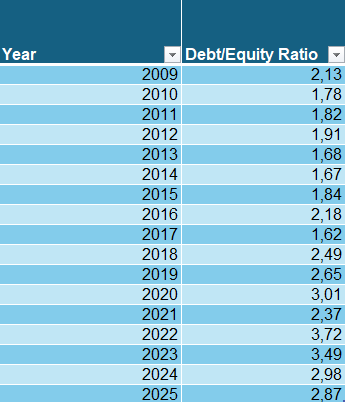
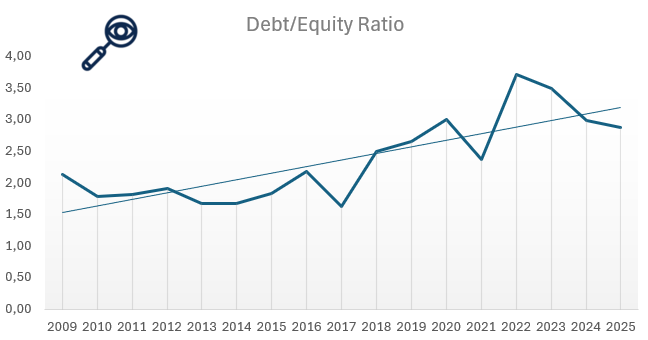
Illustration 17 and 18: Debt to equity ratio for Target from 2011 to 2025

The Debt-to-Equity (D/E) ratio is a key metric for assessing a company’s financial leverage and risk. It measures how much debt a company uses to finance its operations relative to shareholder equity. A higher D/E ratio indicates greater reliance on debt. This reliance can increase financial risk. This is especially true during economic downturns when meeting debt obligations becomes more challenging. Conversely, a lower D/E ratio suggests the company is primarily equity-financed, reducing risk but potentially limiting rapid growth opportunities.

Legendary value investor Warren Buffett generally prefers a debt-to-equity (D/E) ratio below 0.5. Walmart’s D/E ratio, however, stood at approximately 2.81 in 2025. For Target, the D/E ratio has shown a concerning upward trend over recent years, as can be seen in illustration 18. This rise indicates that Target is increasingly relying on debt to fund operations, store remodels, digital investments, and inventory management. While debt can accelerate growth, the steady increase in leverage is a negative sign. It exposes the company to higher financial risk if profitability or cash flow were to weaken.Target is gradually becoming more leveraged. Investors should monitor this situation closely. Continued increases in debt relative to equity could limit financial flexibility. They could also heighten vulnerability to economic shocks.

Price to earnings ratio (P/E)

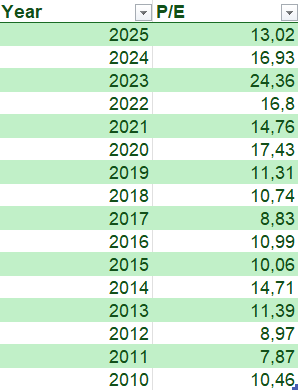
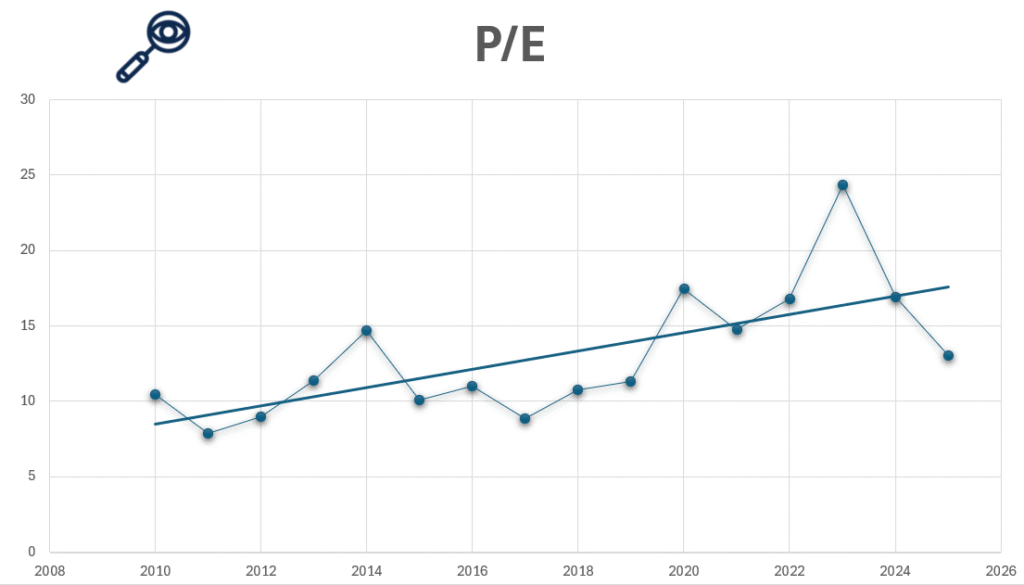
Illustration 19 and 20: P/E Ratio of Target from 2010 to 2025

For value investors, one of the most critical metrics when evaluating Walmart’s stock is the price-to-earnings (P/E) ratio, as it helps assess whether the company is undervalued or overvalued. Even if a company has strong financials, purchasing its stock at a high price can lead to poor returns. For example, imagine a business generating solid profits of $1 million per year. If the owner offers to sell you the business for just $1, it would be an incredible deal. But if the owner asks for $1 trillion, even though the business is profitable, the price would be absurdly overvalued. The stock market works similarly, companies can be priced cheaply on some days and excessively expensive on others.

Warren Buffett, a legendary value investor, typically considers stocks with a P/E ratio of 15 or lower as “bargains.” A high P/E ratio suggests that investors are paying a premium for the company’s earnings, expecting significant growth.

Target’s P/E has declined significantly in recent years. In 2023, it was around 24.36x, and as of 2025 it sits at about 13.02x, reflecting a substantial drop. This recent decline brings the stock back in line with its historical average P/E. Historically, it has generally ranged from 10x to 14x. Therefore, it is fairly valued from a long-term perspective.

The drop in P/E largely reflects a decrease in earnings per share (EPS). Target’s EPS fell from $14.10 in 2022 to $5.98 in 2023, which pressured the stock’s valuation and investor sentiment. The lower P/E indicates that the stock is no longer trading at a high premium. It also reflects recent earnings volatility. The challenges Target has faced include margin pressures, higher operating costs, and inventory management issues.

From a value-investor standpoint, the current P/E suggests that Target is now reasonably valued. The stock may even be modestly undervalued compared with both its recent peak and historical levels. This presents a potential entry point for long-term investors who believe the company can stabilize and grow earnings again. However, caution is warranted, as continued earnings volatility or macroeconomic pressures could make the stock less attractive. Overall, the recent dip in valuation makes Target’s stock more appealing than it has been in recent years. This aligns the price with its earnings. It creates a better opportunity for value-oriented investors.

Price to Book Value (P/B)

Illustration 21 and 22: Price to book value of Target from 2010 to 2025

The price-to-book (P/B) ratio compares a company’s market valuation to its book value. It essentially measures how much investors are paying for each dollar of shareholder equity. A lower P/B ratio can indicate that a stock is undervalued. This means investors are paying less for the company’s assets than they are actually worth. Conversely, a high P/B ratio suggest overvaluation or reflect investor expectations of strong future growth. This metric is often used by value investors to assess whether a stock is trading at a fair price relative to its underlying assets.

For Target, the recent decline in the P/B ratio from around 8.72x in 2022 to approximately 2.58x in 2025 is significant. This sharp drop largely reflects the company’s declining earnings. It also reflects shareholder equity pressures during this period. The pressures are driven by margin compression, higher operating and supply-chain costs, and inventory challenges. The drop was initially a warning sign. Now, the resulting low P/B suggests that Target is trading well below its historical valuation levels. This makes the stock appear undervalued from a value-investor perspective.

At the current P/B of roughly 2.58x, the stock is much closer to the range typically favored by value investors, such as Warren Buffett, who often seeks P/B ratios near or below 2x. This indicates that the market is pricing Target’s shares more in line with the company’s actual assets, rather than speculative growth expectations. The recent dip has stemmed from operational and margin pressures. However, it has created a potential opportunity for long-term investors. Now, the stock is trading at a discount relative to its book value and historical norms.

Return on Investment (ROI)

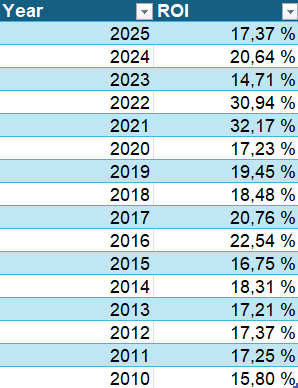
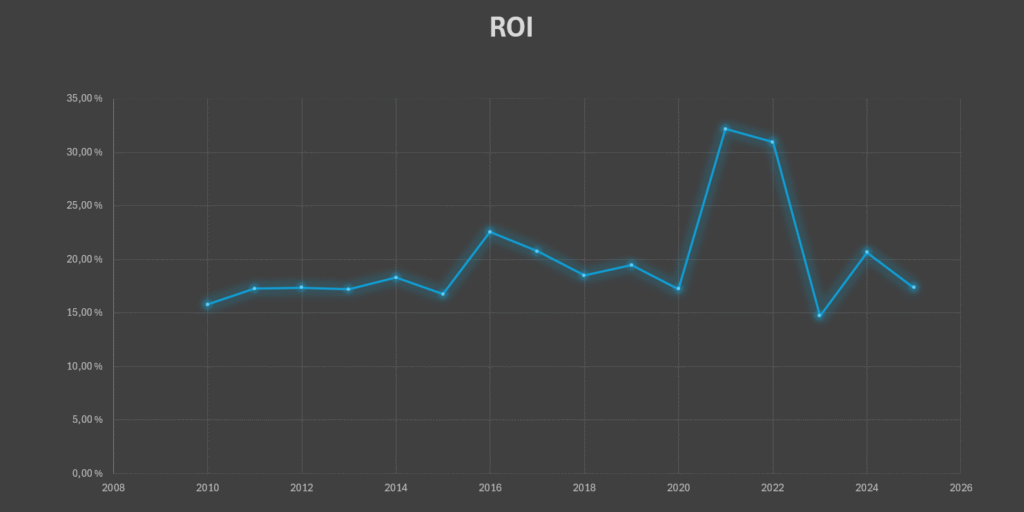
Illustration 23 and 24: ROI for Target from 2010 to 2025

For value investors, Return on Investment (ROI) is a key metric for evaluating Target, as it shows how efficiently the company is using its capital to generate profits. A strong ROI shows that Targetgenerates solid returns compared to the capital it deploys. This makes Target an attractive investment, even if the absolute revenue numbers are large.

Target’s ROI has historically been modest compared with some of its peers. From 2010 to 2020, ROI hovered around 15–20%, reflecting moderate efficiency in its operations and capital deployment. In 2021, ROI spiked sharply to approximately 32%. This increase was largely due to strong sales growth. Higher margins during the post-pandemic retail boom also contributed. Additionally, effective cost management played a role. This temporary surge highlighted Target’s ability to generate excellent returns when market conditions and operational execution align.

However, this improvement proved short-lived. From 2022 through 2024, ROI declined steadily back to around 15%, driven by rising supply-chain and freight costs, margin pressures from heavy markdowns, and higher operating expenses. These factors significantly reduced the efficiency of Target’s invested capital. The lower ROI underscores that, despite strong revenue, the company has struggled to translate sales into proportional returns on investment.

Overall, Target’s ROI remains relatively low, which is a cautionary sign for investors focused on capital efficiency. While the sharp increase in 2021 demonstrated the company’s potential under favorable conditions, the subsequent decline highlights ongoing operational challenges and the need for careful cost and capital management. From a value-investor perspective, the low ROI suggests that returns on invested capital are limited, even though recent strategic initiatives in supply-chain optimization and digital expansion could help improve efficiency over time.

Dividend

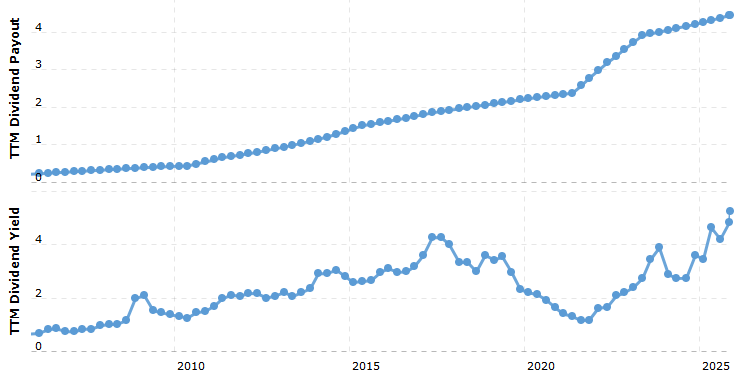
Illustration 25: Target Dividend Yield and dividend payout ratio from 2005 to 2025.

Target currently pays an annual dividend of $4.56 per share, resulting in a yield of approximately 5.45%, with a payout ratio around 55–60%. This moderate payout ratio shows that the dividend is reasonably sustainable. It also allows the company to retain a significant portion of earnings for operational needs, store remodels and inventory management. Additionally, it supports growth initiatives such as digital and supply-chain expansion.

The relatively high yield is attractive for income-focused investors. However, it also reflects some market caution regarding Target’s earnings volatility. Additionally, there have been margin pressures in recent years. Despite this, Target has a long history of consistent dividend payments. It has modest, steady increases. This demonstrates a commitment to returning value to shareholders.

Overall, Target’s dividend profile is a green flag. The dividend is generous and covered by earnings. It provides a reliable income stream. Meanwhile, the company maintains sufficient retained earnings to support ongoing investments.

Insider Trading

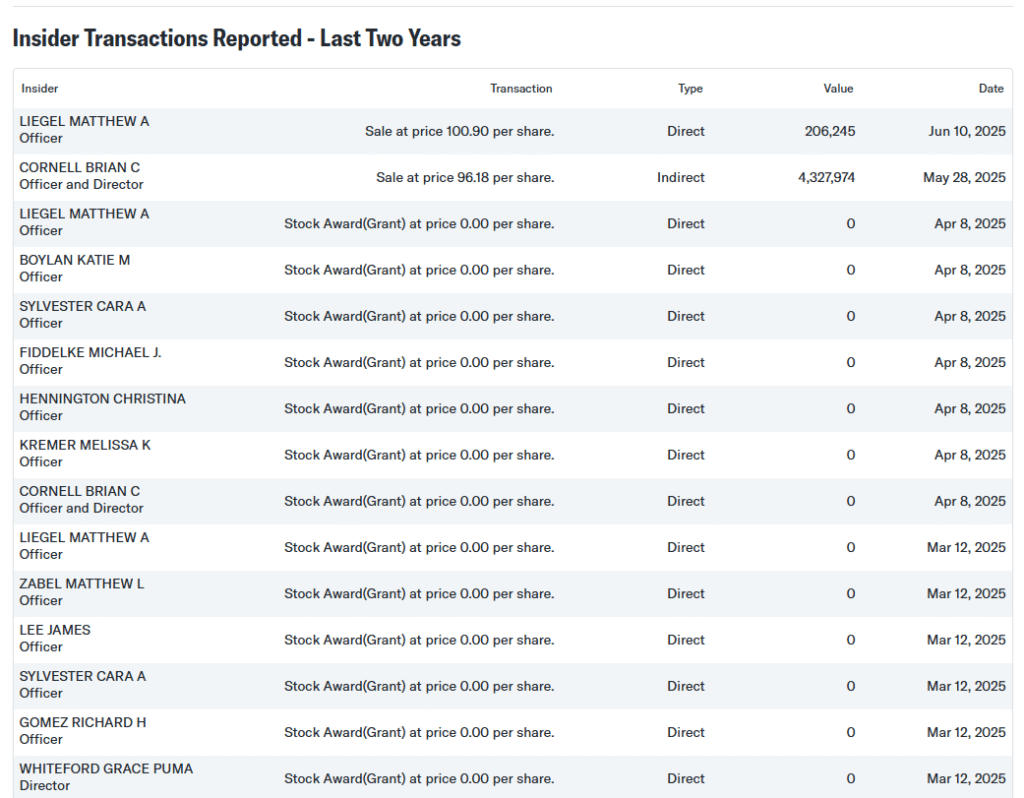
Illustration 26: Most recent insider trading at Target, gathered from Target Corporation (TGT) Recent Insider Transactions – Yahoo Finance. Please consult yahoo finance for most recent list.

In recent months, Target insiders have sold a significant amount of stock, which can be considered a red flag for investors. CEO Brian Cornell sold approximately 45,000 shares at an average price of $96.18, worth over $4 million. Chief Accounting Officer Matthew Liegel also sold shares during the same period. Most of these sales were conducted under prearranged Rule 10b5‑1 trading plans, which allow insiders to sell shares according to a pre-approved schedule. The scale of these transactions is notable. It could signal that insiders may have concerns about the near-term upside of the stock.

Rule 10b5‑1 plans reduce the likelihood that trades reflect a sudden loss of confidence. Despite this, the combination of large insider sales and relatively modest insider ownership in Target suggests caution. It may indicate that key executives are taking profits while the stock price is elevated, which can be a warning sign for potential investors. Target’s insider trading policy requires trades to occur during open windows and under pre-approved plans, providing governance oversight. However, the recent activity still highlights that insiders are reducing their exposure.

Other Company info

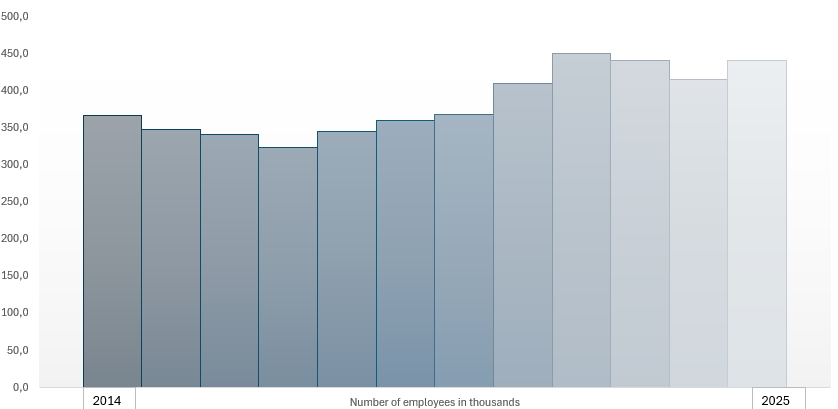
Founded in 1902, Target Corporation is one of the largest and most recognized retail chains in the United States, known for its combination of affordable products, stylish merchandise and growing e-commerce presence. As of 2024, Target employs approximately 450,000 people across its stores, distribution centers, and digital operations. The company is publicly traded on the New York Stock Exchange under the ticker symbol TGT and operates within the Consumer Discretionary sector, specifically in the Retail—Discount Stores industry.

Target is headquartered at 1000 Nicollet Mall, Minneapolis, Minnesota, USA. As of 2024, the company has roughly 496 million shares outstanding, with a market capitalization of around $95 billion USD. For more information, visit Target’s official website: https://corporate.target.com

Illustration 27-29: Number of employees and location of Target Corp.

Final Verdict

Overall, Target is not recommended as a value investment at this time. While the stock may appear reasonably priced, recent declines in sales, lowered earnings guidance, its reduced shareholder equity, fluctuating revenue, low ROI, high debt to equity ratio and net income and notable insider selling suggest caution.

Competitive pressures and operational challenges in the retail sector limit upside potential. This situation makes Target a red flag for long-term investors, even though it has a strong brand and solid operations.

Baidu Inc. – A Stock Analysis of One of China’s Leading Tech Giants

Introduction

Baidu Inc. is a prominent Chinese multinational technology company, widely recognized as one of the world’s leading artificial intelligence (AI) and internet services providers. Headquartered in Beijing, Baidu is best known for operating China’s largest search engine, but its portfolio spans a broad range of sectors, including cloud computing, autonomous driving, language processing, and smart devices.

Illustration 1: The Baidu logo, featuring its distinctive pawprint symbol, representing its digital footprint and innovation.

Unlike many global tech giants that emerged from the West, Baidu has played a foundational role in shaping the Chinese internet landscape. Its search engine dominates the domestic market, while its ongoing investment in AI and machine learning has positioned the company as a key innovator in emerging technologies such as autonomous vehicles and natural language understanding.

As a member of China’s “BAT” trio (Baidu, Alibaba, Tencent), Baidu is one of the most influential tech companies in Asia. Its technological infrastructure powers a wide array of services, including Baidu Maps, Baidu Cloud, and DuerOS—a voice assistant platform integrated into various smart devices. With a strong focus on AI research, a deep data ecosystem, and strategic partnerships, Baidu continues to be a driving force in the global tech landscape, particularly in AI and intelligent mobility.

History

Baidu was founded in 2000 by Robin Li and Eric Xu, emerging at a time when China’s internet ecosystem was still in its infancy. Robin Li’s development of the RankDex site-scoring algorithm in the late 1990s laid the foundation for Baidu’s core search technology—a precursor to modern search engine optimization and ranking systems.

Baidu’s breakthrough came in the early 2000s as it rapidly became China’s dominant search engine, offering results tailored to Chinese-language users with superior indexing of Chinese websites. The company’s innovative pay-for-placement advertising model helped generate significant early revenue, setting the stage for rapid growth and public listing on the NASDAQ in 2005.

Throughout the 2010s, Baidu evolved from a search engine company into a diversified tech powerhouse. It expanded into cloud services, digital maps, mobile applications, and AI-powered products. A major turning point was its strategic pivot toward artificial intelligence—investing heavily in autonomous driving (Apollo), smart voice assistants (DuerOS), and deep learning platforms (PaddlePaddle), making AI central to its long-term vision.

By the 2020s, Baidu had positioned itself as a global leader in AI and autonomous technology. Its Apollo platform became one of the most advanced autonomous driving systems in the world, and Baidu began operating robotaxi services in several Chinese cities. The company also deepened its AI capabilities through Baidu Brain, a large-scale AI system integrating vision, speech, knowledge, and language technologies.


Today, Baidu remains one of China’s most influential technology companies. With a strong emphasis on innovation, research, and ethical AI development, Baidu continues to drive advancements across industries. In the stock market, Baidu is seen as a bellwether for the Chinese tech sector, reflecting broader trends in AI, cloud computing, and digital infrastructure.

Operations and Products

  • Search, Cloud, and AI-Driven Ecosystem

Baidu operates one of the world’s largest and most advanced AI-powered ecosystems, built on a foundation of search, cloud computing, and intelligent services. While the company began as China’s premier internet search engine, it has transformed into a diversified technology enterprise focused on artificial intelligence, autonomous driving, cloud services, and smart devices.

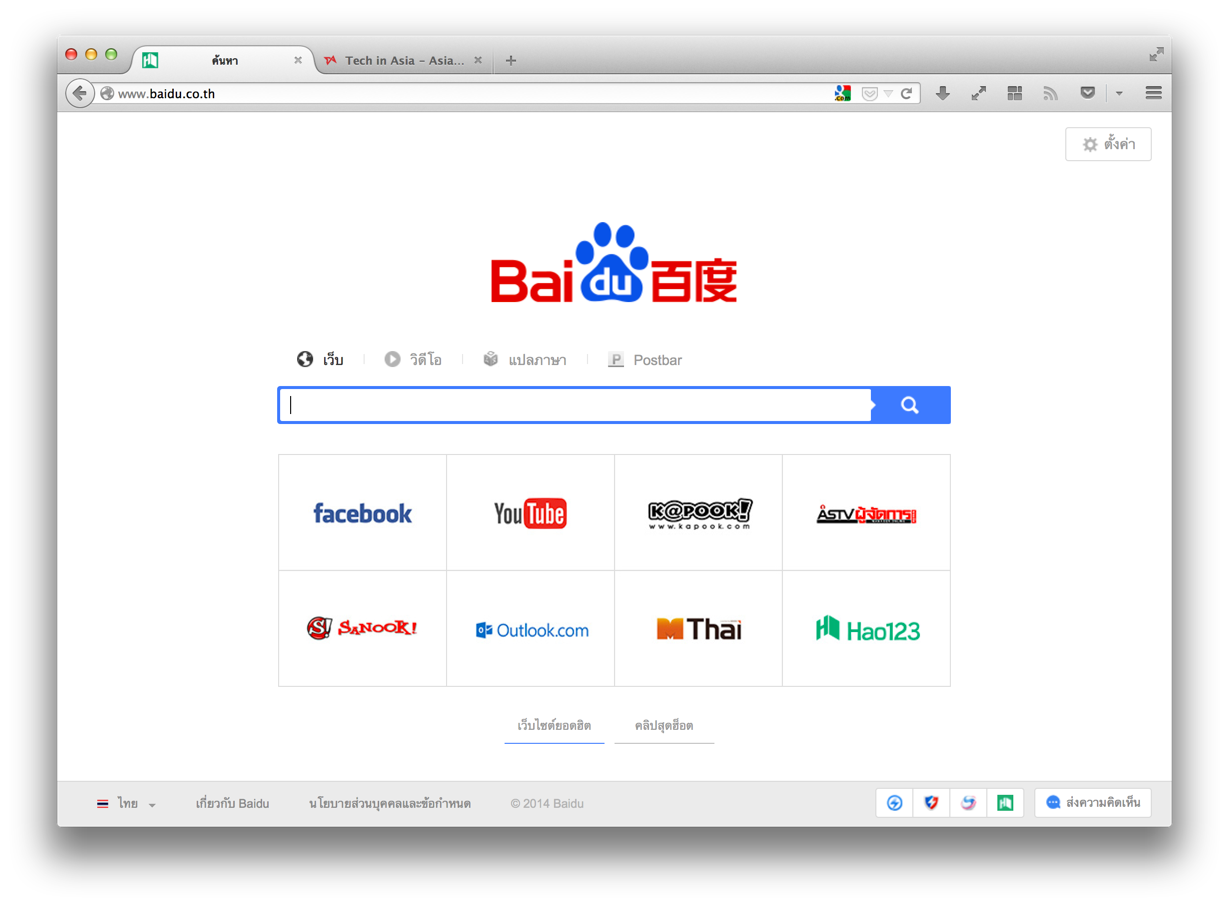
Baidu’s core products still include its flagship Baidu Search, which dominates the Chinese-language internet search market. Over time, this platform has evolved with advanced AI features such as voice search, natural language processing (NLP), and personalized results based on big data analytics.

Baidu launches search engine in Thailand, Brazil, and Egypt

Illustration 2: Baidu Search is the product Baidu is most famous for.

Beyond search, Baidu Cloud delivers enterprise-grade infrastructure and intelligent services, including AI-powered data analytics, intelligent speech and image recognition, and machine learning platforms. This cloud ecosystem serves sectors like finance, healthcare, manufacturing, and smart cities.

  • Autonomous Driving and Smart Transportation

One of Baidu’s most prominent innovations is Apollo, its open-source autonomous driving platform. Apollo provides a comprehensive solution for autonomous vehicle development, including software stacks, cloud-based simulation tools, and in-vehicle operating systems. The platform is used by global automakers and has powered the launch of robotaxi services in cities like Beijing, Wuhan, and Chongqing.

Illustration 3: One of Baidu’s Apollo robotaxies

In addition to Apollo, Baidu has introduced RT6, a fully autonomous electric vehicle designed for urban ride-hailing, marking a step forward in reducing operational costs and scaling autonomous mobility.

  • Voice Assistants and Smart Devices

Baidu’s AI assistant DuerOS powers a growing range of smart devices, from smart speakers and in-car infotainment systems to household appliances. Through natural language processing and conversational AI, DuerOS enables hands-free interaction and integration with Baidu’s services.

The company has also developed AI chips, such as Kunlun, to support high-performance AI processing for applications in data centers and on edge devices. These chips are used for deep learning, image and speech recognition, and autonomous driving computation.


  • Emerging Technologies and Future Focus

Baidu is investing heavily in generative AI, foundation models, and language-based applications. Its ERNIE (Enhanced Representation through Knowledge Integration) model is China’s counterpart to GPT-like large language models, enabling everything from AI writing and coding to intelligent customer service and enterprise automation.

Looking ahead, Baidu is positioning itself as a global AI leader, with a focus on AI cloud integration, smart transportation infrastructure, and intelligent edge computing. Its commitment to ethical AI, energy efficiency, and open-source collaboration ensures its relevance in both China’s tech ecosystem and the broader international market.

Key Competitors

Baidu operates in several fast-evolving and highly competitive sectors, including internet services, artificial intelligence, cloud computing, and autonomous driving. Its major competitors vary by product category and technological focus:

Alibaba Group – As one of China’s largest tech conglomerates, Alibaba competes with Baidu primarily in cloud computing and AI services. Alibaba Cloud is a top rival to Baidu Cloud, offering a wide range of infrastructure and machine learning tools to enterprise clients. Alibaba also invests heavily in smart city and AI-driven business applications.

Tencent – Known for WeChat and its expansive digital ecosystem, Tencent competes with Baidu in the realms of online advertising, content distribution, and AI-powered applications. Tencent’s investments in cloud computing, search, and smart services overlap with Baidu’s broader AI ecosystem.

ByteDance – While originally known for its short-form video platforms like TikTok (Douyin in China), ByteDance has become a formidable competitor in AI and online search. Its Toutiao news aggregation platform and growing ambitions in AI research present a challenge to Baidu’s dominance in content discovery and recommendation systems.

Huawei – Huawei competes with Baidu in AI chips, cloud services, and smart infrastructure. The company’s Ascend AI processors and Huawei Cloud offerings rival Baidu’s Kunlun chips and cloud-based AI solutions. Huawei is also a major player in intelligent transportation, overlapping with Baidu’s Apollo platform.

Illustration 4: Baidu Headquarters in Beijing China

Google (Alphabet Inc.) – On the international stage, Google is Baidu’s most direct analogue, especially in search, cloud, and AI research. While Google does not operate in mainland China due to regulatory constraints, both companies compete globally in areas such as large language models, autonomous driving, and AI-powered cloud services.


Competitive Advantage

Baidu’s most significant competitive advantage lies in its deep expertise and long-standing investment in artificial intelligence (AI). As one of the first Chinese tech companies to prioritize AI as a core strategy, Baidu has built a vertically integrated AI ecosystem that spans foundational research, infrastructure, and practical applications. Its proprietary ERNIE large language model and AI framework PaddlePaddle give Baidu full-stack control over its AI pipeline, from model training to deployment—similar to how a vertically integrated chipmaker controls the semiconductor process. This in-house AI capability enables Baidu to quickly adapt and deploy solutions across sectors such as search, cloud computing, autonomous driving, and smart devices, giving it a strong edge over companies that rely on third-party models or external development frameworks.

Another competitive strength is Baidu’s autonomous driving platform, Apollo, which is widely regarded as one of the world’s most advanced open-source ecosystems for intelligent mobility. With partnerships across the automotive industry and active robotaxi deployments in multiple Chinese cities, Baidu has a first-mover advantage in the smart transportation space.

Baidu also benefits from its dominance in Chinese-language search and knowledge-based services. Its search engine remains the market leader in China, supported by AI-enhanced features and deep content integration through platforms like Baidu Baike (an online encyclopedia) and Baidu Tieba (a discussion forum network). These platforms give Baidu access to vast amounts of first-party data, enabling superior personalization, ad targeting, and machine learning performance.

Additionally, Baidu’s emphasis on data security, localization, and regulatory alignment gives it an operational advantage in China’s tightly regulated digital environment. The company’s strong government relations and commitment to compliance enable it to operate at scale in areas where foreign tech giants face barriers.

Finally, Baidu’s strong R&D culture, with continuous investment in AI chips (e.g., Kunlun) and next-gen computing, ensures its long-term competitiveness. Combined with a robust cloud infrastructure, a growing enterprise customer base, and integrated smart services, Baidu is uniquely positioned to lead China’s digital transformation and compete globally in AI-driven technologies.

Illustration 5: A Baidu AI robot

Future Outlook

Baidu is expected to see steady growth as demand rises for smart mobility, cloud services, and intelligent digital tools in China. Sectors like autonomous driving, enterprise cloud solutions, and digital infrastructure are projected to expand, creating new opportunities for the company.

With ongoing investment in self-driving technology (Apollo), custom chips (Kunlun), and industry-focused cloud services, Baidu is well-placed to benefit from China’s push toward automation and digitalization. As these trends continue, demand for Baidu’s core services is likely to increase in the years ahead.


Stock Analysis

In this section we will analyze Baidu’s stock to see if it is a good stock to buy or not. Our philosophy is value investing meaning that we try to find good quality companies that are undervalued. However, we will give a holistic overview so all kind of investors with different philosophies can judge the stock for themselves.

Revenue and Profits
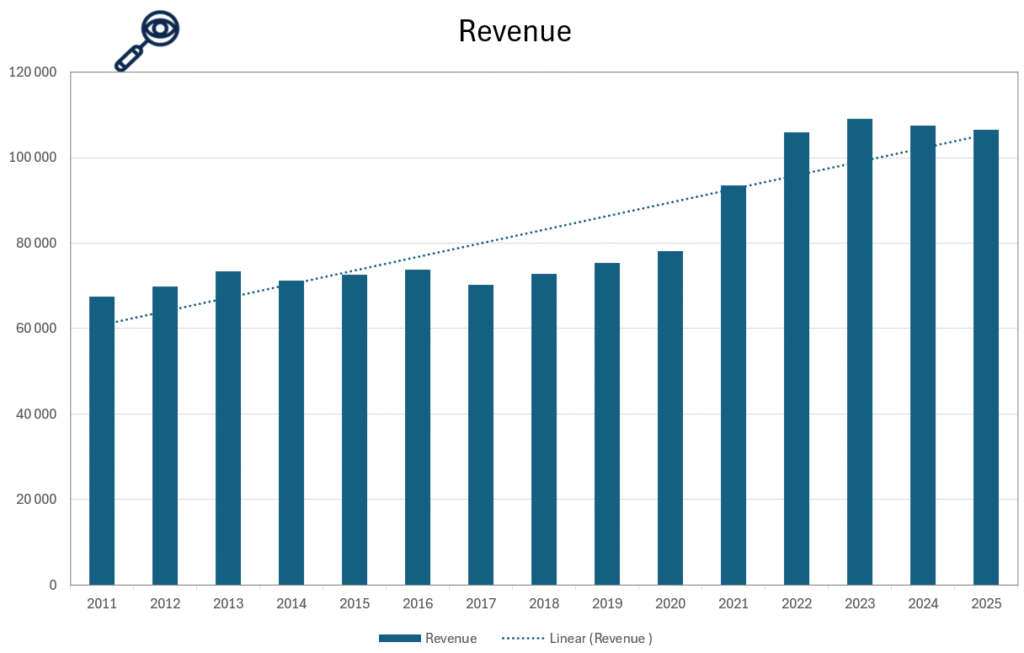
Illustration 6 and 7: Revenue of Baidu from 2009 to 2024

As shown in Illustration 6 and 7, Baidu has experienced a dynamic long-term revenue trajectory, particularly from 2009 to 2021, when it established itself as China’s dominant search engine and a major player in online advertising. The company’s early lead in China’s digital economy, supported by rapid internet adoption and growing advertiser demand, helped drive consistent gains throughout much of this period. Baidu also began investing in emerging technologies during these years, including artificial intelligence, autonomous driving, and cloud services, laying the groundwork for future diversification.

However, despite these early advantages, Baidu encountered periods of slower growth and revenue pressure, notably between 2021 and 2024. This downturn was driven by intensifying competition from platforms like Tencent and Bytedance, shifts in user behavior toward mobile super apps and short-form video, and internal restructuring. In response, Baidu expanded its R&D spending and began repositioning itself as a technology-driven company beyond search, focusing on AI cloud computing, Apollo (autonomous driving), and smart devices. The role of coid-19 on the very strong revenue increase is also worth taking in to consideration.

Baidu’s revenue is overall a green flag as it shows a steady increase in income over time and also reflects the company’s ability to adapt through diversification into AI, cloud, and autonomous driving, positioning it well for future growth despite short-term volatility.

Illustration 8 and 9: Net Income for Baidu from 2009 to 2024

Net income is a crucial metric to evaluate when determining whether a company is a worthwhile investment. It represents a company’s net profit or loss after accounting for all revenues, income items, and expenses, calculated as Net Income = Revenue – Expenses.

As can be seen from Illustration 8 and 9, the net income for Baidu rose steadily from 2009 to 2015 due to strong performance in its core search and online advertising business. However, from 2015 to 2025, net income has been highly volatile despite steadily increasing revenue. This disconnect is largely due to rising operating costs, heavy R&D investments in AI, autonomous driving, and cloud services, as well as regulatory headwinds and economic uncertainty in China. While revenue growth indicates strong top-line performance, the inconsistency in net income is a red flag, suggesting pressure on margins and highlighting the financial risks tied to Baidu’s aggressive long-term innovation strategy.

Revenue Breakdown

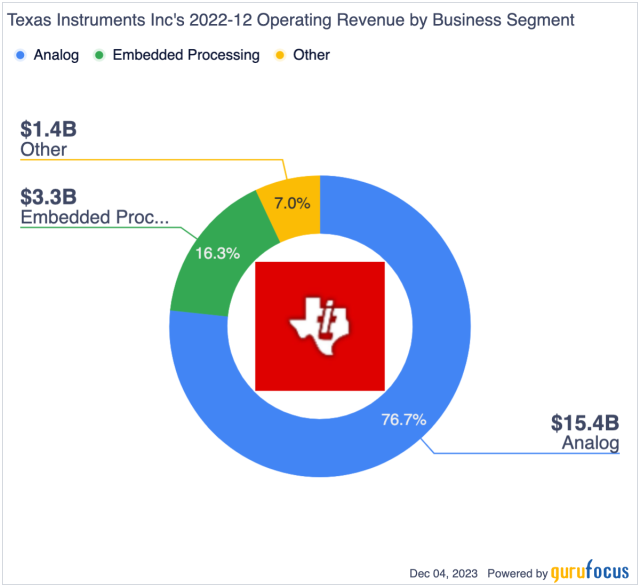
Illustration 10: Revenue Breakdown for Baidu gathered from gurufocus

The Online Marketing segment is Baidu’s largest revenue driver, contributing approximately 60–70% of total revenue. This segment primarily consists of pay-per-click (PPC) advertising services through Baidu’s core search engine platform, as well as display ads across its ecosystem of products and content partners. Despite growing competition from platforms like Tencent and ByteDance, Baidu maintains a strong presence in China’s search-based ad market. However, ad revenue has faced pressure in recent years due to regulatory crackdowns on internet companies, weakening macroeconomic conditions, and advertisers shifting budgets toward e-commerce and short video platforms.

Baidu’s non-advertising revenue—mainly from AI Cloud and intelligent driving—now accounts for approximately 25–30% of total revenue. This segment includes Baidu AI Cloud services, Apollo autonomous driving, Xiaodu smart devices, and intelligent transportation systems. AI Cloud has seen significant growth from government and enterprise demand for digital transformation, while Apollo remains a long-term bet on the future of mobility. These areas have required heavy investment and contributed to margin pressure, but they represent key pillars of Baidu’s strategic pivot beyond advertising. The cloud segment, in particular, has shown strong momentum, with revenue growing over 20% year-over-year in several recent quarters.

The remaining 5–10% of Baidu’s revenue comes from other sources, including content subscriptions, licensing, and miscellaneous services tied to the company’s broader AI ecosystem. While not core drivers of growth, these smaller streams add diversification and support Baidu’s broader goal of becoming a comprehensive AI and technology platform.

Despite this diversification, Baidu has faced financial pressure in recent years. While revenue has continued to rise, net income has been volatile due to high R&D costs, regulatory expenses, and ongoing losses in emerging business units like autonomous driving. For example, Baidu’s net income dropped from RMB 10.2 billion in 2021 to RMB 7.6 billion in 2023, with fluctuations expected to continue as the company scales its next-gen technologies.

As seen in Illustration 13, a significant portion of Baidu’s revenue is allocated to cost of goods sold (COGS), particularly within its cloud and AI-related businesses. Unlike the higher-margin search advertising segment, Baidu’s non-advertising services—such as AI Cloud and smart devices—tend to carry higher operational costs, resulting in a larger share of revenue consumed by COGS. This has put pressure on overall gross margins, especially as these segments expand. Additionally, Baidu consistently allocates over 15% of its revenue to research and development (R&D), reflecting its strategic focus on long-term innovation in AI and autonomous technologies. While these investments are vital for future growth, they contribute to current margin compression and earnings volatility.

Overall, Baidu’s revenue breakdown reflects both stability and transformation. Its dominance in online advertising ensures steady cash flow, while emerging segments in AI and autonomous driving offer promising growth opportunities. However, investors should be aware of the execution risks and earnings volatility that come with this strategic shift.

Earnings per Share (EPS)

Illustration 11: Earnings per share for Baidu from 2009 to 2024

Earnings Per Share (EPS) is a key financial metric that measures a company’s profitability on a per-share basis. It indicates how much profit a company generates for each outstanding share of its stock, and is used to assess a company’s financial health, profitability, and potential for growth. In other words this metric can tell us how profitable the business is.

The EPS figure itself isn’t the primary focus for value investors—it can be 0.2 or 10, but what truly matters is the company’s ability to generate consistent earnings growth. A steadily increasing EPS over time signals strong financial health, profitability, and long-term value creation.

Baidu’ earnings per share (EPS) performance from 2009 to 2015 reflects a generally strong long-term trend, but recent years have shown a concerning volatility as shown in illustration 11. From 2009 to 2015, Baidy consistently grew its EPS, reaching a peak of $16.69 per share in 2015. However, from 2015 onwards, Baidu’s EPS has shown pronounced fluctuations. This volatility has been driven by several factors: intensifying competition from other tech giants, heavy investments in AI and autonomous driving, regulatory pressures within China’s tech sector, and broader macroeconomic uncertainties. While there were periods of recovery and innovation-led growth, the company has struggled to maintain stable profit expansion year-over-year.

This volatility is a red flag for investors, as it indicates that Baidu is struggling to maintain steady profit growth despite its historically strong revenue performance. However, in recent years from 2022 its EPS has been steadily increasing which is a positive sign and shows an ability to grow a profit. Potential Investors should in all case monitor the EPS of Baidu closely for sudden changes.

Assets and Liabilities

Illustration 12 and 13: Assets and Liabilities for Baidu from 2009 to 2024.

When evaluating a company as a potential investment, understanding its assets and liabilities is crucial. If a local business owner offered to sell their shop to you, one of the first questions—after determining its profitability—would be about its equity and assets. The same principle applies when assessing publicly traded companies like Baidu.’

As shown in Illustrations 11 and 12, Texas Instruments has a substantial asset base, totaling $58.6 billion in 2024. This steady asset growth over time from 2009 to 2024 is a positive sign, indicating that the company is expanding its operations, investing in new technologies, and strengthening its market position. A growing asset base often reflects a company’s ability to scale its business, acquire new projects, and improve its production capacity, which is particularly important in the competitive industry Baidu is in.

At the same time, Baidu’s total liabilities have also increased significantly, rising from $0.2 billion in 2009 to $21.1 billion in 2024. While such a sharp rise in debt might raise concerns for some investors, it is not necessarily a red flag given Baidu’s ongoing investments in artificial intelligence, cloud computing, and autonomous driving. These capital-intensive initiatives are essential for maintaining technological leadership in a rapidly evolving landscape. Baidu has historically balanced its investments with a strong focus on innovation and long-term growth, but the rising debt levels warrant careful observation. Investors should closely monitor Baidu’s ability to manage its liabilities effectively, especially amid recent earnings volatility. Ensuring that debt remains manageable and does not hinder future financial stability will be crucial for the company’s long-term success.

The key factor for investors is whether Baidu can effectively manage its debt while maintaining strong revenue and profitability. If the company can generate consistent cash flow and sustain high demand for its products and services, its rising liabilities may not be a major issue. However, if debt levels continue to grow faster than revenue or profits, it could indicate financial strain, making it important for investors to monitor the company’s ability to service its obligations while maintaining profitability.

The cash on hand for Baidu is a green flag for potential investors, as the company has $19 billion in readily available cash as of 2024. This is significantly higher than its long-term debt of $7.1 billion, which indicates a strong liquidity position. This suggests that Baidu is well-equipped to meet its financial obligations, fund strategic investments, and weather short-term market uncertainties without relying heavily on external financing.

As seen in Illustration 13, Total Shareholder Equity—calculated as total assets minus total liabilities—has consistently grown over the past 14 years. This is a positive indicator for potential investors, as it suggests that Baidu is building value over time rather than eroding its financial foundation. A steadily increasing shareholder equity indicates that the company’s assets are growing at a faster rate than its liabilities, which is a green flag for financial health. This trend suggests that Baidu is successfully expanding its operations while maintaining a solid balance sheet. Additionally, rising equity provides a buffer against financial downturns, making the company more resilient in times of economic uncertainty. However, investors should also consider how this growth is achieved—whether through profitable operations or increased debt financing—to fully assess the sustainability of this trend.

Debt to Equity Ratio

Illustration 14 and 15: Debt tp Equity ratio of Baidu from 2009 to 2024

The Debt-to-Equity (D/E) ratio is an important financial metric for assessing a company’s financial leverage and risk. It compares the amount of debt the company uses to finance its operations relative to its shareholder equity. A high D/E ratio suggests that the company relies more heavily on debt to fuel growth, which could increase financial risk, especially during economic downturns when managing debt obligations becomes more challenging. In contrast, a lower D/E ratio indicates that the company is primarily financed through equity, reducing financial risk but potentially limiting its ability to rapidly expand.

Legendary value investor Warren Buffett generally prefers a ratio below 0.5. Baidu’s D/E ratio is currently above that, standing at approximately 0.61 as of 2024 which is not much especially considering all the new AI projects Baidu has started in recent years. The D/E has steadily increased from 2009 where it was just 0.25. This indicates a growing reliance on debt financing over the past decade. This rising trend could raise concerns about Baidu’s financial leverage and its ability to manage debt effectively, especially in a volatile regulatory and competitive environment. However, this is not necessarily a red flag as Baidu has been investing in more AI projects during this time span that are financed through debt financing.

Since peaking around 2018, Baidu’s D/E ratio has shown signs of moderation, indicating a possible shift toward a more balanced capital structure. This decline may reflect efforts to deleverage and improve financial stability, which could be appealing to long-term investors focused on risk management. Baidu’s D/E ratio has also shown some volatility, suggesting that while the company generally maintains a cautious approach to debt, there are periods where leverage increases—potentially due to large-scale investments in AI, cloud, and autonomous driving. This isn’t necessarily a red flag, as long as Baidu avoids becoming overly dependent on debt. Still, the combination of rising debt and inconsistent profitability should be monitored closely, as it could pose risks to financial flexibility if not managed prudently.

Price to earnings ratio (P/E)

Illustration 16 and 17: P/E ratio of Baidu from 2010 to 2024

For value investors, one of the most critical metrics when evaluating Baidu’s stock is the price-to-earnings (P/E) ratio, as it helps assess whether the company is undervalued or overvalued. Even if a company has strong financials, purchasing its stock at a high price can lead to poor returns. For example, imagine a business generating solid profits of $1 million per year. If the owner offers to sell you the business for just $1, it would be an incredible deal. But if the owner asks for $1 trillion, even though the business is profitable, the price would be absurdly overvalued. The stock market works similarly—companies can be priced cheaply on some days and excessively expensive on others.

Warren Buffett, a legendary value investor, typically considers stocks with a P/E ratio of 15 or lower as “bargains.” A high P/E ratio suggests that investors are paying a premium for the company’s earnings, expecting significant growth. The P/E ratio of Baidu has fluctuated widely, ranging from 79.6 in 2010, to 19.21 in 2019, spiking to 99.79 in 2020, and dropping significantly to 12.5 in 2025. These sharp fluctuations are a red flag for potential investors, as they indicate market uncertainty and inconsistent investor confidence in Baidu’s earnings potential. However, the current P/E ratio of 12.5 suggests that Baidu may be undervalued, especially when compared to its historical valuation levels. For value investors, this could represent a potential buying opportunity—provided that the company can stabilize earnings and deliver on future growth prospects.

Price to book value (P/B ratio)

Illustration 18 and 19: Price to book ratio of Baidu from 2010 to 2025.

Price-to-book value (P/B ratio) is a financial metric used to compare a company’s market value (its stock price) to its book value (the net asset value of the company, calculated as total assets minus total liabilities). The P/B ratio is calculated by dividing the current share price by the book value per share. A lower P/B ratio suggests that the stock may be undervalued, as investors are paying less for the company’s assets than their actual worth. Conversely, a high P/B ratiomay indicate that the stock is overvalued, or that investors expect high growth in the company’s future earnings. The P/B ratio is often used by value investors to assess whether a stock is trading at a fair price based on its underlying assets. Legendary Investor Warren Buffet prefers company’s with P/B lower than 1.5 and often buys around 1.3 or lower.

The price-to-book (P/B) ratio of Baidu is a green flag, as it is significantly lower than that of many competitors in the tech sector and falls below the levels Warren Buffett typically considers undervalued. This suggests that the company may be undervalued relative to its book value, meaning investors are paying less for its assets compared to peers. Furthermore, the overall downward trend in Baidu’s P/B ratio in recent years indicates weakening investor sentiment, even as revenues have continued to grow. This could reflect under-optimism about Baidu’s future growth or a disconnect between its stock price and its underlying fundamentals. If profitability continues to decline while the P/B ratio remains low, it could signal a risk of value traps—where a stock appears cheap but lacks the catalyst for recovery. Investors should carefully assess whether the company’s financial performance can support future growth or if the current low valuation reflects deeper structural concerns.

Dividend

As of 2025, Baidu does not pay a regular dividend to shareholders. Baidu has historically reinvested its earnings into research and development, artificial intelligence, autonomous driving, and other growth initiatives rather than returning capital to shareholders through dividends. This strategy is typical for many tech companies, especially those still focused on expansion and innovation. If you’re looking for dividend-paying Chinese tech companies, you might want to look at others like Tencent or Alibaba, which have initiated or considered dividend payments in recent years.

Insider Trading

Over the past few years, insider trading activity at Baidu has been relatively limited, which is generally a neutral to green flag for investors, as it suggests stability and confidence in the company’s long-term prospects. However, there have been some notable planned transactions. For instance, in October 2024, insider Melissa Dongmin Ma filed a Form 144 to sell approximately 395,000 shares valued at around $41.6 million, following a similar filing in July 2024 for 260,000 shares worth about $22.4 million. While such large proposed sales might raise eyebrows, they are not necessarily a red flag, especially if they are part of routine portfolio diversification or personal financial planning. The absence of widespread or frequent insider selling supports a cautiously positive view, but investors should still monitor any emerging trends that may reflect shifting internal sentiment.

Other Company Info

Founded in 2000, Baidu Inc. is a leading Chinese technology company specializing in internet-related services, artificial intelligence, and autonomous driving technologies. As of 2024, Baidu employs approximately 35,900 people, reflecting its continued investment in research and development across AI, cloud computing, and smart mobility. The company is publicly traded on the NASDAQ under the ticker symbol BIDU and operates within the Technology sector, specifically under the Interactive Media & Services industry.

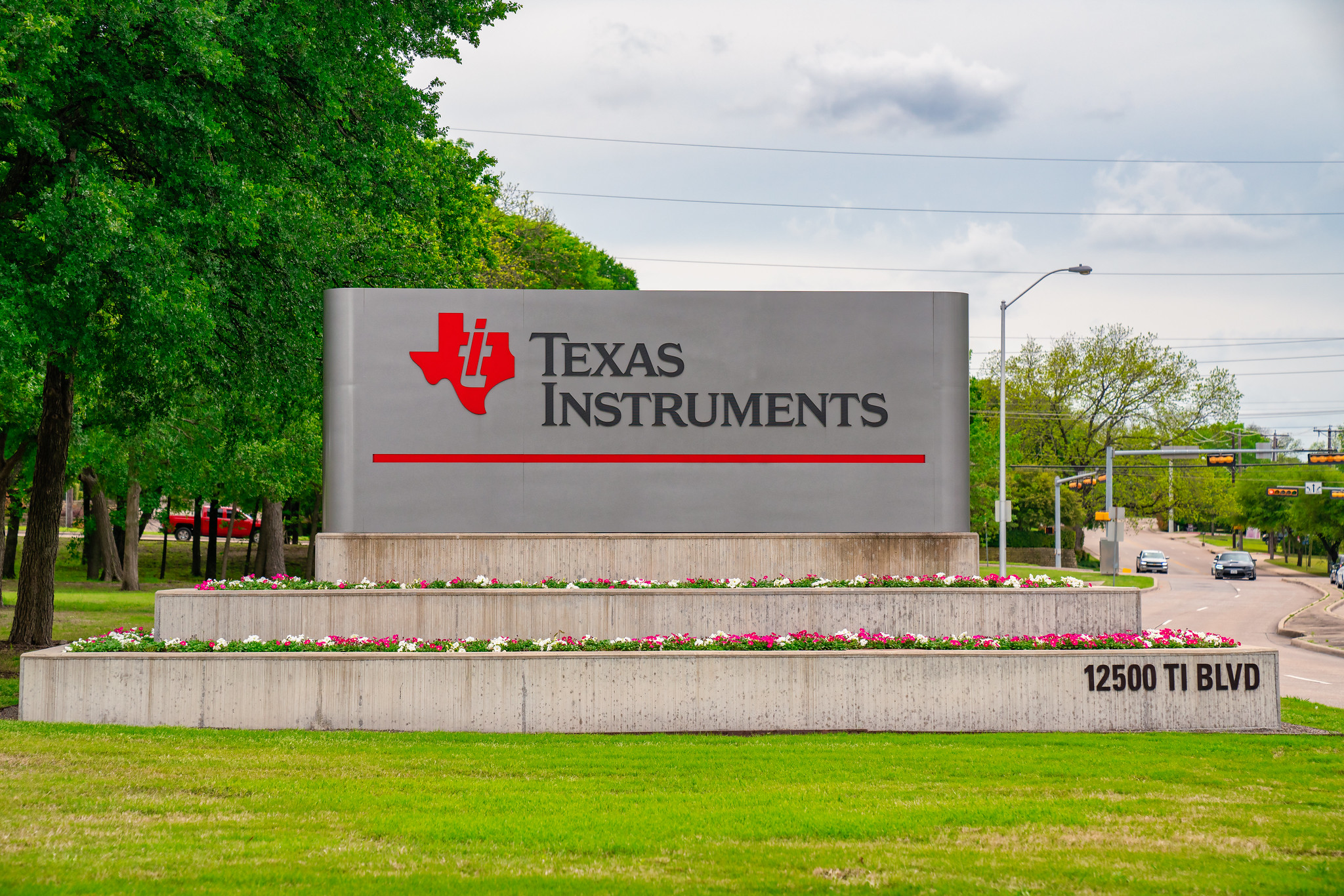
Baidu is headquartered at No. 10 Shangdi 10th Street, Haidian District, Beijing, China. As of 2024, the company has approximately 348 million shares outstanding, with a market capitalization of around $45 billion USD. For more information, visit Baidu’s official website: https://www.baidu.com.

Illustration 20-22: Number of employees and location of Baidu Headquarters in Beijing China

Final Verdict

Investing in Baidu Inc. presents a compelling opportunity, particularly for investors seeking exposure to China’s AI and digital innovation sectors. As a pioneer in search engine technology and artificial intelligence, Baidu has positioned itself at the forefront of China’s tech evolution, with major investments in autonomous driving (Apollo), AI cloud services, and generative AI models. The company’s strong research capabilities and diversified revenue streams—from online marketing to cloud and AI solutions—underscore its long-term growth potential.

However, investors should approach with measured caution. Baidu’s earnings have shown significant volatility in recent years, and while its P/E ratio is currently low (around 12.5 as of April 2025)—suggesting undervaluation—this reflects muted investor sentiment amid regulatory uncertainty and inconsistent profitability. Additionally, Baidu does not currently pay a dividend, which may deter income-focused investors. Competition from domestic tech giants like Alibaba, Tencent, and ByteDance also remains a persistent challenge.

Overall, Baidu may be a suitable investment for long-term, growth-oriented investors who are comfortable with short-term volatility and regulatory risk in exchange for potential upside tied to China’s AI-driven future. However, Its Net Income should be monitored closely.

Baidu Inc. – A Stock Analysis of One of China’s Leading Tech Giants

Introduction

Baidu Inc. is a prominent Chinese multinational technology company, widely recognized as one of the world’s leading artificial intelligence (AI) and internet services providers. Headquartered in Beijing, Baidu is best known for operating China’s largest search engine, but its portfolio spans a broad range of sectors, including cloud computing, autonomous driving, language processing, and smart devices.

Illustration 1: The Baidu logo, featuring its distinctive pawprint symbol, representing its digital footprint and innovation.

Unlike many global tech giants that emerged from the West, Baidu has played a foundational role in shaping the Chinese internet landscape. Its search engine dominates the domestic market, while its ongoing investment in AI and machine learning has positioned the company as a key innovator in emerging technologies such as autonomous vehicles and natural language understanding.

As a member of China’s “BAT” trio (Baidu, Alibaba, Tencent), Baidu is one of the most influential tech companies in Asia. Its technological infrastructure powers a wide array of services, including Baidu Maps, Baidu Cloud, and DuerOS—a voice assistant platform integrated into various smart devices. With a strong focus on AI research, a deep data ecosystem, and strategic partnerships, Baidu continues to be a driving force in the global tech landscape, particularly in AI and intelligent mobility.

History

Baidu was founded in 2000 by Robin Li and Eric Xu, emerging at a time when China’s internet ecosystem was still in its infancy. Robin Li’s development of the RankDex site-scoring algorithm in the late 1990s laid the foundation for Baidu’s core search technology—a precursor to modern search engine optimization and ranking systems.

Baidu’s breakthrough came in the early 2000s as it rapidly became China’s dominant search engine, offering results tailored to Chinese-language users with superior indexing of Chinese websites. The company’s innovative pay-for-placement advertising model helped generate significant early revenue, setting the stage for rapid growth and public listing on the NASDAQ in 2005.

Throughout the 2010s, Baidu evolved from a search engine company into a diversified tech powerhouse. It expanded into cloud services, digital maps, mobile applications, and AI-powered products. A major turning point was its strategic pivot toward artificial intelligence—investing heavily in autonomous driving (Apollo), smart voice assistants (DuerOS), and deep learning platforms (PaddlePaddle), making AI central to its long-term vision.

By the 2020s, Baidu had positioned itself as a global leader in AI and autonomous technology. Its Apollo platform became one of the most advanced autonomous driving systems in the world, and Baidu began operating robotaxi services in several Chinese cities. The company also deepened its AI capabilities through Baidu Brain, a large-scale AI system integrating vision, speech, knowledge, and language technologies.


Today, Baidu remains one of China’s most influential technology companies. With a strong emphasis on innovation, research, and ethical AI development, Baidu continues to drive advancements across industries. In the stock market, Baidu is seen as a bellwether for the Chinese tech sector, reflecting broader trends in AI, cloud computing, and digital infrastructure.

Operations and Products

  • Search, Cloud, and AI-Driven Ecosystem

Baidu operates one of the world’s largest and most advanced AI-powered ecosystems, built on a foundation of search, cloud computing, and intelligent services. While the company began as China’s premier internet search engine, it has transformed into a diversified technology enterprise focused on artificial intelligence, autonomous driving, cloud services, and smart devices.

Baidu’s core products still include its flagship Baidu Search, which dominates the Chinese-language internet search market. Over time, this platform has evolved with advanced AI features such as voice search, natural language processing (NLP), and personalized results based on big data analytics.

Baidu launches search engine in Thailand, Brazil, and Egypt

Illustration 2: Baidu Search is the product Baidu is most famous for.

Beyond search, Baidu Cloud delivers enterprise-grade infrastructure and intelligent services, including AI-powered data analytics, intelligent speech and image recognition, and machine learning platforms. This cloud ecosystem serves sectors like finance, healthcare, manufacturing, and smart cities.

  • Autonomous Driving and Smart Transportation

One of Baidu’s most prominent innovations is Apollo, its open-source autonomous driving platform. Apollo provides a comprehensive solution for autonomous vehicle development, including software stacks, cloud-based simulation tools, and in-vehicle operating systems. The platform is used by global automakers and has powered the launch of robotaxi services in cities like Beijing, Wuhan, and Chongqing.

Illustration 3: One of Baidu’s Apollo robotaxies

In addition to Apollo, Baidu has introduced RT6, a fully autonomous electric vehicle designed for urban ride-hailing, marking a step forward in reducing operational costs and scaling autonomous mobility.

  • Voice Assistants and Smart Devices

Baidu’s AI assistant DuerOS powers a growing range of smart devices, from smart speakers and in-car infotainment systems to household appliances. Through natural language processing and conversational AI, DuerOS enables hands-free interaction and integration with Baidu’s services.

The company has also developed AI chips, such as Kunlun, to support high-performance AI processing for applications in data centers and on edge devices. These chips are used for deep learning, image and speech recognition, and autonomous driving computation.


  • Emerging Technologies and Future Focus

Baidu is investing heavily in generative AI, foundation models, and language-based applications. Its ERNIE (Enhanced Representation through Knowledge Integration) model is China’s counterpart to GPT-like large language models, enabling everything from AI writing and coding to intelligent customer service and enterprise automation.

Looking ahead, Baidu is positioning itself as a global AI leader, with a focus on AI cloud integration, smart transportation infrastructure, and intelligent edge computing. Its commitment to ethical AI, energy efficiency, and open-source collaboration ensures its relevance in both China’s tech ecosystem and the broader international market.

Key Competitors

Baidu operates in several fast-evolving and highly competitive sectors, including internet services, artificial intelligence, cloud computing, and autonomous driving. Its major competitors vary by product category and technological focus:

Alibaba Group – As one of China’s largest tech conglomerates, Alibaba competes with Baidu primarily in cloud computing and AI services. Alibaba Cloud is a top rival to Baidu Cloud, offering a wide range of infrastructure and machine learning tools to enterprise clients. Alibaba also invests heavily in smart city and AI-driven business applications.

Tencent – Known for WeChat and its expansive digital ecosystem, Tencent competes with Baidu in the realms of online advertising, content distribution, and AI-powered applications. Tencent’s investments in cloud computing, search, and smart services overlap with Baidu’s broader AI ecosystem.

ByteDance – While originally known for its short-form video platforms like TikTok (Douyin in China), ByteDance has become a formidable competitor in AI and online search. Its Toutiao news aggregation platform and growing ambitions in AI research present a challenge to Baidu’s dominance in content discovery and recommendation systems.

Huawei – Huawei competes with Baidu in AI chips, cloud services, and smart infrastructure. The company’s Ascend AI processors and Huawei Cloud offerings rival Baidu’s Kunlun chips and cloud-based AI solutions. Huawei is also a major player in intelligent transportation, overlapping with Baidu’s Apollo platform.

Illustration 4: Baidu Headquarters in Beijing China

Google (Alphabet Inc.) – On the international stage, Google is Baidu’s most direct analogue, especially in search, cloud, and AI research. While Google does not operate in mainland China due to regulatory constraints, both companies compete globally in areas such as large language models, autonomous driving, and AI-powered cloud services.


Competitive Advantage

Baidu’s most significant competitive advantage lies in its deep expertise and long-standing investment in artificial intelligence (AI). As one of the first Chinese tech companies to prioritize AI as a core strategy, Baidu has built a vertically integrated AI ecosystem that spans foundational research, infrastructure, and practical applications. Its proprietary ERNIE large language model and AI framework PaddlePaddle give Baidu full-stack control over its AI pipeline, from model training to deployment—similar to how a vertically integrated chipmaker controls the semiconductor process. This in-house AI capability enables Baidu to quickly adapt and deploy solutions across sectors such as search, cloud computing, autonomous driving, and smart devices, giving it a strong edge over companies that rely on third-party models or external development frameworks.

Another competitive strength is Baidu’s autonomous driving platform, Apollo, which is widely regarded as one of the world’s most advanced open-source ecosystems for intelligent mobility. With partnerships across the automotive industry and active robotaxi deployments in multiple Chinese cities, Baidu has a first-mover advantage in the smart transportation space.

Baidu also benefits from its dominance in Chinese-language search and knowledge-based services. Its search engine remains the market leader in China, supported by AI-enhanced features and deep content integration through platforms like Baidu Baike (an online encyclopedia) and Baidu Tieba (a discussion forum network). These platforms give Baidu access to vast amounts of first-party data, enabling superior personalization, ad targeting, and machine learning performance.

Additionally, Baidu’s emphasis on data security, localization, and regulatory alignment gives it an operational advantage in China’s tightly regulated digital environment. The company’s strong government relations and commitment to compliance enable it to operate at scale in areas where foreign tech giants face barriers.

Finally, Baidu’s strong R&D culture, with continuous investment in AI chips (e.g., Kunlun) and next-gen computing, ensures its long-term competitiveness. Combined with a robust cloud infrastructure, a growing enterprise customer base, and integrated smart services, Baidu is uniquely positioned to lead China’s digital transformation and compete globally in AI-driven technologies.

Illustration 5: A Baidu AI robot

Future Outlook

Baidu is expected to see steady growth as demand rises for smart mobility, cloud services, and intelligent digital tools in China. Sectors like autonomous driving, enterprise cloud solutions, and digital infrastructure are projected to expand, creating new opportunities for the company.

With ongoing investment in self-driving technology (Apollo), custom chips (Kunlun), and industry-focused cloud services, Baidu is well-placed to benefit from China’s push toward automation and digitalization. As these trends continue, demand for Baidu’s core services is likely to increase in the years ahead.


Stock Analysis

In this section we will analyze Baidu’s stock to see if it is a good stock to buy or not. Our philosophy is value investing meaning that we try to find good quality companies that are undervalued. However, we will give a holistic overview so all kind of investors with different philosophies can judge the stock for themselves.

Revenue and Profits

Illustration 6 and 7: Revenue of Baidu from 2009 to 2024

As shown in Illustration 6 and 7, Baidu has experienced a dynamic long-term revenue trajectory, particularly from 2009 to 2021, when it established itself as China’s dominant search engine and a major player in online advertising. The company’s early lead in China’s digital economy, supported by rapid internet adoption and growing advertiser demand, helped drive consistent gains throughout much of this period. Baidu also began investing in emerging technologies during these years, including artificial intelligence, autonomous driving, and cloud services, laying the groundwork for future diversification.

However, despite these early advantages, Baidu encountered periods of slower growth and revenue pressure, notably between 2021 and 2024. This downturn was driven by intensifying competition from platforms like Tencent and Bytedance, shifts in user behavior toward mobile super apps and short-form video, and internal restructuring. In response, Baidu expanded its R&D spending and began repositioning itself as a technology-driven company beyond search, focusing on AI cloud computing, Apollo (autonomous driving), and smart devices. The role of coid-19 on the very strong revenue increase is also worth taking in to consideration.

Baidu’s revenue is overall a green flag as it shows a steady increase in income over time and also reflects the company’s ability to adapt through diversification into AI, cloud, and autonomous driving, positioning it well for future growth despite short-term volatility.

Illustration 8 and 9: Net Income for Baidu from 2009 to 2024

Net income is a crucial metric to evaluate when determining whether a company is a worthwhile investment. It represents a company’s net profit or loss after accounting for all revenues, income items, and expenses, calculated as Net Income = Revenue – Expenses.

As can be seen from Illustration 8 and 9, the net income for Baidu rose steadily from 2009 to 2015 due to strong performance in its core search and online advertising business. However, from 2015 to 2025, net income has been highly volatile despite steadily increasing revenue. This disconnect is largely due to rising operating costs, heavy R&D investments in AI, autonomous driving, and cloud services, as well as regulatory headwinds and economic uncertainty in China. While revenue growth indicates strong top-line performance, the inconsistency in net income is a red flag, suggesting pressure on margins and highlighting the financial risks tied to Baidu’s aggressive long-term innovation strategy.

Revenue Breakdown

Illustration 10: Revenue Breakdown for Baidu gathered from gurufocus

The Online Marketing segment is Baidu’s largest revenue driver, contributing approximately 60–70% of total revenue. This segment primarily consists of pay-per-click (PPC) advertising services through Baidu’s core search engine platform, as well as display ads across its ecosystem of products and content partners. Despite growing competition from platforms like Tencent and ByteDance, Baidu maintains a strong presence in China’s search-based ad market. However, ad revenue has faced pressure in recent years due to regulatory crackdowns on internet companies, weakening macroeconomic conditions, and advertisers shifting budgets toward e-commerce and short video platforms.

Baidu’s non-advertising revenue—mainly from AI Cloud and intelligent driving—now accounts for approximately 25–30% of total revenue. This segment includes Baidu AI Cloud services, Apollo autonomous driving, Xiaodu smart devices, and intelligent transportation systems. AI Cloud has seen significant growth from government and enterprise demand for digital transformation, while Apollo remains a long-term bet on the future of mobility. These areas have required heavy investment and contributed to margin pressure, but they represent key pillars of Baidu’s strategic pivot beyond advertising. The cloud segment, in particular, has shown strong momentum, with revenue growing over 20% year-over-year in several recent quarters.

The remaining 5–10% of Baidu’s revenue comes from other sources, including content subscriptions, licensing, and miscellaneous services tied to the company’s broader AI ecosystem. While not core drivers of growth, these smaller streams add diversification and support Baidu’s broader goal of becoming a comprehensive AI and technology platform.

Despite this diversification, Baidu has faced financial pressure in recent years. While revenue has continued to rise, net income has been volatile due to high R&D costs, regulatory expenses, and ongoing losses in emerging business units like autonomous driving. For example, Baidu’s net income dropped from RMB 10.2 billion in 2021 to RMB 7.6 billion in 2023, with fluctuations expected to continue as the company scales its next-gen technologies.

As seen in Illustration 13, a significant portion of Baidu’s revenue is allocated to cost of goods sold (COGS), particularly within its cloud and AI-related businesses. Unlike the higher-margin search advertising segment, Baidu’s non-advertising services—such as AI Cloud and smart devices—tend to carry higher operational costs, resulting in a larger share of revenue consumed by COGS. This has put pressure on overall gross margins, especially as these segments expand. Additionally, Baidu consistently allocates over 15% of its revenue to research and development (R&D), reflecting its strategic focus on long-term innovation in AI and autonomous technologies. While these investments are vital for future growth, they contribute to current margin compression and earnings volatility.

Overall, Baidu’s revenue breakdown reflects both stability and transformation. Its dominance in online advertising ensures steady cash flow, while emerging segments in AI and autonomous driving offer promising growth opportunities. However, investors should be aware of the execution risks and earnings volatility that come with this strategic shift.

Earnings per Share (EPS)

Illustration 11: Earnings per share for Baidu from 2009 to 2024

Earnings Per Share (EPS) is a key financial metric that measures a company’s profitability on a per-share basis. It indicates how much profit a company generates for each outstanding share of its stock, and is used to assess a company’s financial health, profitability, and potential for growth. In other words this metric can tell us how profitable the business is.

The EPS figure itself isn’t the primary focus for value investors—it can be 0.2 or 10, but what truly matters is the company’s ability to generate consistent earnings growth. A steadily increasing EPS over time signals strong financial health, profitability, and long-term value creation.

Baidu’ earnings per share (EPS) performance from 2009 to 2015 reflects a generally strong long-term trend, but recent years have shown a concerning volatility as shown in illustration 11. From 2009 to 2015, Baidy consistently grew its EPS, reaching a peak of $16.69 per share in 2015. However, from 2015 onwards, Baidu’s EPS has shown pronounced fluctuations. This volatility has been driven by several factors: intensifying competition from other tech giants, heavy investments in AI and autonomous driving, regulatory pressures within China’s tech sector, and broader macroeconomic uncertainties. While there were periods of recovery and innovation-led growth, the company has struggled to maintain stable profit expansion year-over-year.

This volatility is a red flag for investors, as it indicates that Baidu is struggling to maintain steady profit growth despite its historically strong revenue performance. However, in recent years from 2022 its EPS has been steadily increasing which is a positive sign and shows an ability to grow a profit. Potential Investors should in all case monitor the EPS of Baidu closely for sudden changes.

Assets and Liabilities

Illustration 12 and 13: Assets and Liabilities for Baidu from 2009 to 2024.

When evaluating a company as a potential investment, understanding its assets and liabilities is crucial. If a local business owner offered to sell their shop to you, one of the first questions—after determining its profitability—would be about its equity and assets. The same principle applies when assessing publicly traded companies like Baidu.’

As shown in Illustrations 11 and 12, Texas Instruments has a substantial asset base, totaling $58.6 billion in 2024. This steady asset growth over time from 2009 to 2024 is a positive sign, indicating that the company is expanding its operations, investing in new technologies, and strengthening its market position. A growing asset base often reflects a company’s ability to scale its business, acquire new projects, and improve its production capacity, which is particularly important in the competitive industry Baidu is in.

At the same time, Baidu’s total liabilities have also increased significantly, rising from $0.2 billion in 2009 to $21.1 billion in 2024. While such a sharp rise in debt might raise concerns for some investors, it is not necessarily a red flag given Baidu’s ongoing investments in artificial intelligence, cloud computing, and autonomous driving. These capital-intensive initiatives are essential for maintaining technological leadership in a rapidly evolving landscape. Baidu has historically balanced its investments with a strong focus on innovation and long-term growth, but the rising debt levels warrant careful observation. Investors should closely monitor Baidu’s ability to manage its liabilities effectively, especially amid recent earnings volatility. Ensuring that debt remains manageable and does not hinder future financial stability will be crucial for the company’s long-term success.

The key factor for investors is whether Baidu can effectively manage its debt while maintaining strong revenue and profitability. If the company can generate consistent cash flow and sustain high demand for its products and services, its rising liabilities may not be a major issue. However, if debt levels continue to grow faster than revenue or profits, it could indicate financial strain, making it important for investors to monitor the company’s ability to service its obligations while maintaining profitability.

The cash on hand for Baidu is a green flag for potential investors, as the company has $19 billion in readily available cash as of 2024. This is significantly higher than its long-term debt of $7.1 billion, which indicates a strong liquidity position. This suggests that Baidu is well-equipped to meet its financial obligations, fund strategic investments, and weather short-term market uncertainties without relying heavily on external financing.

As seen in Illustration 13, Total Shareholder Equity—calculated as total assets minus total liabilities—has consistently grown over the past 14 years. This is a positive indicator for potential investors, as it suggests that Baidu is building value over time rather than eroding its financial foundation. A steadily increasing shareholder equity indicates that the company’s assets are growing at a faster rate than its liabilities, which is a green flag for financial health. This trend suggests that Baidu is successfully expanding its operations while maintaining a solid balance sheet. Additionally, rising equity provides a buffer against financial downturns, making the company more resilient in times of economic uncertainty. However, investors should also consider how this growth is achieved—whether through profitable operations or increased debt financing—to fully assess the sustainability of this trend.

Debt to Equity Ratio

Illustration 14 and 15: Debt tp Equity ratio of Baidu from 2009 to 2024

The Debt-to-Equity (D/E) ratio is an important financial metric for assessing a company’s financial leverage and risk. It compares the amount of debt the company uses to finance its operations relative to its shareholder equity. A high D/E ratio suggests that the company relies more heavily on debt to fuel growth, which could increase financial risk, especially during economic downturns when managing debt obligations becomes more challenging. In contrast, a lower D/E ratio indicates that the company is primarily financed through equity, reducing financial risk but potentially limiting its ability to rapidly expand.

Legendary value investor Warren Buffett generally prefers a ratio below 0.5. Baidu’s D/E ratio is currently above that, standing at approximately 0.61 as of 2024 which is not much especially considering all the new AI projects Baidu has started in recent years. The D/E has steadily increased from 2009 where it was just 0.25. This indicates a growing reliance on debt financing over the past decade. This rising trend could raise concerns about Baidu’s financial leverage and its ability to manage debt effectively, especially in a volatile regulatory and competitive environment. However, this is not necessarily a red flag as Baidu has been investing in more AI projects during this time span that are financed through debt financing.

Since peaking around 2018, Baidu’s D/E ratio has shown signs of moderation, indicating a possible shift toward a more balanced capital structure. This decline may reflect efforts to deleverage and improve financial stability, which could be appealing to long-term investors focused on risk management. Baidu’s D/E ratio has also shown some volatility, suggesting that while the company generally maintains a cautious approach to debt, there are periods where leverage increases—potentially due to large-scale investments in AI, cloud, and autonomous driving. This isn’t necessarily a red flag, as long as Baidu avoids becoming overly dependent on debt. Still, the combination of rising debt and inconsistent profitability should be monitored closely, as it could pose risks to financial flexibility if not managed prudently.

Price to earnings ratio (P/E)

Illustration 16 and 17: P/E ratio of Baidu from 2010 to 2024

For value investors, one of the most critical metrics when evaluating Baidu’s stock is the price-to-earnings (P/E) ratio, as it helps assess whether the company is undervalued or overvalued. Even if a company has strong financials, purchasing its stock at a high price can lead to poor returns. For example, imagine a business generating solid profits of $1 million per year. If the owner offers to sell you the business for just $1, it would be an incredible deal. But if the owner asks for $1 trillion, even though the business is profitable, the price would be absurdly overvalued. The stock market works similarly—companies can be priced cheaply on some days and excessively expensive on others.

Warren Buffett, a legendary value investor, typically considers stocks with a P/E ratio of 15 or lower as “bargains.” A high P/E ratio suggests that investors are paying a premium for the company’s earnings, expecting significant growth. The P/E ratio of Baidu has fluctuated widely, ranging from 79.6 in 2010, to 19.21 in 2019, spiking to 99.79 in 2020, and dropping significantly to 12.5 in 2025. These sharp fluctuations are a red flag for potential investors, as they indicate market uncertainty and inconsistent investor confidence in Baidu’s earnings potential. However, the current P/E ratio of 12.5 suggests that Baidu may be undervalued, especially when compared to its historical valuation levels. For value investors, this could represent a potential buying opportunity—provided that the company can stabilize earnings and deliver on future growth prospects.

Price to book value (P/B ratio)

Illustration 18 and 19: Price to book ratio of Baidu from 2010 to 2025.

Price-to-book value (P/B ratio) is a financial metric used to compare a company’s market value (its stock price) to its book value (the net asset value of the company, calculated as total assets minus total liabilities). The P/B ratio is calculated by dividing the current share price by the book value per share. A lower P/B ratio suggests that the stock may be undervalued, as investors are paying less for the company’s assets than their actual worth. Conversely, a high P/B ratiomay indicate that the stock is overvalued, or that investors expect high growth in the company’s future earnings. The P/B ratio is often used by value investors to assess whether a stock is trading at a fair price based on its underlying assets. Legendary Investor Warren Buffet prefers company’s with P/B lower than 1.5 and often buys around 1.3 or lower.

The price-to-book (P/B) ratio of Baidu is a green flag, as it is significantly lower than that of many competitors in the tech sector and falls below the levels Warren Buffett typically considers undervalued. This suggests that the company may be undervalued relative to its book value, meaning investors are paying less for its assets compared to peers. Furthermore, the overall downward trend in Baidu’s P/B ratio in recent years indicates weakening investor sentiment, even as revenues have continued to grow. This could reflect under-optimism about Baidu’s future growth or a disconnect between its stock price and its underlying fundamentals. If profitability continues to decline while the P/B ratio remains low, it could signal a risk of value traps—where a stock appears cheap but lacks the catalyst for recovery. Investors should carefully assess whether the company’s financial performance can support future growth or if the current low valuation reflects deeper structural concerns.

Dividend

As of 2025, Baidu does not pay a regular dividend to shareholders. Baidu has historically reinvested its earnings into research and development, artificial intelligence, autonomous driving, and other growth initiatives rather than returning capital to shareholders through dividends. This strategy is typical for many tech companies, especially those still focused on expansion and innovation. If you’re looking for dividend-paying Chinese tech companies, you might want to look at others like Tencent or Alibaba, which have initiated or considered dividend payments in recent years.

Insider Trading

Over the past few years, insider trading activity at Baidu has been relatively limited, which is generally a neutral to green flag for investors, as it suggests stability and confidence in the company’s long-term prospects. However, there have been some notable planned transactions. For instance, in October 2024, insider Melissa Dongmin Ma filed a Form 144 to sell approximately 395,000 shares valued at around $41.6 million, following a similar filing in July 2024 for 260,000 shares worth about $22.4 million. While such large proposed sales might raise eyebrows, they are not necessarily a red flag, especially if they are part of routine portfolio diversification or personal financial planning. The absence of widespread or frequent insider selling supports a cautiously positive view, but investors should still monitor any emerging trends that may reflect shifting internal sentiment.

Other Company Info

Founded in 2000, Baidu Inc. is a leading Chinese technology company specializing in internet-related services, artificial intelligence, and autonomous driving technologies. As of 2024, Baidu employs approximately 35,900 people, reflecting its continued investment in research and development across AI, cloud computing, and smart mobility. The company is publicly traded on the NASDAQ under the ticker symbol BIDU and operates within the Technology sector, specifically under the Interactive Media & Services industry.

Baidu is headquartered at No. 10 Shangdi 10th Street, Haidian District, Beijing, China. As of 2024, the company has approximately 348 million shares outstanding, with a market capitalization of around $45 billion USD. For more information, visit Baidu’s official website: https://www.baidu.com.

Illustration 20-22: Number of employees and location of Baidu Headquarters in Beijing China

Final Verdict

Investing in Baidu Inc. presents a compelling opportunity, particularly for investors seeking exposure to China’s AI and digital innovation sectors. As a pioneer in search engine technology and artificial intelligence, Baidu has positioned itself at the forefront of China’s tech evolution, with major investments in autonomous driving (Apollo), AI cloud services, and generative AI models. The company’s strong research capabilities and diversified revenue streams—from online marketing to cloud and AI solutions—underscore its long-term growth potential.

However, investors should approach with measured caution. Baidu’s earnings have shown significant volatility in recent years, and while its P/E ratio is currently low (around 12.5 as of April 2025)—suggesting undervaluation—this reflects muted investor sentiment amid regulatory uncertainty and inconsistent profitability. Additionally, Baidu does not currently pay a dividend, which may deter income-focused investors. Competition from domestic tech giants like Alibaba, Tencent, and ByteDance also remains a persistent challenge.

Overall, Baidu may be a suitable investment for long-term, growth-oriented investors who are comfortable with short-term volatility and regulatory risk in exchange for potential upside tied to China’s AI-driven future. However, Its Net Income should be monitored closely.

Texas Instruments: A Comprehensive Overview and Stock Analysis of an Analog Semiconductor Powerhouse

Introduction

Texas Instruments (TI) is a globally recognized American technology company specializing in the design and manufacturing of analog and embedded semiconductor solutions. Headquartered in Dallas, Texas, TI plays a crucial role in various industries, from consumer electronics to automotive, industrial automation, and communications. Unlike companies that focus primarily on digital processors, TI is a dominant force in the analog semiconductor market, producing essential components that enable power management, signal processing, and wireless connectivity.

Fil:TexasInstruments-Logo.svg – Wikipedia

Illustration 1: The logo of Texas Instruments which includes its famous outline of the state of Texas.

As one of the largest semiconductor manufacturers by revenue, Texas Instruments has maintained a strong market presence for decades. The company’s extensive product portfolio includes microcontrollers, power management chips, and data converters, which are integral to countless electronic devices. TI’s robust financial performance, strategic innovation, and commitment to efficient manufacturing make it a key player in the semiconductor industry.

History

Texas Instruments traces its origins back to 1930 when it was founded as Geophysical Service Incorporated (GSI), a company specializing in oil exploration technology. In 1951, it rebranded as Texas Instruments and shifted its focus to the emerging semiconductor industry.

TI’s breakthrough moment came in 1958 when engineer Jack Kilby invented the integrated circuit (IC), revolutionizing electronics and laying the foundation for modern computing. This innovation earned Kilby the Nobel Prize in Physics and cemented TI’s reputation as a semiconductor pioneer.

Throughout the 20th century, Texas Instruments played a pivotal role in advancing semiconductor technology. It became a leader in analog and embedded processing, developing industry-leading signal processors, power management chips, and automotive electronics. The company also ventured into consumer electronics, famously producing the first handheld calculator and early digital signal processors (DSPs).

By the 2000s, TI had streamlined its operations, focusing primarily on analog and embedded processing. This strategic move allowed the company to strengthen its competitive advantage in power-efficient, high-performance semiconductor solutions. Today, Texas Instruments continues to lead the analog semiconductor market, benefiting from its broad customer base, efficient manufacturing processes, and long product life cycles.

With a commitment to innovation and sustainability, TI invests heavily in research and development while expanding its global production capabilities. As industries increasingly rely on analog and embedded technologies, Texas Instruments remains well-positioned to drive growth and maintain its leadership in the semiconductor sector. In the stock market, Texas Instruments is often regarded as an indicator for the semiconductor and electronics industry as a whole, since the company sells to more than 100,000 customers.


Operations and Products

  • Analog and Embedded Semiconductor Manufacturing

Texas Instruments (TI) is one of the world’s leading manufacturers of analog and embedded semiconductors, supplying essential components for industries such as automotive, industrial automation, consumer electronics, and communications. Unlike digital-focused semiconductor companies, TI specializes in analog chips and embedded processors that enable power management, signal processing, and wireless connectivity in electronic devices.

TI’s product portfolio includes power management integrated circuits (PMICs), data converters, amplifiers, sensors, and embedded processors like microcontrollers (MCUs) and digital signal processors (DSPs). These chips are fundamental to applications ranging from electric vehicles and renewable energy systems to medical devices and industrial automation.

A key differentiator for Texas Instruments is its in-house semiconductor manufacturing. The company operates its own wafer fabrication facilities (fabs), allowing greater control over production costs, quality, and supply chain stability. TI has invested heavily in advanced manufacturing processes, including the expansion of its 300mm wafer fabs, which provide significant cost advantages compared to traditional 200mm fabs.

  • Emerging Technologies and Future Growth Areas

Texas Instruments is strategically expanding its capabilities in several high-growth markets, particularly in automotive and industrial sectors. The increasing adoption of electric vehicles (EVs) and autonomous driving has driven demand for TI’s power management and sensing technologies, making it a critical supplier for automakers and Tier 1 suppliers.

Texas Instruments BAII Plus finansiell kalkulator brukermanual for  Storbritannia

Illustration 2: A Texas Instruments BAII Plus Calculators. Calculators is one of many products TI offers.

In the industrial sector, TI plays a vital role in factory automation, robotics, and smart grid infrastructure, providing energy-efficient chips that optimize performance and reliability. With the rise of the Internet of Things (IoT), TI’s low-power wireless solutions, such as Bluetooth Low Energy and Wi-Fi connectivity chips, are widely used in smart home devices, wearables, and industrial IoT application

  • Data-Centric AI and Embedded Processing Solutions

While Texas Instruments is not a major player in high-performance computing (HPC) or AI accelerators like Intel or NVIDIA, it provides critical support components for AI-driven applications. TI’s analog chips and embedded processors are used in AI-enabled edge devices, industrial sensors, and automotive AI systems.


Additionally, Texas Instruments continues to enhance its portfolio of automotive microcontrollers and ADAS (Advanced Driver Assistance Systems) components, helping power the next generation of AI-driven vehicle safety features. Its innovations in radar and sensor fusion technology are key to enabling semi-autonomous and autonomous driving capabilities.

Key Competitors

Texas Instruments operates in a highly competitive semiconductor industry, facing strong rivals across various market segments. Its key competitors include:

Analog Devices, Inc. (ADI) – One of TI’s primary competitors in the analog semiconductor market, Analog Devices specializes in high-performance signal processing, power management, and sensor technology. ADI competes with TI in sectors such as industrial automation, automotive, and communications.

Infineon Technologies – A major player in power semiconductors and automotive electronics, Infineon competes with TI in power management ICs, microcontrollers, and sensor technologies. Its strong presence in electric vehicles (EVs) and energy-efficient semiconductor solutions makes it a formidable competitor.

STMicroelectronics (ST) – STMicroelectronics is a key rival in embedded processing and analog semiconductors, offering a broad portfolio of microcontrollers (MCUs), sensors, and power management solutions. It competes with TI in automotive, industrial, and IoT applications.

NXP Semiconductors – NXP is a strong competitor in embedded processing and automotive semiconductors, particularly in ADAS (Advanced Driver Assistance Systems), vehicle networking, and secure connectivity solutions. Its MCUs and automotive processors rival TI’s offerings in the automotive sector.

Texas Instruments drowns in tax breaks - Good Jobs First

Illustration 3: Outside Texas Instruments Headquarters

Competitive Advantage

One of Texas Instruments’ strongest competitive advantages is its vertically integrated manufacturing strategy, which includes in-house fabrication of semiconductors using 300mm wafer technology. Unlike many competitors that rely on third-party foundries, TI controls its entire production process, allowing for greater cost efficiency, supply chain stability, and quality control. The use of 300mm wafers provides a significant cost advantage over traditional 200mm wafers, reducing per-chip production expenses and enabling competitive pricing. This manufacturing efficiency helps TI maintain high profit margins while ensuring long-term supply reliability, especially in high-demand markets like automotive and industrial electronics.


Another key advantage is TI’s extensive and diverse product portfolio, which spans analog and embedded semiconductors, including power management ICs, data converters, amplifiers, sensors, and microcontrollers. These products are essential across a broad range of industries, from automotive and industrial automation to consumer electronics and communications. Unlike companies that focus primarily on cutting-edge digital processors, TI specializes in long product lifecycle semiconductors, ensuring sustained demand and reducing the risk of technological obsolescence. This strategic focus allows Texas Instruments to generate consistent revenue streams and maintain leadership in key analog and embedded markets.

Texas Instruments also benefits from a strong emphasis on research and development (R&D) and customer-driven innovation. The company invests heavily in advancing semiconductor technology, particularly in areas like power efficiency, sensor integration, and wireless connectivity. TI’s deep industry relationships and extensive technical support services enable it to tailor solutions to the evolving needs of its customers, fostering long-term partnerships with major players in the automotive, industrial, and communications sectors. Additionally, TI’s robust direct sales and distribution network ensures widespread availability of its products, reinforcing its leadership position in the semiconductor market.

Future Outlook

Texas Instruments is well-positioned for sustained growth as demand for analog and embedded semiconductors continues to expand across automotive, industrial, and IoT sectors. Its strong brand, cost-efficient manufacturing, and diverse product portfolio provide a solid foundation for long-term success.

TI stands to benefit from the increasing need for power management, signal processing, and energy-efficient semiconductor solutions, particularly in EVs, factory automation, and smart infrastructure. Its 300mm wafer technology ensures cost advantages and supply chain stability, reinforcing its market leadership.

Furthermore, TI’s continued investment in R&D, manufacturing expansion, and emerging markets presents significant growth opportunities. As industries shift toward electrification and automation, Texas Instruments remains a key player in shaping the future of semiconductor innovation.


Stock Analysis

In this section we will analyze Texas Instrument’s stock to see if it is a good stock to buy or not. Our philosophy is value investing meaning that we try to find good quality companies that are undervalued. However, we will give a holistic overview so all kind of investors with different philosophies can judge the stock for themselves.

Revenue and Profits

Illustration 4 and 5: Revenue for Texas Instruments from 2009 to 2024.

As shown in illustration 4 and 5, Texas Instruments (TI) has demonstrated strong long-term revenue growth, particularly from 2009 to 2022. The company’s focus on analog and embedded processing solutions has positioned it well in the semiconductor market, driving consistent gains for much of this period. TI benefited from increasing demand across industries, including automotive, industrial, and consumer electronics.

However, despite this long-term upward trend, TI has experienced notable periods of revenue decline, particularly from 2010 to 2013 and again from 2022 to 2024. The 2010–2013 downturn was largely due to restructuring efforts, including exiting the wireless business, and broader market fluctuations. While the company rebounded strongly afterward, the more recent 2022–2024 decline raises red flags for investors. This drop has been driven by weaker demand, inventory corrections, and heightened competition in the semiconductor space. However, all in all the general trend has been positive indicating increased revenue over time, but potential investors should monitor downturn carefully and especially the reasons for them.

Illustration 6 and 7: Net Income for Texas Instruments from 2009 to 2024

Net income is a crucial metric to evaluate when determining whether a company is a worthwhile investment. It represents a company’s net profit or loss after accounting for all revenues, income items, and expenses, calculated as Net Income = Revenue – Expenses.

The net income of Texas Instruments is a red flag as it has been both volatile and on a strongly negative trend in the last couple of years, particularly from 2022 to 2024. This decline is driven by several factors, including weakening demand in key markets, inventory corrections, higher operational costs, and increased competition from other semiconductor manufacturers. Additionally, macroeconomic uncertainties and fluctuations in the semiconductor cycle have further pressured profitability. In 2024, net income saw a significant decline, raising concerns for potential investors about TI’s ability to maintain strong margins and competitive positioning. Given this negative trend, investors should closely monitor TI’s financial performance to assess whether the company can stabilize profitability and return to growth. However, all in all the general trend from 2009 to 2022 has been generally positive which indicates that the profitability over time for the company is usually positive, and that if past gains is an indicator for future gains, it will develop in a positive direction in the future again.

Revenue breakdown

Texas Instruments Inc's Dividend Analysis
A Calculated Look at Texas Instruments

Illustration 8 and 9: Revenue breakdown for Texas Instruments

The Analog segment is Texas Instruments’ largest revenue driver, contributing approximately 75-80% of total revenue. This segment includes power management, signal chain, and high-performance analog chips used in automotive, industrial, communications, and personal electronics. TI has a strong market position in analog semiconductors, but it faces increasing competition from companies like Analog Devices and Infineon. While demand has historically been strong, recent downturns in the semiconductor cycle have impacted growth.

This segment accounts for around 15-20% of TI’s revenue, focusing on microcontrollers and processors used in industrial automation, automotive systems, and communications equipment. The push toward automation and the growing electrification of vehicles have supported long-term growth in this segment. However, macroeconomic headwinds and inventory corrections have created challenges in recent years, contributing to the revenue decline from 2022 to 2024.

The remaining 5% of TI’s revenue comes from legacy businesses and other semiconductor products. While this segment is not a primary growth driver, it provides additional diversification. However, despite strong historical performance, Texas Instruments has faced a concerning decline in revenue and net income from 2022 to 2024. The company’s net income dropped from $8.7 billion in 2022 to $6.3 billion in 2023, with further declines expected in 2024 due to softening demand, rising costs, and inventory corrections. Given these financial pressures, investors should carefully monitor TI’s ability to recover and sustain long-term profitability

As seen in Illustration 8, a significant portion of Texas Instruments’ revenue is allocated to the cost of goods sold (COGS), which is expected for a semiconductor company. However, COGS does not account for as large a percentage of revenue as one might anticipate, indicating strong gross margins.

In addition, Texas Instruments invests heavily in research and development (R&D), which is a positive signal for potential investors. This commitment to innovation helps the company maintain a competitive edge in analog and embedded processing markets, ensuring long-term growth opportunities.

Overall, Texas Instruments’ revenue breakdown and expense structure present a favorable outlook for investors. The company’s diversified revenue streams and efficient cost management allow it to retain a substantial portion of earnings as net profit, reinforcing its position as a financially stable and well-managed semiconductor leader.

Earnings per Share (EPS)

Illustration 10: EPS for Texas Instruments from 2009 to 2024

Earnings Per Share (EPS) is a key financial metric that measures a company’s profitability on a per-share basis. It indicates how much profit a company generates for each outstanding share of its stock, and is used to assess a company’s financial health, profitability, and potential for growth. In other words this metric can tell us how profitable the business is.

The EPS figure itself isn’t the primary focus for value investors—it can be 0.2 or 10, but what truly matters is the company’s ability to generate consistent earnings growth. A steadily increasing EPS over time signals strong financial health, profitability, and long-term value creation.

Texas Instruments’ earnings per share (EPS) performance from 2009 to 2023 reflects a generally strong long-term trend, but recent years have shown a concerning decline. From 2009 to 2022, TI consistently grew its EPS, reaching a peak of $9.41 per share in 2022. However, in 2023, EPS dropped to $7.07, and further declines are expected in 2024 due to weakening demand, inventory corrections, and increased operational costs.

This downward trend is a red flag for investors, as it indicates that TI is struggling to maintain profit growth despite its historically strong revenue performance. However, its strong historical performance is a green sign since it shows the ability to maintain and grow profit over time. Potential Investors should in all case monitor the EPS of TI closely for sudden changes.

Assets and Liabilities

Illustration 11 and 12: Assets and Liabilities for Texas Instruments from 2009 to 2024

When evaluating a company as a potential investment, understanding its assets and liabilities is crucial. If a local business owner offered to sell their shop to you, one of the first questions—after determining its profitability—would be about its equity and assets. The same principle applies when assessing publicly traded companies like Texas Instruments.

As shown in Illustrations 11 and 12, Texas Instruments has a substantial asset base, totaling $35.5 billion in 2024. While this is lower than its competitors in the semiconductor industry, the steady asset growth over time from 2009 to 2024 is a positive sign, indicating that the company is expanding its operations, investing in new technologies, and strengthening its market position. A growing asset base often reflects a company’s ability to scale its business, acquire new projects, and improve its production capacity, which is particularly important in the competitive industry Texas Instruments is in.

At the same time, Texas Instruments’ total liabilities have also increased, rising from $2.3 billion in 2009 to $18.6 billion in 2024. . While such a sharp increase in debt might raise concerns for some investors, it is not necessarily a red flag given the nature of the semiconductor industry. Significant capital expenditures are often required for research and development, as well as for building and upgrading manufacturing facilities to remain competitive. TI has consistently invested in manufacturing capacity expansion, research and development, and supply chain resilience, which require significant capital expenditures. Unlike some competitors, TI follows a capital-efficient strategy, with a focus on maintaining strong free cash flow and shareholder returns while investing in long-term growth. However, investors should closely monitor TI’s debt levels and its ability to manage liabilities effectively, especially as profitability has declined in recent years. Ensuring that debt remains manageable and does not hinder future financial stability will be crucial for the company’s long-term success.

The key factor for investors is whether Texas Instruments can effectively manage its debt while maintaining strong revenue and profitability. If the company can generate consistent cash flow and sustain high demand for its products and services, its rising liabilities may not be a major issue. However, if debt levels continue to grow faster than revenue or profits, it could indicate financial strain, making it important for investors to monitor the company’s ability to service its obligations while maintaining profitability.

The cash on hand for Texas Instruments is a red flag for potential investors, as the company has $7.5 billion in readily available cash as of 2024. This is lower than expected, given the company’s large-scale operations and significant capital expenditures. In addition, its cash on hand is significantly lower than its long-term debt of $12.8 billion as of 2024, which indicates a potential liquidity risk. This imbalance could limit Texas Instrument’s ability to respond to unforeseen market challenges or invest in future growth opportunities without relying heavily on additional debt.

As seen in Illustration 12, Total Shareholder Equity—calculated as total assets minus total liabilities—has consistently grown over the past 14 years. This is a positive indicator for potential investors, as it suggests that Texas Instruments is building value over time rather than eroding its financial foundation. A steadily increasing shareholder equity indicates that the company’s assets are growing at a faster rate than its liabilities, which is a green flag for financial health. This trend suggests that Texas Instruments is successfully expanding its operations while maintaining a solid balance sheet. Additionally, rising equity provides a buffer against financial downturns, making the company more resilient in times of economic uncertainty. However, investors should also consider how this growth is achieved—whether through profitable operations or increased debt financing—to fully assess the sustainability of this trend. The recent dip down in total shareholder equity from 2023 to 2024 should also be strongly monitored to make sure it is not the start of a stronger downwards trend.

Debt to Equity Ratio

Illustration 13 and 14: Debt to Equity ratio for Texas Instruments from 2009 to 2024

The Debt-to-Equity (D/E) ratio is an important financial metric for assessing a company’s financial leverage and risk. It compares the amount of debt the company uses to finance its operations relative to its shareholder equity. A high D/E ratio suggests that the company relies more heavily on debt to fuel growth, which could increase financial risk, especially during economic downturns when managing debt obligations becomes more challenging. In contrast, a lower D/E ratio indicates that the company is primarily financed through equity, reducing financial risk but potentially limiting its ability to rapidly expand.

Legendary value investor Warren Buffett generally prefers a ratio below 0.5. Texas Instrument’s D/E ratio is currently above that and has been on the rise from 2009 to 2020, which indicates increasing reliance on debt financing over the past decade. This rising trend could suggest concerns about the company’s financial leverage and potential risks in managing its debt load. However, since 2020, it has had a downturn, which indicates a shift towards a more conservative approach in its capital structure. This decline could signal efforts by TI to reduce its debt and improve financial stability, making it potentially more appealing to long-term investors concerned about excessive debt. The D/E ratio of Texas Instruments have also been volatile indicating that while the company generally maintains a conservative approach to debt, fluctuations suggest occasional periods of increased financial leverage, which could pose risks if not managed effectively. This is not a red flag as long as the company don’t become too reliant on debt, especially the combination of increased debt and reduced revenue/profits should be strongly watched for.

Price to earnings ratio (P/E)

Illustration 15 and 16: P/E ratio for Texas Instruments from 2010 to 2025

For value investors, one of the most critical metrics when evaluating Texas Instrument’s stock is the price-to-earnings (P/E) ratio, as it helps assess whether the company is undervalued or overvalued. Even if a company has strong financials, purchasing its stock at a high price can lead to poor returns. For example, imagine a business generating solid profits of $1 million per year. If the owner offers to sell you the business for just $1, it would be an incredible deal. But if the owner asks for $1 trillion, even though the business is profitable, the price would be absurdly overvalued. The stock market works similarly—companies can be priced cheaply on some days and excessively expensive on others.

Warren Buffett, a legendary value investor, typically considers stocks with a P/E ratio of 15 or lower as “bargains.” A high P/E ratio suggests that investors are paying a premium for the company’s earnings, expecting significant growth. However, this also indicates that the stock is expensive relative to its earnings, which can be a red flag for value investors. The P/E of Texas Instruments has fluctuated widely in recent years, but it has over time grown from 10,15 in 2010 to 34,8 in 2025. Considering the historical prices of TI, this is also a bit high, which suggests that the stock may be overvalued relative to its fundamentals. A P/E ratio of 34.8 in 2025, combined with declining revenue and profits and increased competition, indicates that investors may be pricing in future growth expectations that might not be justified by recent financial performance. For value investors, such a high P/E ratio, especially during a period of financial weakness, is a red flag, suggesting that TI might be overpriced compared to its intrinsic value. Investors should carefully assess whether TI can justify its high valuation through future earnings growth or whether it faces risks of a price decline.

Price to book value (P/B ratio)

Illustration 17 and 18: Price to book value for Texas Instruments from 2010 to 2025.

Price-to-book value (P/B ratio) is a financial metric used to compare a company’s market value (its stock price) to its book value (the net asset value of the company, calculated as total assets minus total liabilities). The P/B ratio is calculated by dividing the current share price by the book value per share. A lower P/B ratio suggests that the stock may be undervalued, as investors are paying less for the company’s assets than their actual worth. Conversely, a high P/B ratiomay indicate that the stock is overvalued, or that investors expect high growth in the company’s future earnings. The P/B ratio is often used by value investors to assess whether a stock is trading at a fair price based on its underlying assets. Legendary Investor Warren Buffet prefers company’s with P/B lower than 1.5 and often buys around 1.3 or lower.

The price-to-book (P/B) ratio of Texas Instruments is a red flag, as it is significantly higher than its competitors and well above the levels that Warren Buffett typically considers undervalued. This suggests that the company may be overvalued relative to its book value, meaning investors are paying a high premium for its assets. Furthermore, the overall upward trend in the P/B ratio, despite a decline from 2021 to 2024, indicates that investor sentiment remains strong even as revenues and profits have weakened. This could suggest over-optimism about TI’s future growth or a disconnect between its stock price and its fundamental value. If profitability continues to decline while the P/B ratio remains high, it could signal a risk of overvaluation and potential price corrections. Investors should carefully assess whether the company’s financial performance can justify its high valuation or if the stock is trading at an unsustainable premium.

Dividend

Illustration 19: Dividend Yield and dividend payout for Texas Instruments from 2005 to 2025

Texas Instruments has established itself as a reliable dividend payer in the semiconductor industry, offering an annual dividend of $5.21 per share in 2025. This reflects the company’s commitment to returning capital to shareholders while maintaining financial stability. TI has a strong history of steady dividend growth, consistently increasing payouts since 2004, making it a favorable choice for income-seeking investors even during economic downturns.

However, there are concerns regarding TI’s dividend yield, which declined to approximately 2.8% in 2024. While the company has consistently raised its dividend over the years, slowing earnings growth and increased capital expenditures could impact future increases. Given TI’s significant investments in manufacturing expansion and R&D, there is a risk that dividend growth may slow or become less sustainable if profitability continues to decline.

✅ Green Flags:

✔ Strong Dividend History: Texas Instruments has a proven track record of dividend payments and consistent increases, making it attractive to long-term income investors.
✔ Healthy Payout Ratio: TI maintains a payout ratio around 50-60%, which suggests dividends remain sustainable under current conditions.

🚩 Red Flags:

⚠ Declining Dividend Yield: Despite rising payouts, TI’s dividend yield has dropped, signaling that stock price growth has outpaced dividend increases.
⚠ Capital-Intensive Expansion: Large investments in new manufacturing facilities and research may limit future dividend growth or put pressure on cash flow.

Insider Trading

Illustration 20: Last couple of insider trading at Texas Instruments

As shown in illustration 20, the insider trading at Texas Instrument is a red flag for potential investors as a lot of insiders are currently selling their shares in Texas Instruments. Insider selling has outpaced buying, which could be a red flag if it indicates a lack of confidence in the company’s future growth. Furthermore, the people selling stocks are the chairman of the board and high ranking officers which should be especially concerning. In addition, considering the downturn in revenue in the last couple of years this could indicate that the downwards trend could continue and that insiders don’t trust the company to turn the trend around in recent future.

Other Company Information

Founded in 1930, Texas Instruments (TI) is a global leader in semiconductor manufacturing, particularly known for its analog and embedded processing chips. As of 2024, TI employs approximately 33,000 people, reflecting a relatively stable workforce compared to previous years. The company is publicly traded on the NASDAQ under the ticker symbol TXN and operates within the Technology sector, specifically in the Semiconductors industry. As of 2024, TI has approximately 910 million shares outstanding, with a market capitalization of around $140 billion USD.

Texas Instruments is headquartered at 12500 TI Boulevard, Dallas, Texas, 75243, United States. For more information, the company’s official website is www.ti.com.

Final Verdict

Investing in Texas Instruments Incorporated (TI) offers a compelling mix of stability and strategic positioning. TI is a leading analog and embedded semiconductor company, known for its strong operational efficiency and long-standing commitment to returning capital to shareholders. The company has raised its dividend for 20 consecutive years, with a current dividend yield of approximately 2.9% and a payout ratio near 65%, signaling healthy cash flow management. TI’s focus on industrial and automotive markets—which together make up nearly 80% of its revenue—offers steady long-term growth potential driven by increasing chip content in everyday devices.

However, caution is still warranted. TI’s revenue declined about 10% year-over-year in 2024, reflecting cyclical headwinds and weaker demand in some end markets. Moreover, the stock trades at a P/E ratio of roughly 23, which may be considered high relative to historical averages, especially in a softening macro environment. Competition from firms like Analog Devices and Infineon is also intensifying.

Texas Instruments: A Comprehensive Overview and Stock Analysis of an Analog Semiconductor Powerhouse

Introduction

Texas Instruments (TI) is a globally recognized American technology company specializing in the design and manufacturing of analog and embedded semiconductor solutions. Headquartered in Dallas, Texas, TI plays a crucial role in various industries, from consumer electronics to automotive, industrial automation, and communications. Unlike companies that focus primarily on digital processors, TI is a dominant force in the analog semiconductor market, producing essential components that enable power management, signal processing, and wireless connectivity.

Fil:TexasInstruments-Logo.svg – Wikipedia

Illustration 1: The logo of Texas Instruments which includes its famous outline of the state of Texas.

As one of the largest semiconductor manufacturers by revenue, Texas Instruments has maintained a strong market presence for decades. The company’s extensive product portfolio includes microcontrollers, power management chips, and data converters, which are integral to countless electronic devices. TI’s robust financial performance, strategic innovation, and commitment to efficient manufacturing make it a key player in the semiconductor industry.

History

Texas Instruments traces its origins back to 1930 when it was founded as Geophysical Service Incorporated (GSI), a company specializing in oil exploration technology. In 1951, it rebranded as Texas Instruments and shifted its focus to the emerging semiconductor industry.

TI’s breakthrough moment came in 1958 when engineer Jack Kilby invented the integrated circuit (IC), revolutionizing electronics and laying the foundation for modern computing. This innovation earned Kilby the Nobel Prize in Physics and cemented TI’s reputation as a semiconductor pioneer.

Throughout the 20th century, Texas Instruments played a pivotal role in advancing semiconductor technology. It became a leader in analog and embedded processing, developing industry-leading signal processors, power management chips, and automotive electronics. The company also ventured into consumer electronics, famously producing the first handheld calculator and early digital signal processors (DSPs).

By the 2000s, TI had streamlined its operations, focusing primarily on analog and embedded processing. This strategic move allowed the company to strengthen its competitive advantage in power-efficient, high-performance semiconductor solutions. Today, Texas Instruments continues to lead the analog semiconductor market, benefiting from its broad customer base, efficient manufacturing processes, and long product life cycles.

With a commitment to innovation and sustainability, TI invests heavily in research and development while expanding its global production capabilities. As industries increasingly rely on analog and embedded technologies, Texas Instruments remains well-positioned to drive growth and maintain its leadership in the semiconductor sector. In the stock market, Texas Instruments is often regarded as an indicator for the semiconductor and electronics industry as a whole, since the company sells to more than 100,000 customers.


Operations and Products

  • Analog and Embedded Semiconductor Manufacturing

Texas Instruments (TI) is one of the world’s leading manufacturers of analog and embedded semiconductors, supplying essential components for industries such as automotive, industrial automation, consumer electronics, and communications. Unlike digital-focused semiconductor companies, TI specializes in analog chips and embedded processors that enable power management, signal processing, and wireless connectivity in electronic devices.

TI’s product portfolio includes power management integrated circuits (PMICs), data converters, amplifiers, sensors, and embedded processors like microcontrollers (MCUs) and digital signal processors (DSPs). These chips are fundamental to applications ranging from electric vehicles and renewable energy systems to medical devices and industrial automation.

A key differentiator for Texas Instruments is its in-house semiconductor manufacturing. The company operates its own wafer fabrication facilities (fabs), allowing greater control over production costs, quality, and supply chain stability. TI has invested heavily in advanced manufacturing processes, including the expansion of its 300mm wafer fabs, which provide significant cost advantages compared to traditional 200mm fabs.

  • Emerging Technologies and Future Growth Areas

Texas Instruments is strategically expanding its capabilities in several high-growth markets, particularly in automotive and industrial sectors. The increasing adoption of electric vehicles (EVs) and autonomous driving has driven demand for TI’s power management and sensing technologies, making it a critical supplier for automakers and Tier 1 suppliers.

Texas Instruments BAII Plus finansiell kalkulator brukermanual for  Storbritannia

Illustration 2: A Texas Instruments BAII Plus Calculators. Calculators is one of many products TI offers.

In the industrial sector, TI plays a vital role in factory automation, robotics, and smart grid infrastructure, providing energy-efficient chips that optimize performance and reliability. With the rise of the Internet of Things (IoT), TI’s low-power wireless solutions, such as Bluetooth Low Energy and Wi-Fi connectivity chips, are widely used in smart home devices, wearables, and industrial IoT application

  • Data-Centric AI and Embedded Processing Solutions

While Texas Instruments is not a major player in high-performance computing (HPC) or AI accelerators like Intel or NVIDIA, it provides critical support components for AI-driven applications. TI’s analog chips and embedded processors are used in AI-enabled edge devices, industrial sensors, and automotive AI systems.


Additionally, Texas Instruments continues to enhance its portfolio of automotive microcontrollers and ADAS (Advanced Driver Assistance Systems) components, helping power the next generation of AI-driven vehicle safety features. Its innovations in radar and sensor fusion technology are key to enabling semi-autonomous and autonomous driving capabilities.

Key Competitors

Texas Instruments operates in a highly competitive semiconductor industry, facing strong rivals across various market segments. Its key competitors include:

Analog Devices, Inc. (ADI) – One of TI’s primary competitors in the analog semiconductor market, Analog Devices specializes in high-performance signal processing, power management, and sensor technology. ADI competes with TI in sectors such as industrial automation, automotive, and communications.

Infineon Technologies – A major player in power semiconductors and automotive electronics, Infineon competes with TI in power management ICs, microcontrollers, and sensor technologies. Its strong presence in electric vehicles (EVs) and energy-efficient semiconductor solutions makes it a formidable competitor.

STMicroelectronics (ST) – STMicroelectronics is a key rival in embedded processing and analog semiconductors, offering a broad portfolio of microcontrollers (MCUs), sensors, and power management solutions. It competes with TI in automotive, industrial, and IoT applications.

NXP Semiconductors – NXP is a strong competitor in embedded processing and automotive semiconductors, particularly in ADAS (Advanced Driver Assistance Systems), vehicle networking, and secure connectivity solutions. Its MCUs and automotive processors rival TI’s offerings in the automotive sector.

Texas Instruments drowns in tax breaks - Good Jobs First

Illustration 3: Outside Texas Instruments Headquarters

Competitive Advantage

One of Texas Instruments’ strongest competitive advantages is its vertically integrated manufacturing strategy, which includes in-house fabrication of semiconductors using 300mm wafer technology. Unlike many competitors that rely on third-party foundries, TI controls its entire production process, allowing for greater cost efficiency, supply chain stability, and quality control. The use of 300mm wafers provides a significant cost advantage over traditional 200mm wafers, reducing per-chip production expenses and enabling competitive pricing. This manufacturing efficiency helps TI maintain high profit margins while ensuring long-term supply reliability, especially in high-demand markets like automotive and industrial electronics.


Another key advantage is TI’s extensive and diverse product portfolio, which spans analog and embedded semiconductors, including power management ICs, data converters, amplifiers, sensors, and microcontrollers. These products are essential across a broad range of industries, from automotive and industrial automation to consumer electronics and communications. Unlike companies that focus primarily on cutting-edge digital processors, TI specializes in long product lifecycle semiconductors, ensuring sustained demand and reducing the risk of technological obsolescence. This strategic focus allows Texas Instruments to generate consistent revenue streams and maintain leadership in key analog and embedded markets.

Texas Instruments also benefits from a strong emphasis on research and development (R&D) and customer-driven innovation. The company invests heavily in advancing semiconductor technology, particularly in areas like power efficiency, sensor integration, and wireless connectivity. TI’s deep industry relationships and extensive technical support services enable it to tailor solutions to the evolving needs of its customers, fostering long-term partnerships with major players in the automotive, industrial, and communications sectors. Additionally, TI’s robust direct sales and distribution network ensures widespread availability of its products, reinforcing its leadership position in the semiconductor market.

Future Outlook

Texas Instruments is well-positioned for sustained growth as demand for analog and embedded semiconductors continues to expand across automotive, industrial, and IoT sectors. Its strong brand, cost-efficient manufacturing, and diverse product portfolio provide a solid foundation for long-term success.

TI stands to benefit from the increasing need for power management, signal processing, and energy-efficient semiconductor solutions, particularly in EVs, factory automation, and smart infrastructure. Its 300mm wafer technology ensures cost advantages and supply chain stability, reinforcing its market leadership.

Furthermore, TI’s continued investment in R&D, manufacturing expansion, and emerging markets presents significant growth opportunities. As industries shift toward electrification and automation, Texas Instruments remains a key player in shaping the future of semiconductor innovation.


Stock Analysis

In this section we will analyze Texas Instrument’s stock to see if it is a good stock to buy or not. Our philosophy is value investing meaning that we try to find good quality companies that are undervalued. However, we will give a holistic overview so all kind of investors with different philosophies can judge the stock for themselves.

Revenue and Profits

Illustration 4 and 5: Revenue for Texas Instruments from 2009 to 2024.

As shown in illustration 4 and 5, Texas Instruments (TI) has demonstrated strong long-term revenue growth, particularly from 2009 to 2022. The company’s focus on analog and embedded processing solutions has positioned it well in the semiconductor market, driving consistent gains for much of this period. TI benefited from increasing demand across industries, including automotive, industrial, and consumer electronics.

However, despite this long-term upward trend, TI has experienced notable periods of revenue decline, particularly from 2010 to 2013 and again from 2022 to 2024. The 2010–2013 downturn was largely due to restructuring efforts, including exiting the wireless business, and broader market fluctuations. While the company rebounded strongly afterward, the more recent 2022–2024 decline raises red flags for investors. This drop has been driven by weaker demand, inventory corrections, and heightened competition in the semiconductor space. However, all in all the general trend has been positive indicating increased revenue over time, but potential investors should monitor downturn carefully and especially the reasons for them.

Illustration 6 and 7: Net Income for Texas Instruments from 2009 to 2024

Net income is a crucial metric to evaluate when determining whether a company is a worthwhile investment. It represents a company’s net profit or loss after accounting for all revenues, income items, and expenses, calculated as Net Income = Revenue – Expenses.

The net income of Texas Instruments is a red flag as it has been both volatile and on a strongly negative trend in the last couple of years, particularly from 2022 to 2024. This decline is driven by several factors, including weakening demand in key markets, inventory corrections, higher operational costs, and increased competition from other semiconductor manufacturers. Additionally, macroeconomic uncertainties and fluctuations in the semiconductor cycle have further pressured profitability. In 2024, net income saw a significant decline, raising concerns for potential investors about TI’s ability to maintain strong margins and competitive positioning. Given this negative trend, investors should closely monitor TI’s financial performance to assess whether the company can stabilize profitability and return to growth. However, all in all the general trend from 2009 to 2022 has been generally positive which indicates that the profitability over time for the company is usually positive, and that if past gains is an indicator for future gains, it will develop in a positive direction in the future again.

Revenue breakdown

Texas Instruments Inc's Dividend Analysis
A Calculated Look at Texas Instruments

Illustration 8 and 9: Revenue breakdown for Texas Instruments

The Analog segment is Texas Instruments’ largest revenue driver, contributing approximately 75-80% of total revenue. This segment includes power management, signal chain, and high-performance analog chips used in automotive, industrial, communications, and personal electronics. TI has a strong market position in analog semiconductors, but it faces increasing competition from companies like Analog Devices and Infineon. While demand has historically been strong, recent downturns in the semiconductor cycle have impacted growth.

This segment accounts for around 15-20% of TI’s revenue, focusing on microcontrollers and processors used in industrial automation, automotive systems, and communications equipment. The push toward automation and the growing electrification of vehicles have supported long-term growth in this segment. However, macroeconomic headwinds and inventory corrections have created challenges in recent years, contributing to the revenue decline from 2022 to 2024.

The remaining 5% of TI’s revenue comes from legacy businesses and other semiconductor products. While this segment is not a primary growth driver, it provides additional diversification. However, despite strong historical performance, Texas Instruments has faced a concerning decline in revenue and net income from 2022 to 2024. The company’s net income dropped from $8.7 billion in 2022 to $6.3 billion in 2023, with further declines expected in 2024 due to softening demand, rising costs, and inventory corrections. Given these financial pressures, investors should carefully monitor TI’s ability to recover and sustain long-term profitability

As seen in Illustration 8, a significant portion of Texas Instruments’ revenue is allocated to the cost of goods sold (COGS), which is expected for a semiconductor company. However, COGS does not account for as large a percentage of revenue as one might anticipate, indicating strong gross margins.

In addition, Texas Instruments invests heavily in research and development (R&D), which is a positive signal for potential investors. This commitment to innovation helps the company maintain a competitive edge in analog and embedded processing markets, ensuring long-term growth opportunities.

Overall, Texas Instruments’ revenue breakdown and expense structure present a favorable outlook for investors. The company’s diversified revenue streams and efficient cost management allow it to retain a substantial portion of earnings as net profit, reinforcing its position as a financially stable and well-managed semiconductor leader.

Earnings per Share (EPS)

Illustration 10: EPS for Texas Instruments from 2009 to 2024

Earnings Per Share (EPS) is a key financial metric that measures a company’s profitability on a per-share basis. It indicates how much profit a company generates for each outstanding share of its stock, and is used to assess a company’s financial health, profitability, and potential for growth. In other words this metric can tell us how profitable the business is.

The EPS figure itself isn’t the primary focus for value investors—it can be 0.2 or 10, but what truly matters is the company’s ability to generate consistent earnings growth. A steadily increasing EPS over time signals strong financial health, profitability, and long-term value creation.

Texas Instruments’ earnings per share (EPS) performance from 2009 to 2023 reflects a generally strong long-term trend, but recent years have shown a concerning decline. From 2009 to 2022, TI consistently grew its EPS, reaching a peak of $9.41 per share in 2022. However, in 2023, EPS dropped to $7.07, and further declines are expected in 2024 due to weakening demand, inventory corrections, and increased operational costs.

This downward trend is a red flag for investors, as it indicates that TI is struggling to maintain profit growth despite its historically strong revenue performance. However, its strong historical performance is a green sign since it shows the ability to maintain and grow profit over time. Potential Investors should in all case monitor the EPS of TI closely for sudden changes.

Assets and Liabilities

Illustration 11 and 12: Assets and Liabilities for Texas Instruments from 2009 to 2024

When evaluating a company as a potential investment, understanding its assets and liabilities is crucial. If a local business owner offered to sell their shop to you, one of the first questions—after determining its profitability—would be about its equity and assets. The same principle applies when assessing publicly traded companies like Texas Instruments.

As shown in Illustrations 11 and 12, Texas Instruments has a substantial asset base, totaling $35.5 billion in 2024. While this is lower than its competitors in the semiconductor industry, the steady asset growth over time from 2009 to 2024 is a positive sign, indicating that the company is expanding its operations, investing in new technologies, and strengthening its market position. A growing asset base often reflects a company’s ability to scale its business, acquire new projects, and improve its production capacity, which is particularly important in the competitive industry Texas Instruments is in.

At the same time, Texas Instruments’ total liabilities have also increased, rising from $2.3 billion in 2009 to $18.6 billion in 2024. . While such a sharp increase in debt might raise concerns for some investors, it is not necessarily a red flag given the nature of the semiconductor industry. Significant capital expenditures are often required for research and development, as well as for building and upgrading manufacturing facilities to remain competitive. TI has consistently invested in manufacturing capacity expansion, research and development, and supply chain resilience, which require significant capital expenditures. Unlike some competitors, TI follows a capital-efficient strategy, with a focus on maintaining strong free cash flow and shareholder returns while investing in long-term growth. However, investors should closely monitor TI’s debt levels and its ability to manage liabilities effectively, especially as profitability has declined in recent years. Ensuring that debt remains manageable and does not hinder future financial stability will be crucial for the company’s long-term success.

The key factor for investors is whether Texas Instruments can effectively manage its debt while maintaining strong revenue and profitability. If the company can generate consistent cash flow and sustain high demand for its products and services, its rising liabilities may not be a major issue. However, if debt levels continue to grow faster than revenue or profits, it could indicate financial strain, making it important for investors to monitor the company’s ability to service its obligations while maintaining profitability.

The cash on hand for Texas Instruments is a red flag for potential investors, as the company has $7.5 billion in readily available cash as of 2024. This is lower than expected, given the company’s large-scale operations and significant capital expenditures. In addition, its cash on hand is significantly lower than its long-term debt of $12.8 billion as of 2024, which indicates a potential liquidity risk. This imbalance could limit Texas Instrument’s ability to respond to unforeseen market challenges or invest in future growth opportunities without relying heavily on additional debt.

As seen in Illustration 12, Total Shareholder Equity—calculated as total assets minus total liabilities—has consistently grown over the past 14 years. This is a positive indicator for potential investors, as it suggests that Texas Instruments is building value over time rather than eroding its financial foundation. A steadily increasing shareholder equity indicates that the company’s assets are growing at a faster rate than its liabilities, which is a green flag for financial health. This trend suggests that Texas Instruments is successfully expanding its operations while maintaining a solid balance sheet. Additionally, rising equity provides a buffer against financial downturns, making the company more resilient in times of economic uncertainty. However, investors should also consider how this growth is achieved—whether through profitable operations or increased debt financing—to fully assess the sustainability of this trend. The recent dip down in total shareholder equity from 2023 to 2024 should also be strongly monitored to make sure it is not the start of a stronger downwards trend.

Debt to Equity Ratio

Illustration 13 and 14: Debt to Equity ratio for Texas Instruments from 2009 to 2024

The Debt-to-Equity (D/E) ratio is an important financial metric for assessing a company’s financial leverage and risk. It compares the amount of debt the company uses to finance its operations relative to its shareholder equity. A high D/E ratio suggests that the company relies more heavily on debt to fuel growth, which could increase financial risk, especially during economic downturns when managing debt obligations becomes more challenging. In contrast, a lower D/E ratio indicates that the company is primarily financed through equity, reducing financial risk but potentially limiting its ability to rapidly expand.

Legendary value investor Warren Buffett generally prefers a ratio below 0.5. Texas Instrument’s D/E ratio is currently above that and has been on the rise from 2009 to 2020, which indicates increasing reliance on debt financing over the past decade. This rising trend could suggest concerns about the company’s financial leverage and potential risks in managing its debt load. However, since 2020, it has had a downturn, which indicates a shift towards a more conservative approach in its capital structure. This decline could signal efforts by TI to reduce its debt and improve financial stability, making it potentially more appealing to long-term investors concerned about excessive debt. The D/E ratio of Texas Instruments have also been volatile indicating that while the company generally maintains a conservative approach to debt, fluctuations suggest occasional periods of increased financial leverage, which could pose risks if not managed effectively. This is not a red flag as long as the company don’t become too reliant on debt, especially the combination of increased debt and reduced revenue/profits should be strongly watched for.

Price to earnings ratio (P/E)

Illustration 15 and 16: P/E ratio for Texas Instruments from 2010 to 2025

For value investors, one of the most critical metrics when evaluating Texas Instrument’s stock is the price-to-earnings (P/E) ratio, as it helps assess whether the company is undervalued or overvalued. Even if a company has strong financials, purchasing its stock at a high price can lead to poor returns. For example, imagine a business generating solid profits of $1 million per year. If the owner offers to sell you the business for just $1, it would be an incredible deal. But if the owner asks for $1 trillion, even though the business is profitable, the price would be absurdly overvalued. The stock market works similarly—companies can be priced cheaply on some days and excessively expensive on others.

Warren Buffett, a legendary value investor, typically considers stocks with a P/E ratio of 15 or lower as “bargains.” A high P/E ratio suggests that investors are paying a premium for the company’s earnings, expecting significant growth. However, this also indicates that the stock is expensive relative to its earnings, which can be a red flag for value investors. The P/E of Texas Instruments has fluctuated widely in recent years, but it has over time grown from 10,15 in 2010 to 34,8 in 2025. Considering the historical prices of TI, this is also a bit high, which suggests that the stock may be overvalued relative to its fundamentals. A P/E ratio of 34.8 in 2025, combined with declining revenue and profits and increased competition, indicates that investors may be pricing in future growth expectations that might not be justified by recent financial performance. For value investors, such a high P/E ratio, especially during a period of financial weakness, is a red flag, suggesting that TI might be overpriced compared to its intrinsic value. Investors should carefully assess whether TI can justify its high valuation through future earnings growth or whether it faces risks of a price decline.

Price to book value (P/B ratio)

Illustration 17 and 18: Price to book value for Texas Instruments from 2010 to 2025.

Price-to-book value (P/B ratio) is a financial metric used to compare a company’s market value (its stock price) to its book value (the net asset value of the company, calculated as total assets minus total liabilities). The P/B ratio is calculated by dividing the current share price by the book value per share. A lower P/B ratio suggests that the stock may be undervalued, as investors are paying less for the company’s assets than their actual worth. Conversely, a high P/B ratiomay indicate that the stock is overvalued, or that investors expect high growth in the company’s future earnings. The P/B ratio is often used by value investors to assess whether a stock is trading at a fair price based on its underlying assets. Legendary Investor Warren Buffet prefers company’s with P/B lower than 1.5 and often buys around 1.3 or lower.

The price-to-book (P/B) ratio of Texas Instruments is a red flag, as it is significantly higher than its competitors and well above the levels that Warren Buffett typically considers undervalued. This suggests that the company may be overvalued relative to its book value, meaning investors are paying a high premium for its assets. Furthermore, the overall upward trend in the P/B ratio, despite a decline from 2021 to 2024, indicates that investor sentiment remains strong even as revenues and profits have weakened. This could suggest over-optimism about TI’s future growth or a disconnect between its stock price and its fundamental value. If profitability continues to decline while the P/B ratio remains high, it could signal a risk of overvaluation and potential price corrections. Investors should carefully assess whether the company’s financial performance can justify its high valuation or if the stock is trading at an unsustainable premium.

Dividend

Illustration 19: Dividend Yield and dividend payout for Texas Instruments from 2005 to 2025

Texas Instruments has established itself as a reliable dividend payer in the semiconductor industry, offering an annual dividend of $5.21 per share in 2025. This reflects the company’s commitment to returning capital to shareholders while maintaining financial stability. TI has a strong history of steady dividend growth, consistently increasing payouts since 2004, making it a favorable choice for income-seeking investors even during economic downturns.

However, there are concerns regarding TI’s dividend yield, which declined to approximately 2.8% in 2024. While the company has consistently raised its dividend over the years, slowing earnings growth and increased capital expenditures could impact future increases. Given TI’s significant investments in manufacturing expansion and R&D, there is a risk that dividend growth may slow or become less sustainable if profitability continues to decline.

✅ Green Flags:

✔ Strong Dividend History: Texas Instruments has a proven track record of dividend payments and consistent increases, making it attractive to long-term income investors.
✔ Healthy Payout Ratio: TI maintains a payout ratio around 50-60%, which suggests dividends remain sustainable under current conditions.

🚩 Red Flags:

⚠ Declining Dividend Yield: Despite rising payouts, TI’s dividend yield has dropped, signaling that stock price growth has outpaced dividend increases.
⚠ Capital-Intensive Expansion: Large investments in new manufacturing facilities and research may limit future dividend growth or put pressure on cash flow.

Insider Trading

Illustration 20: Last couple of insider trading at Texas Instruments

As shown in illustration 20, the insider trading at Texas Instrument is a red flag for potential investors as a lot of insiders are currently selling their shares in Texas Instruments. Insider selling has outpaced buying, which could be a red flag if it indicates a lack of confidence in the company’s future growth. Furthermore, the people selling stocks are the chairman of the board and high ranking officers which should be especially concerning. In addition, considering the downturn in revenue in the last couple of years this could indicate that the downwards trend could continue and that insiders don’t trust the company to turn the trend around in recent future.

Other Company Information

Founded in 1930, Texas Instruments (TI) is a global leader in semiconductor manufacturing, particularly known for its analog and embedded processing chips. As of 2024, TI employs approximately 33,000 people, reflecting a relatively stable workforce compared to previous years. The company is publicly traded on the NASDAQ under the ticker symbol TXN and operates within the Technology sector, specifically in the Semiconductors industry. As of 2024, TI has approximately 910 million shares outstanding, with a market capitalization of around $140 billion USD.

Texas Instruments is headquartered at 12500 TI Boulevard, Dallas, Texas, 75243, United States. For more information, the company’s official website is www.ti.com.

Final Verdict

Investing in Texas Instruments Incorporated (TI) offers a compelling mix of stability and strategic positioning. TI is a leading analog and embedded semiconductor company, known for its strong operational efficiency and long-standing commitment to returning capital to shareholders. The company has raised its dividend for 20 consecutive years, with a current dividend yield of approximately 2.9% and a payout ratio near 65%, signaling healthy cash flow management. TI’s focus on industrial and automotive markets—which together make up nearly 80% of its revenue—offers steady long-term growth potential driven by increasing chip content in everyday devices.

However, caution is still warranted. TI’s revenue declined about 10% year-over-year in 2024, reflecting cyclical headwinds and weaker demand in some end markets. Moreover, the stock trades at a P/E ratio of roughly 23, which may be considered high relative to historical averages, especially in a softening macro environment. Competition from firms like Analog Devices and Infineon is also intensifying.

Intel Corporation: A Comprehensive Overview and Stock Analysis of a Semiconductor Industry Leader

Introduction

Intel Corporation is a leading American multinational technology company specializing in the design and manufacturing of semiconductor chips and computing components. Headquartered in Santa Clara, California, and incorporated in Delaware, Intel has played a pivotal role in shaping modern computing. The company is best known for its microprocessors, which power the majority of personal computers (PCs) worldwide, and its contributions to high-performance computing, AI, and data center technologies.

Intel's New Strategy Is The Right One For The Company

Illustration1: Logo of the Intel corporation which symbolizes Intel’s power in peoples mind

As one of the largest semiconductor manufacturers by revenue, Intel has been a dominant force in the industry for decades. The company has consistently ranked among the top U.S. corporations on the Fortune 500 list, demonstrating its strong financial performance and market influence. Beyond CPUs, Intel produces chipsets, network interface controllers, GPUs, FPGAs, and memory solutions, making it a key player in the computing ecosystem.

History

Intel was founded on July 18, 1968, by semiconductor pioneers Gordon Moore (famous for Moore’s Law) and Robert Noyce, along with investor Arthur Rock. Under the leadership of Andrew Grove, Intel became a driving force behind Silicon Valley’s rise as a global tech hub. Initially, the company focused on SRAM and DRAM memory chips, which were its primary revenue sources until the early 1980s.

Intel’s breakthrough came in 1971 with the release of the Intel 4004, the world’s first commercial microprocessor. However, it wasn’t until the 1990s—when the PC revolution gained momentum—that microprocessors became Intel’s core business. The strategic alliance between Microsoft Windows and Intel (“Wintel”) cemented Intel’s dominance in the industry, as its CPUs became the standard for personal and enterprise computing.

By the late 1990s and early 2000s, Intel was the undisputed leader in the microprocessor market, holding over 90% market share in PC CPUs. However, the company also faced antitrust challenges and growing competition, particularly from AMD. Despite these challenges, Intel continued to innovate, pushing the boundaries of CPU performance, efficiency, and scalability.

Since the late 2010s, Intel has faced increasing competition from AMD, NVIDIA, and ARM-based processors, leading to a decline in its market dominance. However, Intel remains the leader in the x86 CPU market, holding a 68.4% share as of 2023. Unlike many of its competitors, Intel designs and manufactures its own chips, a rare advantage in the semiconductor industry where most companies rely on third-party manufacturers like TSMC and Samsung.

With a renewed focus on AI, data centers, and advanced chip manufacturing, Intel is investing heavily in next-generation process technologies and expanding its semiconductor fabrication facilities (fabs). The company aims to regain its competitive edge and reinforce its position as a leader in the evolving semiconductor landscape.

Operations and Products

  • Microprocessor and Semiconductor Manufacturing

Intel is one of the world’s largest manufacturers of microprocessors, producing chips for personal computers (PCs), servers, data centers, and embedded systems.


The company’s flagship Intel Core and Xeon processors power a vast majority of consumer and enterprise computing devices. Intel has remained a leader in CPU development, continuously innovating with new architectures, manufacturing nodes, and efficiency improvements.

Beyond CPUs, Intel also develops chipsets, graphics processing units (GPUs), memory solutions (Optane SSDs), and field-programmable gate arrays (FPGAs). The company manufactures its own chips in Intel Foundry Services (IFS), distinguishing itself from competitors like AMD and NVIDIA, which rely on third-party fabs like TSMC. Intel is actively investing in advanced semiconductor fabrication and is working towards regaining leadership in chip manufacturing with cutting-edge process nodes like Intel 4 and Intel 3.

  • Data Centric AI Solutions

Intel has expanded beyond traditional computing into AI, cloud computing, and data center technologies. The Intel Xeon Scalable Processors dominate the server and cloud computing markets, providing businesses with high-performance computing (HPC) and enterprise-grade AI capabilities.

Additionally, Intel’s AI-focused hardware, including Intel Gaudi AI accelerators and Intel Arc GPUs, is designed to compete in the growing machine learning and artificial intelligence sectors. The company is also actively involved in networking and 5G infrastructure, offering programmable solutions for cloud service providers and telecom operators.

Intel: CPU Shortage Will Extend Into Q3 2019 | Extremetech

Illustration 2: An Intel Core CPU, which is part of its core business

  • Emerging Technologies and Future Growth Areas

Intel is making significant investments in next-generation semiconductor technologies, energy-efficient computing, and quantum computing. The company’s R&D efforts focus on improving chip performance, reducing power consumption, and enhancing cybersecurity.

As part of its strategic expansion, Intel is also developing self-driving car technologies through Mobileye, a subsidiary specializing in automotive AI and autonomous vehicle systems. With the increasing demand for AI computing and data processing, Intel is positioning itself as a key player in the evolving technology landscape.

Revenue Breakdown

Client Computing Group (CCG) – This segment accounts for 50-55% of Intel’s total revenue, making it the largest contributor. It includes the sale of Intel Core processors for laptops, desktops, and other personal computing devices. While Intel remains a dominant force in the PC processor market, it faces increasing competition from AMD and Apple’s in-house silicon.


Illustration 3: Revenue breakdown for Intel Corporation from Tipranks.

Data Center and AI Group (DCAI) – Responsible for 30-35% of Intel’s revenue, this segment focuses on Intel Xeon processors, AI accelerators, and cloud computing solutions. With the increasing adoption of AI and high-performance computing (HPC), Intel continues to expand its data center offerings. However, growing competition from NVIDIA and AMD has pressured this segment’s growth.

Network and Edge (NEX) & Foundry Services – Contributing 10-15% of Intel’s revenue, these segments include 5G network infrastructure, edge computing, and custom semiconductor manufacturing (Intel Foundry Services, or IFS). Intel is investing heavily in chip fabrication to compete with TSMC and Samsung while strengthening its position in the semiconductor supply chain.

Mobileye & Other Emerging Technologies – This is Intel’s smallest revenue segment, contributing 5-10%. Mobileye specializes in autonomous vehicle technology, providing ADAS (Advanced Driver Assistance Systems) and AI-powered automotive solutions. Intel is also making strides in quantum computing, neuromorphic chips, and AI-focused hardware.

Key Competitors

Intel operates in a highly competitive semiconductor industry, facing strong rivals across different market segments. Its key competitors include:

  • AMD (Advanced Micro Devices, Inc.) – Intel’s primary competitor in the CPU market, AMD has gained significant market share with its Ryzen and EPYC processor lines. AMD’s Zen architecture has challenged Intel’s dominance in both consumer and data center markets, particularly in multi-core performance and power efficiency.
  • NVIDIA Corporation – While historically focused on graphics processing units (GPUs), NVIDIA has expanded into AI, high-performance computing (HPC), and data centers, areas that overlap with Intel’s Xeon and AI accelerator businesses. NVIDIA’s CUDA ecosystem and AI chips (such as the H100 and upcoming Blackwell series) present a major challenge to Intel’s ambitions in AI-driven computing.
  • TSMC (Taiwan Semiconductor Manufacturing Company) – As the world’s largest contract chip manufacturer, TSMC produces cutting-edge chips for companies like Apple, AMD, and NVIDIA. Intel is attempting to compete in semiconductor manufacturing with its Intel Foundry Services (IFS), but TSMC leads in advanced process nodes (e.g., 3nm, 5nm), posing a significant challenge to Intel’s manufacturing business.

Competitive Advantage

Unlike many competitors that depend on third-party foundries like TSMC, Intel both designs and manufactures its own chips, allowing for greater control over production, innovation, and supply chain management. The company makes significant investments in R&D, focusing on advanced semiconductor technology, AI, high-performance computing (HPC), and quantum computing. Intel remains a leader in processor architecture, driving advancements in Intel Core, Xeon, and AI-powered accelerators.

Exploring the Evolution: A Brief History of Intel Corporation

Illustration 4: Outside Intel’s headquarters in Santa Clara, California.

With breakthrough technologies like Intel 3 and Intel 18A process nodes, Intel is working to regain process leadership in semiconductor manufacturing. Its vertically integrated model, which combines chip design and fabrication in-house, offers long-term cost efficiencies and technological advantages over competitors that outsource production.

Intel’s comprehensive product lineup spans PC processors (Intel Core), data center solutions (Xeon), GPUs (Intel Arc), networking hardware, AI accelerators, and foundry services, ensuring its strong presence across multiple high-growth technology sectors.

Future Outlook

Looking ahead, Intel Corporation is well-positioned to drive future growth as demand for high-performance computing, AI, and semiconductor innovation continues to rise. The company’s strong brand, cutting-edge technology, and global manufacturing footprint provide a solid foundation for long-term success.

Intel stands to benefit from government initiatives supporting domestic semiconductor production, such as the CHIPS Act, which aims to boost U.S. chip manufacturing. With increasing demand for AI accelerators, data center solutions, and advanced semiconductor nodes, Intel is expected to remain a key player in the industry.

Furthermore, Intel’s expansion into new markets, including foundry services, AI-driven computing, and emerging global tech hubs, presents significant growth opportunities in the coming years.


Stock Analysis

In this section we will analyze Intel Corporation’s stock to see if it is a good stock to buy or not. Our philosophy is value investing meaning that we try to find good quality companies that are undervalued. However, we will give a holistic overview so all kind of investors with different philosophies can judge the stock for themselves.

Revenue and Profits

To determine a company’s worth and if it is worth investing in, the company’s revenue and profits are a natural starting point to analyze. It should never bee forgotten that a stock represents a company just like the small businesses in your home town. If someone asked you if you want to buy their company, the first question would naturally be how much the company makes and the same question when trying to analyze if a company registered in the stock exchange is worth buying.

Illustration 5 and 6: Revenue for Intel Corporation from 2009 to 2024

As shown in recent financial reports, Intel Corporation has experienced steady revenue growth over the long term, particularly in recent years. In 2023, Intel’s revenue was approximately $63.1 billion, driven by rising global demand for high-performance computing, AI, data center solutions, and semiconductor innovation. Intel’s expansion into new markets, such as AI accelerators and foundry services, as well as increased demand for data center chips and consumer processors, continues to support its growth trajectory.

However, despite this general upward trend, Intel’s revenue growth has faced some volatility. As seen in recent years, Intel’s revenue declined in 2021 and 2024, largely due to increased competition in the semiconductor industry, challenges in transitioning to new process technologies, and market fluctuations. For investors, this volatility could be a concern, as it suggests that Intel’s revenue growth may not always be consistent, making it a potentially riskier investment compared to companies with more predictable financial performance. Increased competition has also eaten Intel’s market share leading to a concerning decrease in decline from 2021 to 2024. Even though Intel’s revenue before this was on an increasing trend upwards, the recent decline should be red flag as increased competition in the industry is to be expected to be a lasting problem.

Illustration 7 and 8: Net Income for Intel Corporation from 2009 to 2024

Net income is a crucial metric to evaluate when determining whether a company is a worthwhile investment. It represents a company’s net profit or loss after accounting for all revenues, income items, and expenses, calculated as Net Income = Revenue – Expenses.

The Net Income of Intel Corporation is a red flag as it has been both volatile and on a strongly negative trend in the last couple of years, as can be seen in illustration 8 from 2021 to 2024. This negative trend is due to several factors, including increased competition from companies like AMD and Nvidia, higher operational costs, delays in transitioning to new manufacturing processes, and investments in long-term projects such as AI and semiconductor R&D. The Net Income in 2024 was negative, which is a red flag for potential investors, as it signals a lack of profitability and could indicate challenges in maintaining competitive market positioning. The net income of intel should be watched very closely be any potential investors.

Revenue breakdown

Illustration 9: Revenue Breakdown of Intel Corporation

As can be seen from illustration 9, Intel Corporation has a good variety of different revenue sources in the technology sector, which is a positive sign as it shows the company’s diversification and ability to capitalize on multiple markets. COGS and operating expenses eat up a good part of the profit, which is to be expected in a capital-intensive industry. However, a very positive sign for Intel is that the majority of its operating expenses is allocated to R&D. This investment in research and development in the long term provides Intel with better technology, a competitive advantage, and the ability to stay at the forefront of innovation in areas such as AI, high-performance computing, and semiconductor manufacturing. This focus on R&D positions Intel well for future growth and resilience in the highly competitive tech sector. The revenue breakdown of intel corporation is a green flag for potential investors.

Earnings per shar (EPS)

Earnings Per Share (EPS) is a key financial metric that measures a company’s profitability on a per-share basis. It indicates how much profit a company generates for each outstanding share of its stock, and is used o assess a company’s financial health, profitability, and potential for growth. In other words this metric can tell us how profitable the business is.

Illustration 10: Earnings per share for Intel Corporation from 2009 to 2024

The EPS figure itself isn’t the primary focus for value investors—it can be 0.2 or 10, but what truly matters is the company’s ability to generate consistent earnings growth. A steadily increasing EPS over time signals strong financial health, profitability, and long-term value creation.

Intel Corporation’s earnings per share (EPS) performance from 2009 to 2023 presents a mixed picture for investors. While the company has demonstrated resilience and growth in revenue over the long term, its EPS has in recent years been falling quite dramatically and is, as of the moment, strongly negative. This is a red flag due to the company’s inability to convert revenue growth into consistent profit growth, which suggests operational or market challenges. Factors such as increasing competition in the semiconductor industry, delays in product development, and rising costs have likely contributed to the decline in EPS. For investors, the negative EPS signals potential risks in Intel’s ability to sustain profitability, making it an important indicator to monitor moving forward.

Assets and Liabilities

Illustration 11 and 12: Assets, Liabilities and Total Shareholder Equity for Intel Corporation from 2009 to 2024.

When evaluating a company as a potential investment, understanding its assets and liabilities is crucial. If a local business owner offered to sell their shop to you, one of the first questions—after determining its profitability—would be about its equity and assets. The same principle applies when assessing publicly traded companies like Dominion Energy.

As shown in Illustrations 11 and 12, Intel Corporation has a substantial asset base, totaling $196.5 billion in 2024. This steady asset growth over time is a positive sign, indicating that the company is expanding its operations, investing in new technologies, and strengthening its market position. A growing asset base often reflects a company’s ability to scale its business, acquire new projects, and improve its production capacity, which is particularly important in the highly competitive industry Intel is in.

At the same time, Intel Corporation’s total liabilities have also increased significantly, rising from $10.8 billion in 2009 to $72.1 billion in 2024. While such a sharp increase in debt might raise concerns for some investors, it is not necessarily a red flag given the nature of the semiconductor industry. Significant capital expenditures are often required for research and development, as well as for building and upgrading manufacturing facilities to remain competitive. This debt is primarily used to fuel Intel’s innovation and expansion in critical technologies like AI, high-performance computing, and next-generation chips. However, investors should closely monitor Intel’s debt levels and ability to service them, especially in light of recent profitability struggles, to ensure it doesn’t become a long-term risk to the company’s financial health.

The key factor for investors is whether Intel Corporation can effectively manage its debt while maintaining strong revenue and profitability. If the company can generate consistent cash flow and sustain high demand for its products and services, its rising liabilities may not be a major issue. However, if debt levels continue to grow faster than revenue or profits, it could indicate financial strain, making it important for investors to monitor the company’s ability to service its obligations while maintaining profitability.

The cash on hand for Intel Corporation is a red flag for potential investors, as the company has $22 billion in readily available cash as of 2024. This is lower than expected, given the company’s large-scale operations and significant capital expenditures. In addition, its cash on hand is significantly lower than its long-term debt of $46.3 billion as of 2024, which indicates a potential liquidity risk. This imbalance could limit Intel’s ability to respond to unforeseen market challenges or invest in future growth opportunities without relying heavily on additional debt.

As seen in Illustration 11, Total Shareholder Equity—calculated as total assets minus total liabilities—has consistently grown over the past 14 years. This is a positive indicator for potential investors, as it suggests that Intel Corporation is building value over time rather than eroding its financial foundation. A steadily increasing shareholder equity indicates that the company’s assets are growing at a faster rate than its liabilities, which is a green flag for financial health. This trend suggests that Intel Corporation is successfully expanding its operations while maintaining a solid balance sheet. Additionally, rising equity provides a buffer against financial downturns, making the company more resilient in times of economic uncertainty. However, investors should also consider how this growth is achieved—whether through profitable operations or increased debt financing—to fully assess the sustainability of this trend. The recent dip down in total shareholder equity from 2023 to 2024 should also be strongly monitored to make sure it is not the start of a stronger downwards trend.

Debt to Equity Ratio

Illustration 12 and 13: Debt to Equity ratio of Intel Corporation

The Debt-to-Equity (D/E) ratio is an important financial metric for assessing a company’s financial leverage and risk. It compares the amount of debt the company uses to finance its operations relative to its shareholder equity. A high D/E ratio suggests that the company relies more heavily on debt to fuel growth, which could increase financial risk, especially during economic downturns when managing debt obligations becomes more challenging. In contrast, a lower D/E ratio indicates that the company is primarily financed through equity, reducing financial risk but potentially limiting its ability to rapidly expand.

Legendary value investor Warren Buffett generally prefers a ratio below 0.5. Intel Corporation’s D/E ratio is currently above that and has been on the rise from 2009 to 2020, which indicates increasing reliance on debt financing over the past decade. This rising trend could suggest concerns about the company’s financial leverage and potential risks in managing its debt load. However, since 2020, it has had a downturn, which indicates a shift towards a more conservative approach in its capital structure. This decline could signal efforts by Intel to reduce its debt and improve financial stability, making it potentially more appealing to long-term investors concerned about excessive debt.

Price to earnings ratio (P/E)

Illustration 14 and 15: Price to earnings ratio for Intel Corporation from 2010 to 2024

For value investors, one of the most critical metrics when evaluating Intel Corporation’s stock is the price-to-earnings (P/E) ratio, as it helps assess whether the company is undervalued or overvalued. Even if a company has strong financials, purchasing its stock at a high price can lead to poor returns. For example, imagine a business generating solid profits of $1 million per year. If the owner offers to sell you the business for just $1, it would be an incredible deal. But if the owner asks for $1 trillion, even though the business is profitable, the price would be absurdly overvalued. The stock market works similarly—companies can be priced cheaply on some days and excessively expensive on others.

Warren Buffett, a legendary value investor, typically considers stocks with a P/E ratio of 15 or lower as “bargains.” A high P/E ratio suggests that investors are paying a premium for the company’s earnings, expecting significant growth. However, this also indicates that the stock is expensive relative to its earnings, which can be a red flag for value investors. Intel Corporation’s P/E has fluctuated in recent years, even being negative in 2023 and jumping to a high of 45.53 in 2023, which indicates a period of strong market expectations and speculative growth. However, this spike in the P/E ratio also raises concerns about the stock being overpriced relative to its actual earnings, making it potentially risky for investors who prefer to buy undervalued stocks. This volatility suggests uncertainty about Intel’s ability to meet the high growth expectations embedded in its valuation. As of now, Intel can be said to be overvalued as its earning are going down, buts its P/E ratio at the same time is going up reaching new hight which is not supported by the Company’s fundamentals.

Price to Book Value

Illustration 16 and 17: Price to Book ratio for Intel Corporation from 2010 to 2025.

Price-to-book value (P/B ratio) is a financial metric used to compare a company’s market value (its stock price) to its book value (the net asset value of the company, calculated as total assets minus total liabilities). The P/B ratio is calculated by dividing the current share price by the book value per share. A lower P/B ratio suggests that the stock may be undervalued, as investors are paying less for the company’s assets than their actual worth. Conversely, a high P/B ratiomay indicate that the stock is overvalued, or that investors expect high growth in the company’s future earnings. The P/B ratio is often used by value investors to assess whether a stock is trading at a fair price based on its underlying assets. Legendary Investor Warren Buffet prefers company’s with P/B lower than 1.5 and often buys around 1.3 or lower.

Intel Corporation’s price-to-book (P/B) ratio has seen notable fluctuations from 2010 to 2025, reflecting varying market perceptions and financial performance. Throughout the 2010s, Intel’s P/B ratio was typically above 2, indicating that investors were willing to pay a premium for its assets, likely due to strong market positioning and expected growth in the semiconductor industry. However, in recent years, the ratio has been more volatile, dropping below 1 in certain periods, signaling potential undervaluation or market skepticism about its future earnings growth, especially with increasing competition and declining margins. As of 2024-2025, Intel’s P/B ratio remains relatively low, suggesting that the stock may be undervalued compared to its book value, which could present a green flag for value investors looking for opportunities. Nevertheless, this could also be a red flag if the low P/B ratio reflects market concerns about Intel’s long-term competitive position, particularly amid shifts in the tech industry.

Dividend

Illustration 18: Intel Corporation Dividend from 2005 to 2025

Intel Corporation has established itself as a reliable dividend payer within the technology sector, offering an annual dividend of $0.52 per share in 2025. This reflects the company’s commitment to rewarding shareholders and maintaining financial stability. Intel has a long history of steady dividend payments, consistently delivering returns to investors, even during periods of market volatility and economic uncertainty. This has made it a favorable choice for income-seeking investors.

However, there are concerns regarding Intel’s dividend yield, which has recently seen a decline, now standing at 2.15%. While the company has consistently raised its dividend since 2005, the first-ever decrease in 2024-2025 to $0.52 per share in 2025 raises red flags. This marks a shift in Intel’s dividend strategy and signals potential challenges ahead, particularly given the capital-intensive nature of the business, including significant investments in research, development, and manufacturing.

To summarize:

✅ Green Flag:

  • Reliable Dividend Payouts: Intel has a strong history of dividend payments, making it an appealing option for investors seeking consistent income.
  • Long-Term Growth Potential: The company combines steady dividends with prospects for growth in the technology sector.

🚩 Red Flag:

  • Declining Dividend Yield: The recent drop in Intel’s dividend yield is concerning for income investors who rely on stable returns.
  • Capital Intensity: Intel’s ongoing investments in innovation and capital expenditures raise questions about the long-term sustainability of its dividend payouts.

Insider Trading

In 2024, Intel Corporation’s insider trading activities included purchases totaling approximately $882,574, with no recorded sales. The most recent insider transaction was on November 7, 2024, when EVP Michelle Johnston Holthaus sold 25,000 shares at $26.00 per share, amounting to $650,000. In 2025, there were no reported insider purchases or sales; however, option exercises occurred, totaling 108,713 shares. These transactions suggest active insider engagement, but the absence of sales in 2025 may raise some questions.

✅ Green Flag: The lack of insider sales in 2025 and limited purchases in 2024 can be seen as a positive, as it may indicate confidence in the company’s future prospects and a long-term outlook from insiders.

🚩 Red Flag: The lack of insider sales in 2025 could be viewed as a potential red flag by some investors, as it may suggest insiders are not capitalizing on stock opportunities, which could be a sign of caution or internal concerns.

Other Company Information

Intel Corporation, founded in 1968, currently employs approximately 121,100 individuals as of 2024, reflecting a steady workforce presence that has grown from 110,000 employees in 2020. Originally established as Integrated Electronics Corporation, Intel is a global leader in semiconductor innovation, particularly known for its microprocessors. The company is publicly traded on the NASDAQ under the ticker symbol INTC. Operating within the Technology sector, Intel is classified under the Semiconductors industry. As of 2024, Intel has approximately 4.1 billion shares outstanding, with a market capitalization of around $100 billion USD.

Headquartered at 2200 Mission College Blvd, Santa Clara, California 95054, United States, Intel’s official website is www.intel.com.

Illustration 19-21: Number of employees at Intel and its headquarters location in Santa Clara.

Final Verdict

Investing in Intel Corporation presents both opportunities and risks. On the positive side, Intel is a leader in semiconductor manufacturing, with a solid history of innovation and consistent dividend payouts. Its diversified portfolio, which includes processors, AI accelerators, and foundry services, positions it well for long-term growth, especially with the increasing demand for advanced technology across multiple sectors. However, recent challenges, such as declining earnings, volatile dividend yields, and increasing competition from companies like AMD and Nvidia, should not be overlooked. It is also not easy to determine if Intel currently is overpriced or not as the P/E ratio and P/B ratio point in different direction. As of now the final conclusion is to be careful and cautious before buying Intel stock.

Powered by WordPress & Theme by Anders Norén